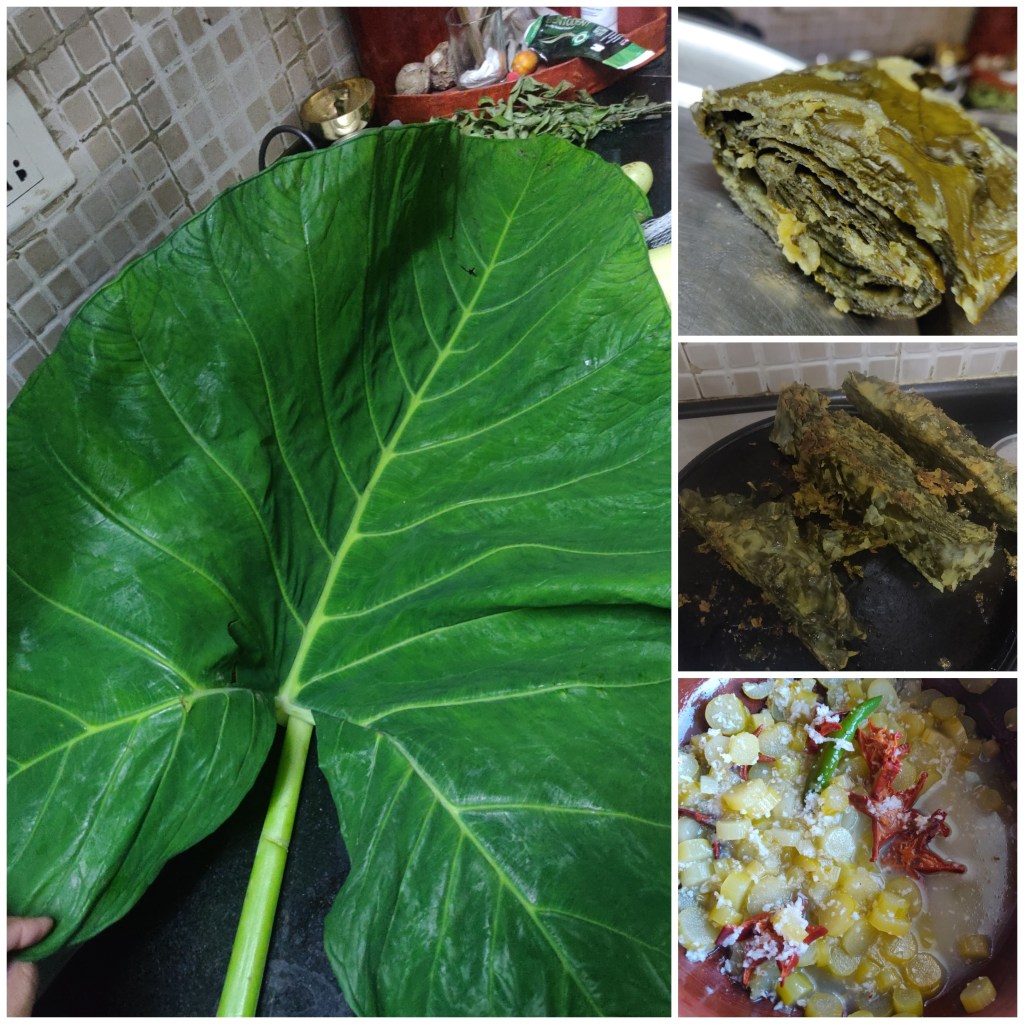
Finally, I cooked ‘pathrodo’ all by myself for first time after years of hesitance, lazyness, scaredness & all those kinds of related feelings!
When some specific food is tagged to the community we live in, & being a woman, it’s mandatory to know how to cook! Not my words guys. This is from many people around me which includes our own family. Not sure if that was the driving factor which made me cook this time!
I couldn’t resist buying the wild colocasia leaves from @farmizenofficial . I am not a big fan of it, but my husband and kid are! And even our neighbors are!! Whenever my Amma makes pathrodo, she would make some ‘cabbage undi’ for me. After my marriage, I had to make some glance (atleast) on these because my MIL used to make it and as I can’t say ‘No’ from eating.
I made pathrodo with few leaves and “undi” with remaining. The taste would be almost same as the batter used for both is same. The major difference is in its looks. While pathrodo is made by rolling the leaves spreading the batter on it, ‘Undi ‘ is made by chopping the leaves and adding to the batter. The batter is prepared by grinding soaked raw rice, grated coconut, turmeric powder, red chillies, salt, a pinch of hing and any souring agents(tamarind or bilimbi)
With the stems I made the ‘VeNtiye bajji’ aka ‘Alvati'(“Thaalu curry” in Malayalam)
Note – Actual pathrodo are made with the colocasia leaves which are much smaller than wild ones. For me both tastes similar, no noticeable difference. Read detailed post on Taro and Colocasia here
I could not get bilimbi, hence I used the sun dried star fruit slices in both dishes.
Tip – Roast the pathrodo the next day and it would be more delicious than steam cooked version!
Some more recipes with alocasia & wild alocasia leaves & tubers are listed below.
1. Chembila Curry
2. Chembin thaalu thoran
3. Alvatti– A Konkani Dish
4. Ganti Buthi
5. Thera Panna Bajji
A.
 MY LITTLE THOUGHTS LANE
Leave a comment