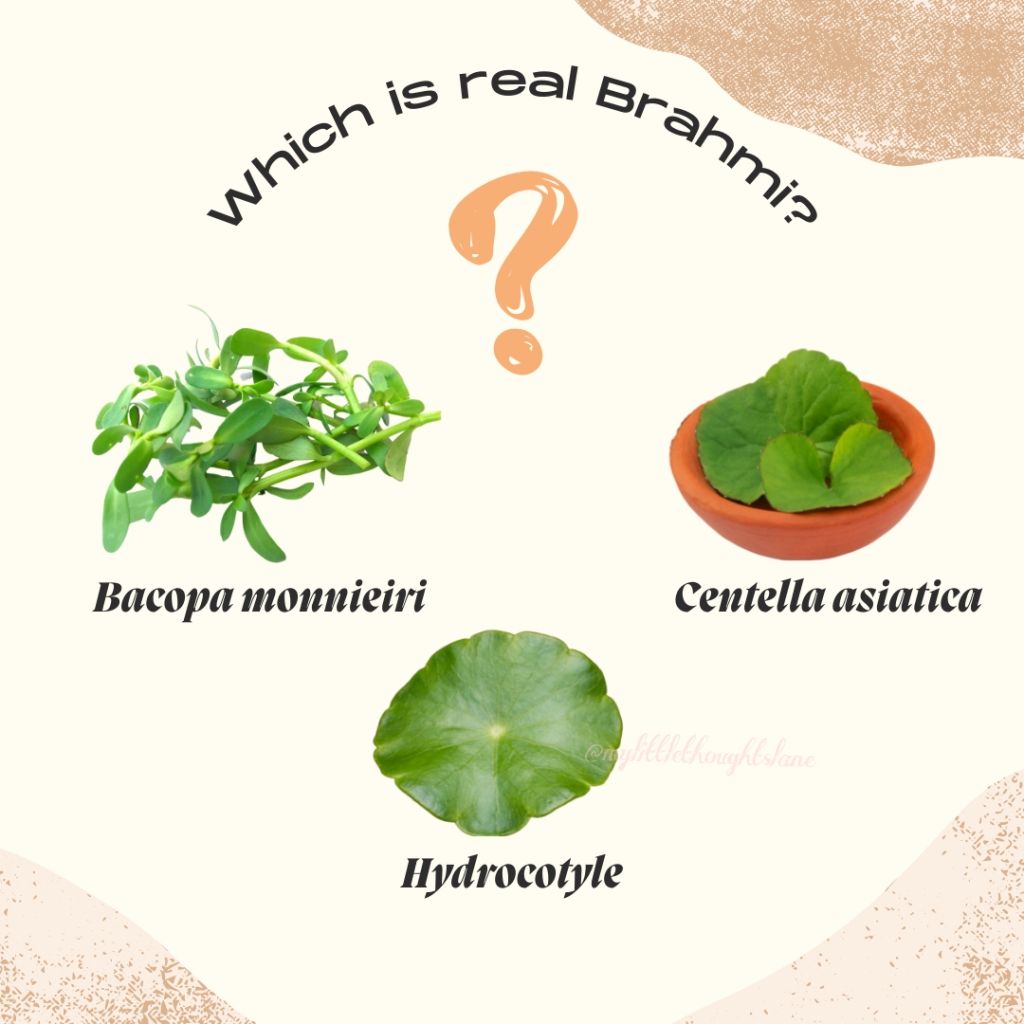
Centella asiatica or Bacopa monnieri or Hydrocotyle??
Recently, the question of which plant is the real Brahmi has become a common topic of discussion among gardeners and herb enthusiasts in many gardening groups. Centella asiatica, Bacopa monnieri, and Hydrocotyle are the names which always appear in these conversations.
To clarify this confusion, it is important to note that the term “Brahmi” is used to refer to multiple plants in Ayurveda. The most commonly referred plant as Brahmi is Bacopa monnieri, which is also known as water hyssop or herb of grace.
If you are located in Kerala or in western Indian states and talking about Brahmi, it is always Bacopa monnieri. Rest all other states generally consider Centella asiatica as Brahmi. Bacopa is also called as Neer/Jala Brahmi , Centella is called as Sthala Brahmi.
Lets start with Centella as this would be the one you all know.
CENTELLA ASIATICA
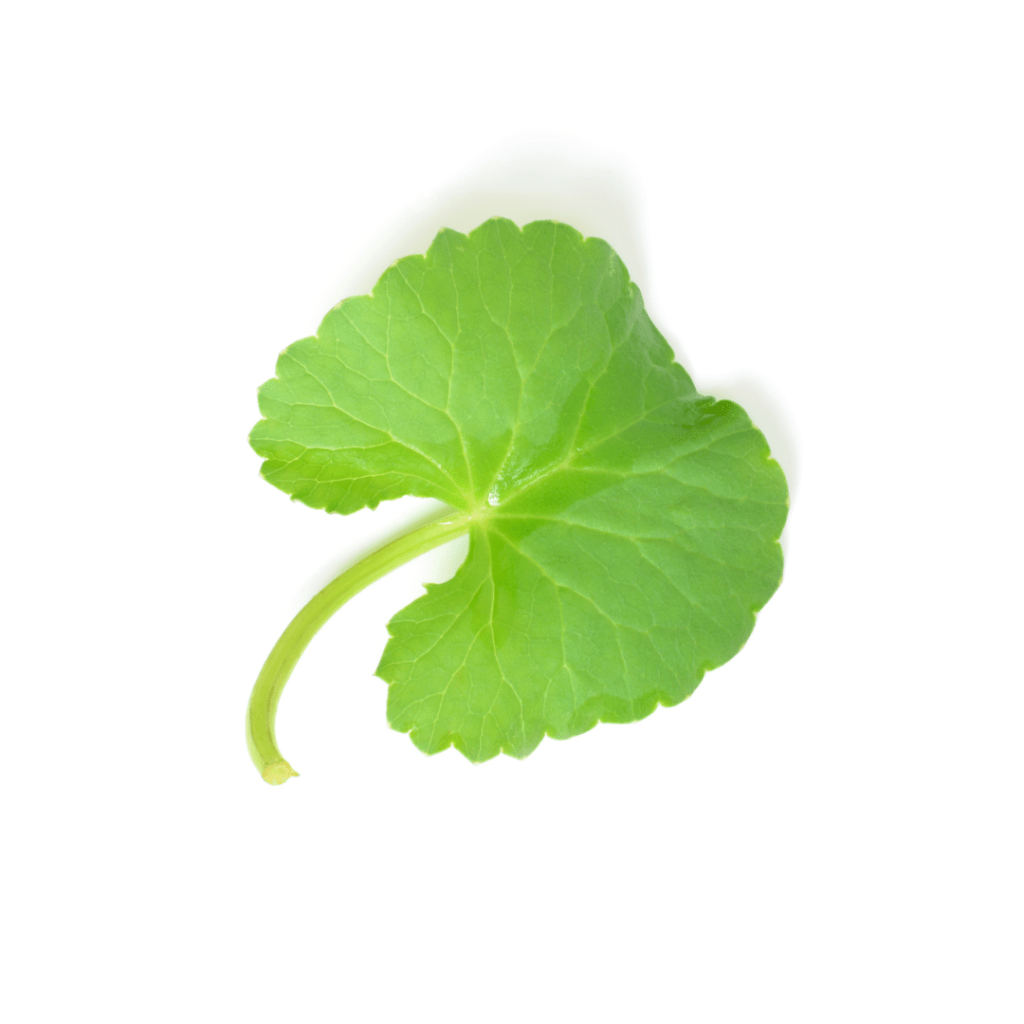
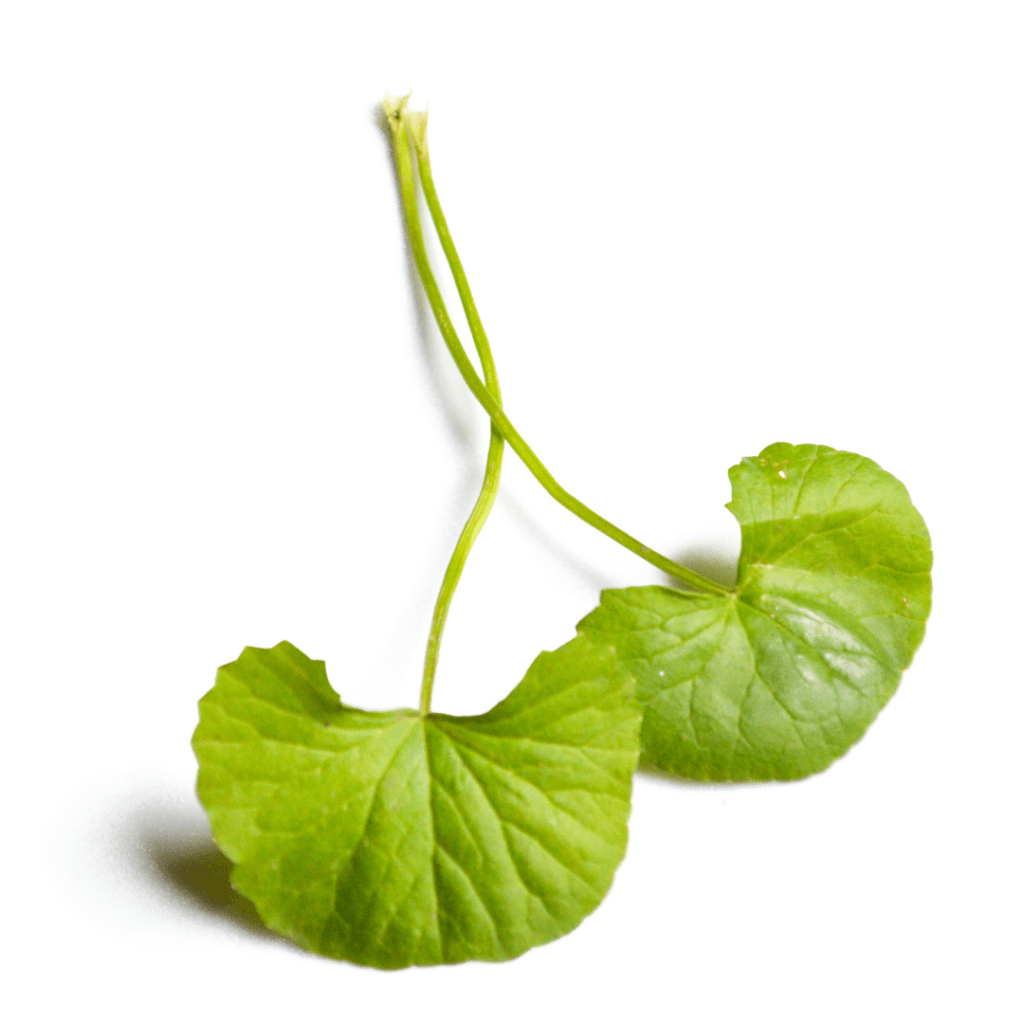
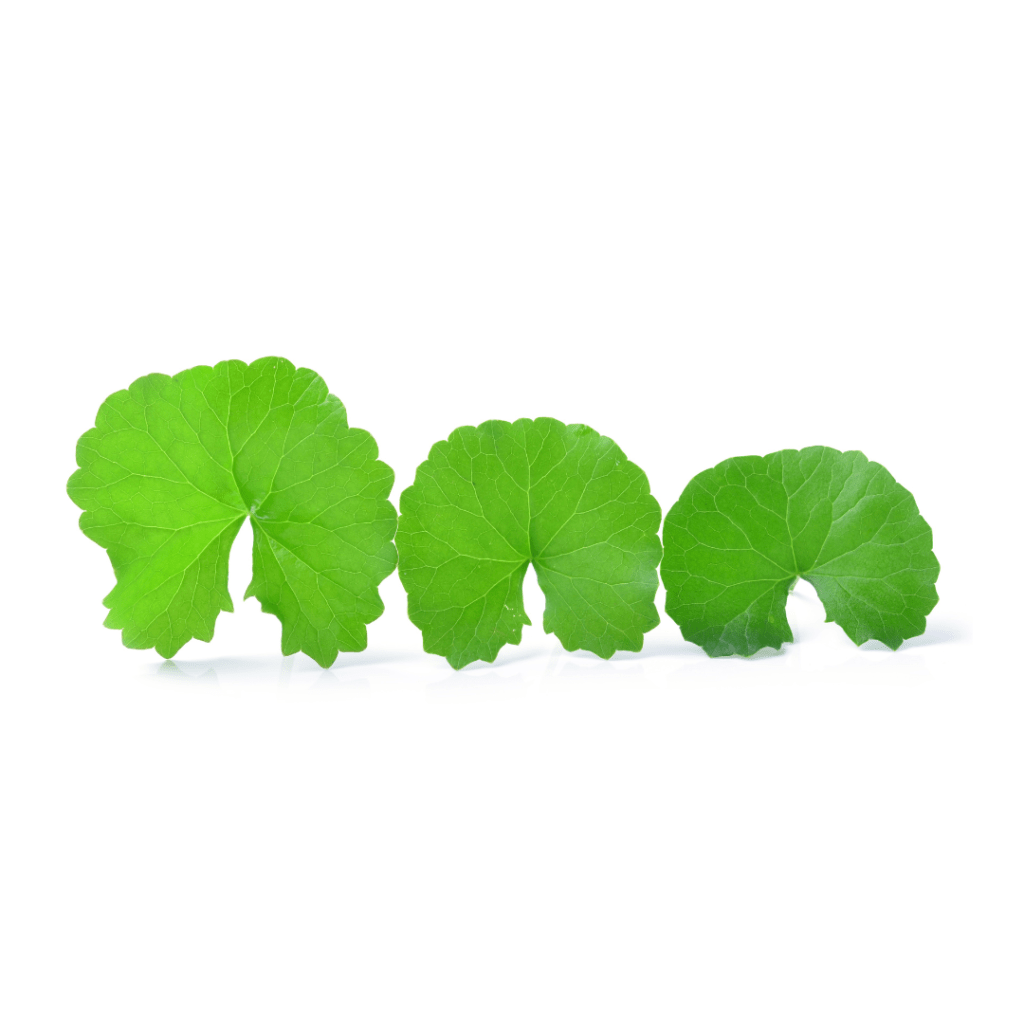
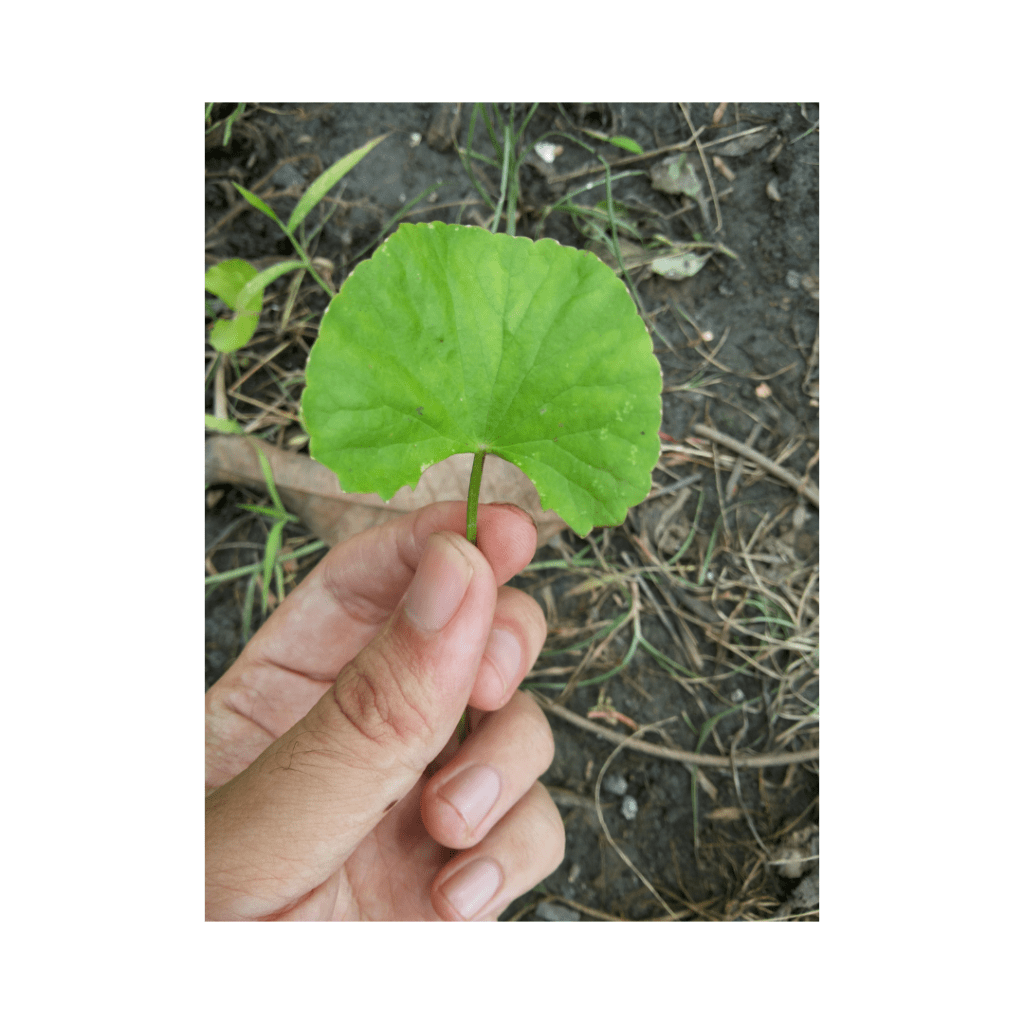
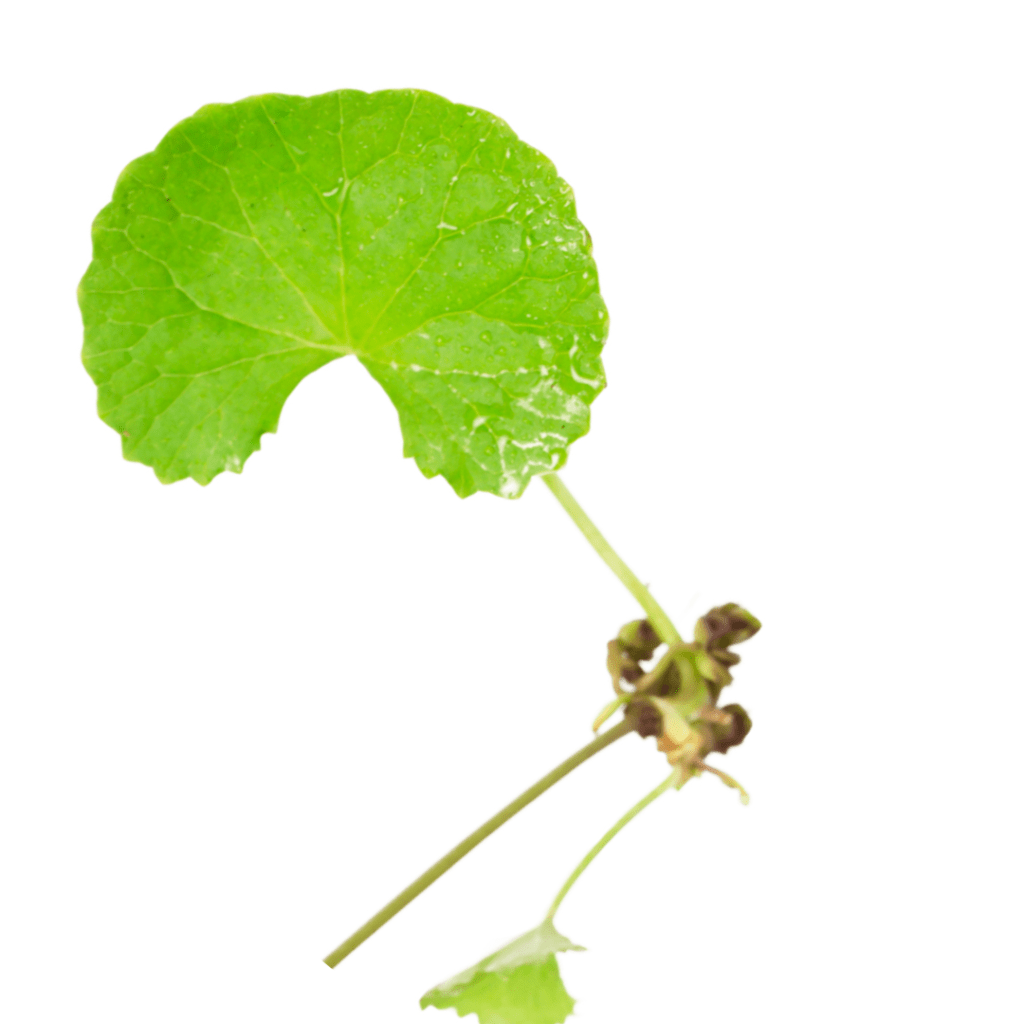
In Malayalam, Centella has many names which vary region by region – Kudangal(കുടങ്ങൽ),Kudavan(കുടവൻ), Kodangal(കൊടങ്ങൽ), Kodakan(കൊടകൻ), MuthiL(മുത്തിൾ) , kodungal(കൊടുങ്ങൽ), Kuthirakulambu Chedi(means horse’s hoof plant, കുതിരകുളമ്പ് ചെടി ).
Always keep in mind that common/local names are same for different species of plants.
In other languages – it is called as Vallarai keerai(வல்லாரை கீரை ,Thamizh), Ondelaga(Kannada), Mandukaparni(Sanskrit, the name because the leaves resemble the shape of frog ), Gotu Kola(Telugu). The same plant can have smaller as well as medium sized leaves depending upon the place it grows. Apart from that, there are a few more varieties found across Kerala and other parts of the world too.
Usually, we can find these in paddy fields or empty lands where human intervention is very less. The leaves are less shiny(compared to hydrocotyle), thin and bright shaded, rounded/kidney shaped serrated marginal(the edges). The leaves also resembles human brain. The easiest way to identify Centella is to observe the stalk. The stalk that joins the leaf(petiole) is attached to the point where ‘v’ shaped cut is there(lobed leaf). It has slender stems, and grows horizontally along the ground like carpet, with small nodes and roots from which the erect leaves are produced. It produces small, inconspicuous flowers in clusters (umbels) at the nodes, close to the ground. The flowers are really small so are the fruits/seeds which are flat, and ribbed schizocarp (a dry fruit that splits into single-seeded parts when mature).
I could find details about a few locally found and exotic varieties of Centella. –
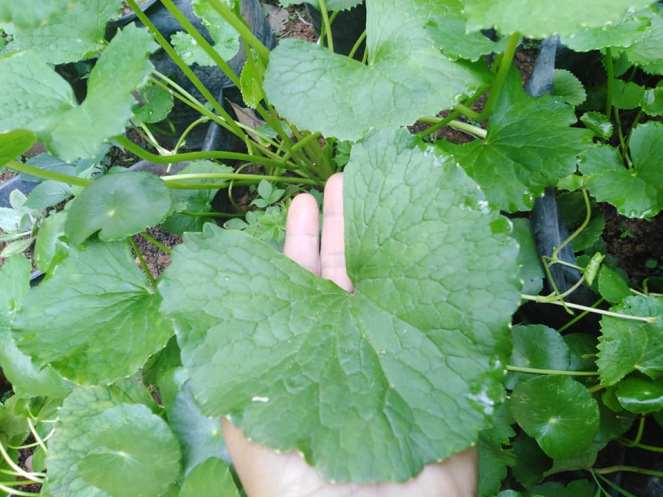
Aana Kudangal
A bigger size leaves variety(bigger than your palms) which is known as Aana Kudangal(literally means Elephant Kudangal).
Karinkudangal
These with little dark green variety and smaller leaves are found mostly near rocky area.and in deep forests.
Pic source – George Muttathil
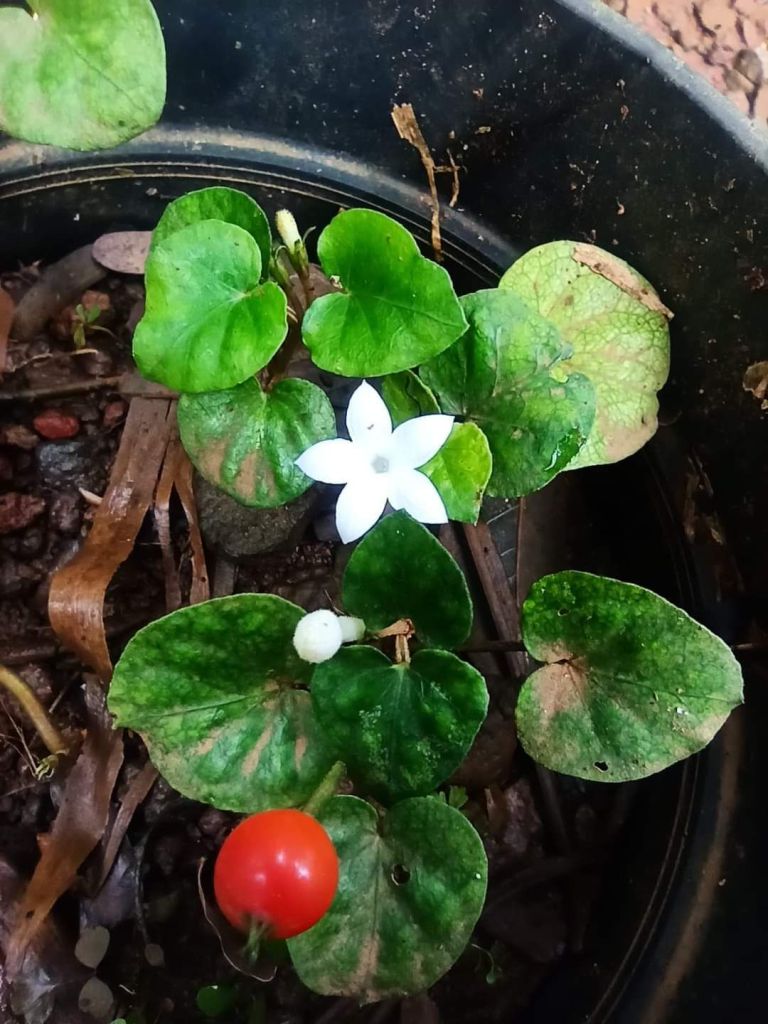
They are known as Karinkudangal/KarimuthiL(കരിങ്കുടങ്ങല്/കരിമുത്തിള്) /Karuvallarai- Geophila repens/ Prostrate Geophila. ‘Within India, it has been recorded on the hills of Assam, Western Ghats of Kerala (Nilambur, Thrissur) and Tamil Nadu (Coimbatore, Ramanathapuram, Tirunelveli) and Andaman Islands’ as per ENVIS-FRLHT site database.
Also sharing a few notes from Chaithrika Hegade of FRLHT. “Geo’ refers to earth and ‘phila’ means love. The plant which loves earth. In other words the plant grows very close to the ground or the plant which grows by spreading over the ground. Hence, the genus name ‘Geophila’. ‘repens’ refers to creeping, prostrate and rooting. “
- The plant grows in shady and damp places which indicates the aap mahabhoota predominance.
- It grows by spreading over the ground, make colonies because of prithvi mahabhoota.
- The leaves are blackish-green in color , thick , margin is entire indicates the predominant of prithvi mahabhoota.
- Flowers are white, indicates akasha mahabhoota predominance.
- Fruits are red in color due to the predominance of tejo mahabhoota.
Overall it is Prithvi and aap mahabhoota predominant.
Medicinal uses
It has anti-inflammatory, antifungal and antibacterial properties. It is used in diarrhea, vomiting, loss of appetite, jaundice.
Just like Centella asiatica this plant is also used as a memory enhancer. The drugs which act on CNS and help in cognitive functions will be having prithvi mahabhoota predominance. Prithvi is having sthira guna( stable ). Sthira guna is responsible for concentration, perception and memorization. That’s why Geophila repens can also be used as a medhya dravya.
Apart from these, the appearance of the plant varies according to the location, weather, soil composition, water, space availability and so on.
Centella is being used in Ayurveda for preparing various medicines, for culinary purposes and in home remedies. In certain parts of India, it is consumed along with buttermilk to get relief from stomach related ailments.
The tender leaves are fried in ghee and given for kids for good memory/intellect. A decoction of leaves is given while treating ulcers as well as stomach infections. A paste made with water and the dried leaf powder is potent to reduce the skin issues like eczema. A skin ointment called Madecassol manufactured in South Korea has Centella extracts as one of the main ingredients. In Kerala, it is given mainly for the postpartum women to recover the health of new mother also for the well-being of the baby(the baby receives its benefits through mother’s milk).
C.P Khare in “Indian Herbal Remedies: Rational Western Therapy, Ayurvedic, and Other Traditional Usage, Botany” mentions this most interesting point – Centella asiatica was also known as Braahmi. The confusion was created during the 16th century when Bhaavaprakaasha equated Braahmi with Manduukaparni and Maanduuki. Even in the Ayurvedic Pharmacopoeia of India Part I, Vol. II,
the Hindi synonym of Braahmi was documented as Manduukaparni. Braahmi and Manduukaparni are two different drugs and have been equated with Bacopa monnieri and Centella asiatica respectively. .
People of Manipur boils the whole plant with rice water and is used as hair lotion according to this article.
For all my food lover friends, I have added a list of recipes at the end which was saved in my vault for a very long time. I am yet to prepare and taste most of it, so let me know your feedback once you try them.
BACOPA MONNIERI
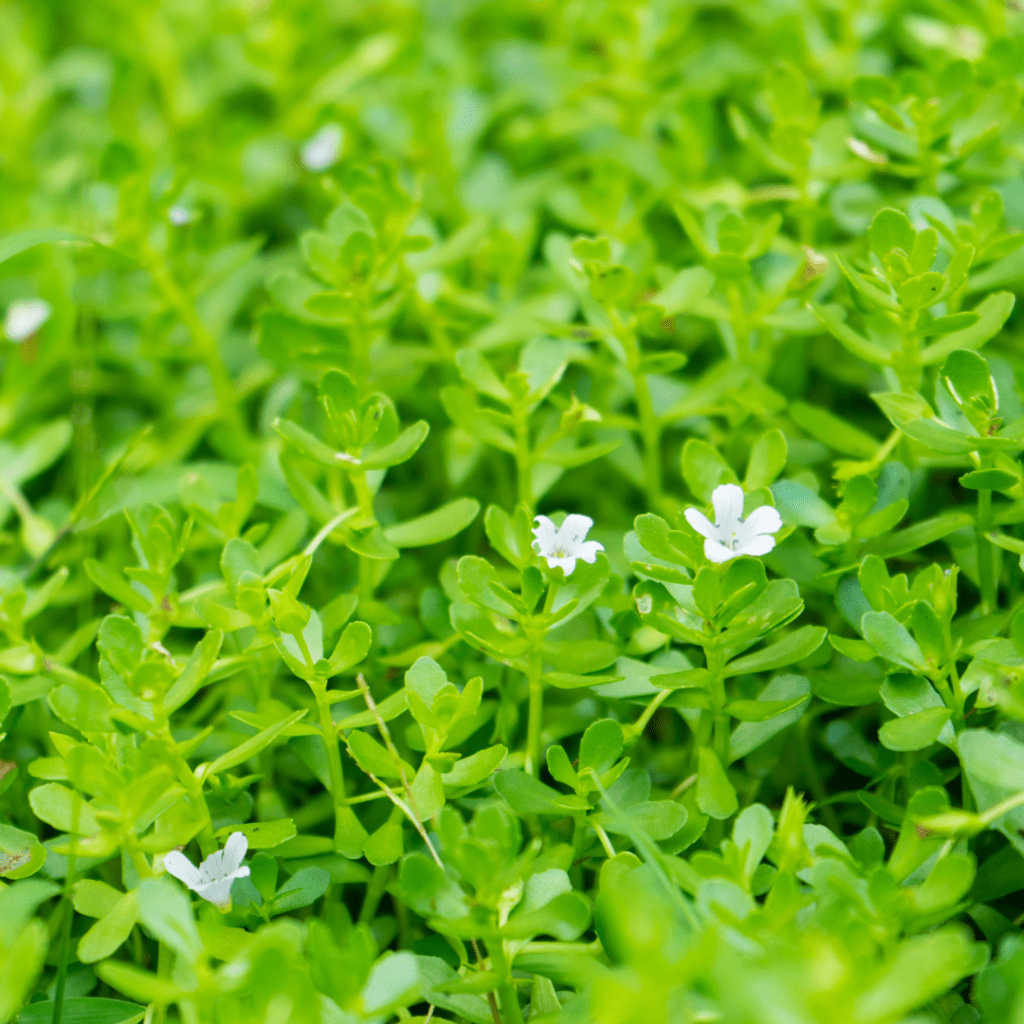
Also known as Water hyssop, thyme-leafed gratiola, herb of grace and goes on. It has a creeping nature, slightly fleshy, flowers are little pale blue/pink or white. Read more about this herb at one of my favourite site FlowersofIndia.
This is our actual Brahmi(for Kerala people) which grows abundantly in/near water bodies, swampy areas. Many Ayurvedic grandhas like Charaka Samhitaa, Ashtaanga Hridaya, Vrindamaadhava, Kaashyapa Samhitaa, have mentioned about this divine herb’s uses. Many books like ‘Ayurvedic herbs : a clinical guide to the healing plants of traditional Indian medicine’ by Premila M.S, ‘Healthy herbs : fact versus fiction’ by Goldstein, Myrna Chandler etc. mentions many researches that studied the medicinal benefits, side effects and have brought in more light from Science world. Initially the Western countries considered this as an aquatic plant and only later they realized and started to learn more about this wonder plant. Books like Fraser Smith’s ‘Keep your brain young’, Earl Mindell’s ‘The memory bible’ have Bacopa listed as brain tonic! The Ayurvedic medicines likes Saraswathaarishtam, Saraswatha Churnam, Brahmi Ghrita, Swarnaprashana etc contains B. Monnieri as principal ingredient. And many famous Ayurveda brands sell it as capsules too!
C.P Khare in the same book states –Charaka, Sushruta and Vagbhatta treated Braahmi and Manduukaparni as two different drugs. A critical study of comparative phytochemistry, pharmacology and therapeutic properties of these two drugs have proved that they are distinct. Braahmi was used specifically in mental diseases like insanity and epilepsy, while Manduukaparni as a general brain tonic. Braahmi promotes fertility (Charaka used it as an impregnating herb) and sustains implantation; while Manduukaparni is abortifacient. Both are used for skin diseases but their therapeutic effects are not the same.
There was a study done by providing B. monnieri(standardized extracts) to elderly people for 12 weeks and they could see some positive effects on Attention, Cognitive Processing & Working Memory. You can go through the same here. Another study in which Indian medical students were received B. monnieri(standardized extracts) and it showed significant improvement in cognitive functioning.
If you go to any herb shops in Kerala (known as pachamarunnu kada), and request Brahmi, they will provide you B. monnieri exclusively. The local Vaidya stated that this particular plant is utilized for producing hair oils, ghrithams, kashayas, and so forth. We have been using this herb in our homemade hair oils. Occasionally, when preparing DIY herbal hair washes, I include the leaves together with our simple Chembaruthi or hibiscus leaves and flowers. We haven’t utilized it for cooking since it is much more pungent and bitter than C. asiatica
HYDROCOTYLE
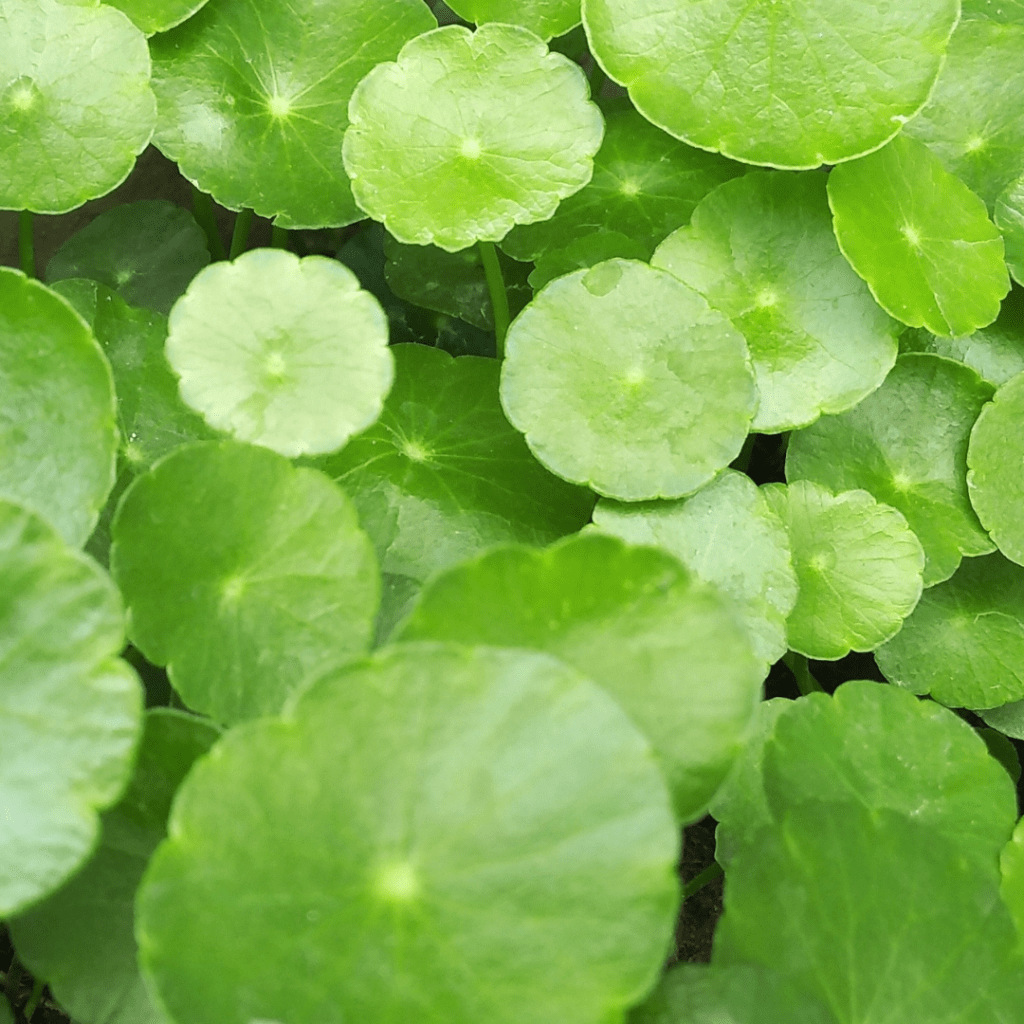
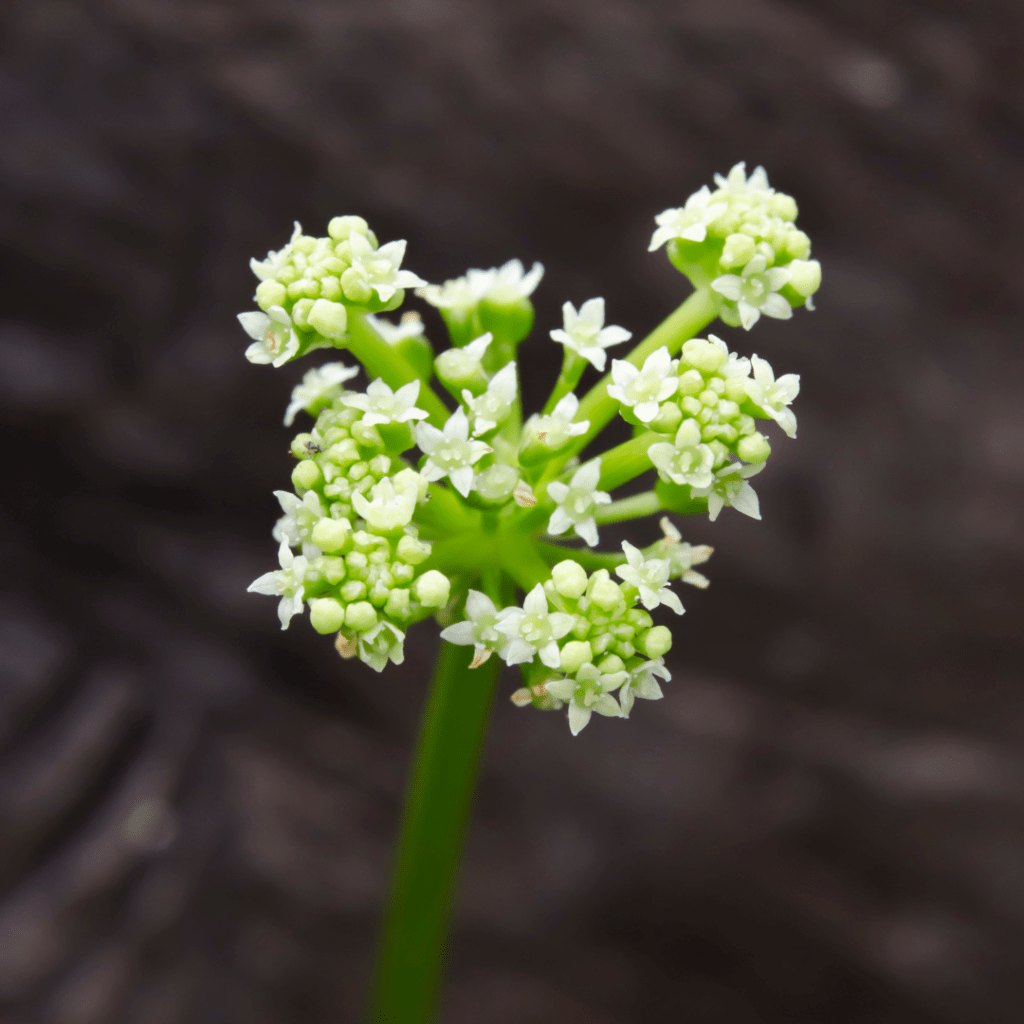
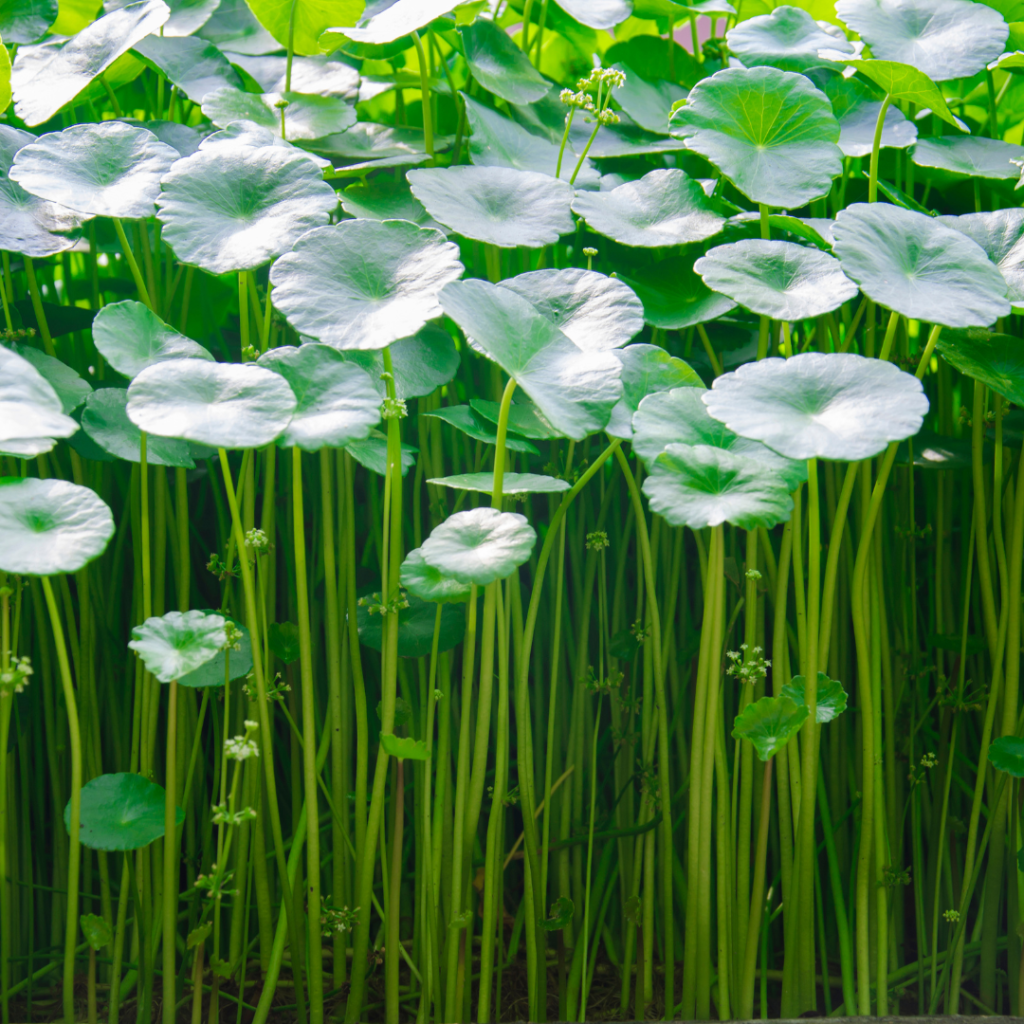
You would find this plant more common than C.asiatica as it grows almost moist, water logged areas. It is also grown as a good ground cover.
Some of my Social media friends told me that few varieties of Hydrocotyle are being sold as Brahmi in nurseries( like H.verticillata(umbrella plant) and H. umbellata). Please be aware that H. tripartita, H. sibithripoids, and H. verticillata are available as Aquatic plants in Aquarium stores as well. This page from eflora has listed few of the varieties found in India.
H. umbellata is being sold as Brahmi in nurseries which also has synonyms Hydrocotyle ambigua, Hydrocotyle vulgaris, Hydrocotyle caffra.
So buying any plants saying Brahmi for growing is absolutely fine. But before consuming them, please confirm with Ayurvedic doctors/friends/family who are well aware about these plants. Recently, many stores, online/offline are selling these as Brahmi.
One of the research papers indicated that H.verticillata possesses medicinal properties and is confirmed to address specific health conditions. It is also noted that it is utilized in traditional Chinese herbal medicines. I’ve misplaced the reference, so I will revise the sources as soon as I locate them.
Which Brahmi is actual Brahmi for me?
For my needs, I would use C. asiatica for all my culinary needs like chutneys, rasams, etc and add B. monnieri in my hair oils and masks. The Hydrocotyles will be grown in my garden pots only as a decor plant. For medicinal purposes, I would prefer the medicine prepared by Vaidyas as it will have the right combination & proportion of herbs for my prakriti unless Vaidya prescribes it specifically.
So which is actual Brahmi for you?
Recipes & Other Uses
Peruk kangsu from Manipur
Manimuni xaak from Assam
Fish curry with Manimuni from Assam
Manimuni Jol from Assam
Ondelaga thambli from South Karnataka
Ondelaga Rasam
Ondelaga-Yakult juice
Ondelaga Pulao
Ondelaga Lady’s Finger Sasive
Ondelaga Raw Mango Chutney
Ondelaga -Tondekai(Ivy Gourd) Sabji
Ondelaga juice
Gotukola Sambol
Gotukola Buttermilk
Ondelaga Dal
Herbal Tea
Pesto recipe
Herbal Hair oil
Herbal Hair wash powder
Vanchina Chaaru with foraged greens
Vallarai Keerai Kootu
Vallarai Thuvaiyal
Vallarai Keerai Masiyal
Vallarai Kuzambu
Thalkudi Saag
Village Style Thalkudi Leaf Patua
Thalkudi patra tarkari
Thankuni Pata Bata and Drink
Thankuni Pathar Bora from Bengal
Refreshing Syrup
Vallarai podi
Vallarai dosa
Vallarai keerai kootu
Vallarai paniyaram
Kola Kenda – A healthy Kanji from Sri Lanka
Sambal Pegagan Aceh A salad from Indonesia
Nuoc Rau Ma – A Vietnamese Pennywort Drink Recipe
Jus Daun Pegaga – Juice recipe from Malay
Kodangal Aappam from Kerala
Kudangal Appam from Kerala
Kodangal Kurrukkiyathu from Kerala
Kudangal Ela Thoran from Kerala
Kodangal Halwa
Kodangal Kinnathappam
Centella asiatica juice with carrot
Gotu kola soup
Naga Style Centella Asiatica Chutney
Thalkudi Saag and chutney
Vallarai Keerai Tea and health benefits by Ramya from Wildturmeric
Blog post from Ramya
Some interesting reads ~
Not a recipe – How to grow Vallarai at home
An interesting article from Down to Earth – Versatile Vitaliser
The Hindu News article ‘Centella asiatica’s beauty mark’
Easyayurveda.com refers Centella as ‘Gotukola’ or ‘Mandukaparni’
Additional Reads
Brahmi Shaak
Brahmi Hair oil By Ramya from Wildturmeric
Blog post from Ramya
Natural Herbal Shampoo with Centella, Bacopa and many other from Manipur Meitei Community
Easyayurveda.com clearly differentiates the differences between both the plants in Ayurveda perspective.
Disclaimer – Few recipes listed above might be using some variety of Hydrocotyle. Make sure you identify the variety which is edible. I am not a practitioner in any field of Medical Sciences. Please follow the remedies after consulting with your family doctor or an Ayurvedic Practitioner.
Any herb has to be consumed in moderate use if you are consuming it as food. Also please consume smaller portions and observe before you go ahead with big portions.
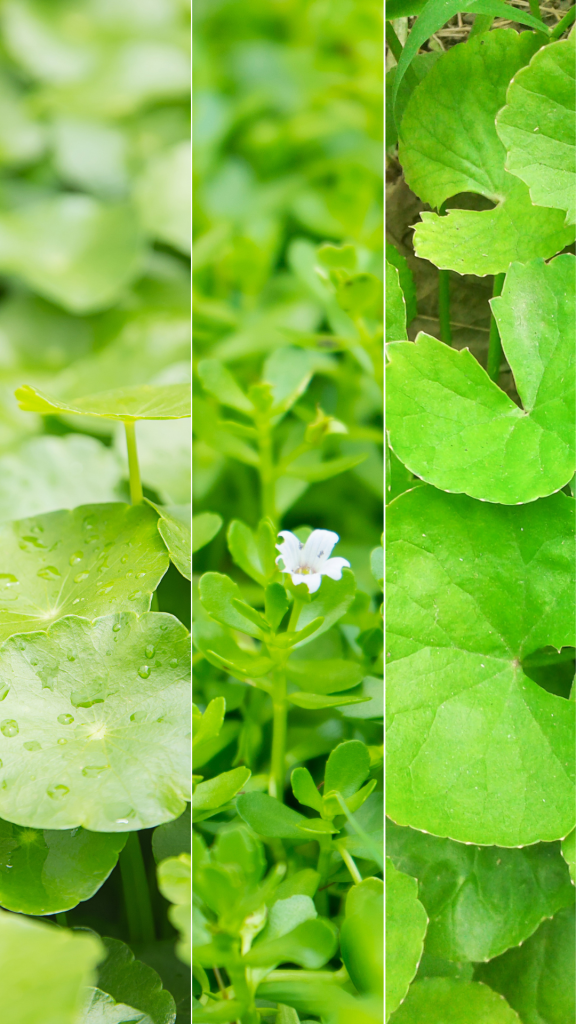
Now, can you identify these plants?
Before you leave, please take a look at my blog post about lesser-known edible greens (or weeds for many). It features close to 300 species of plants which we see around and are edible!
Archana.
 MY LITTLE THOUGHTS LANE
4 responses to “Which is the real Brahmi?”
[…] Indian Pennywort […]
LikeLike
[…] Go to source […]
LikeLike
[…] Another plant often caught in a web of confusion is Brahmi! (If you’d like to read more, check out my blog post dedicated to […]
LikeLike
[…] This comparison by Mr Gopala Krishna Baliga gives a clear difference between both the species. May not be exactly the same(for experts) this reminded me one of my old posts on Brahmi which explains the difference on various brahmis. […]
LikeLike