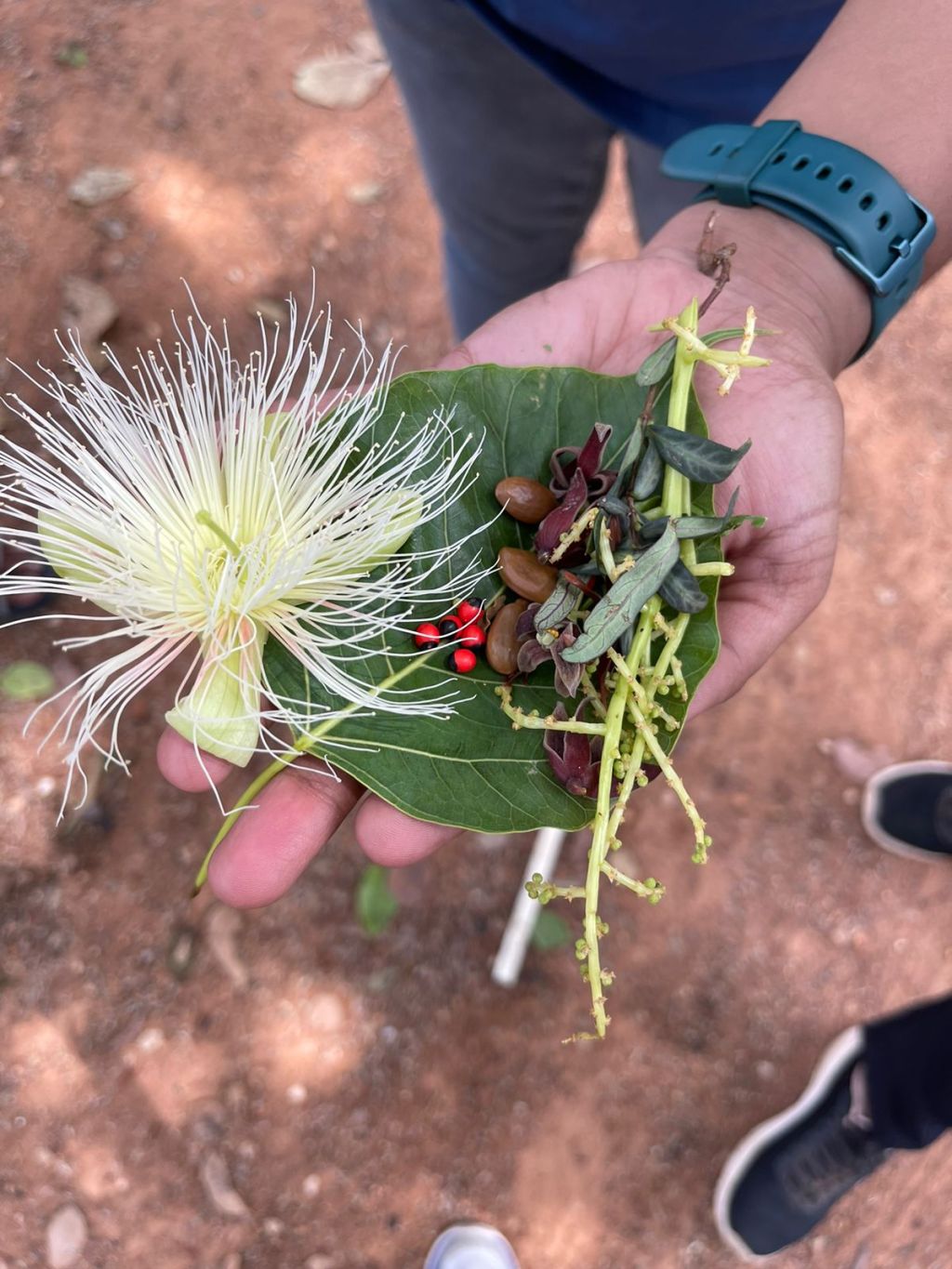
A glimpse of Medicinal Plant Walk conducted by TDU.
Along with some other students & enthusiasts who shares similar interest in plants, I set off on an enthralling trip into the world of medicinal plants. Before starting the walk, we were given a brief introduction of a couple of their herb collections within the herbarium lab. Our emotions were brimming with intrigue and eagerness as we strolled through the lush, verdant terrain. Sharing a few of plants and trees we came across
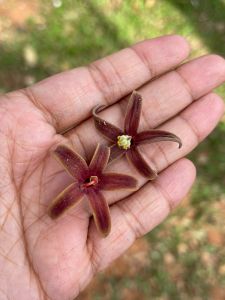
Our journey began at the base of the sage Arjuna tree, whose broad, inviting arms bore witness to its age-old medical knowledge. Just next to it, a tree known as Jangli Badam, or Sterculia foetida, which is covered in fragrant blooms, captured our attention with its alluring perfume. The guides & our mentors for the day, Mr. Arun and Mr. Dakshinamurthy, taught us about monoecious and dioecious plants as well as how to distinguish between male and female flowers.
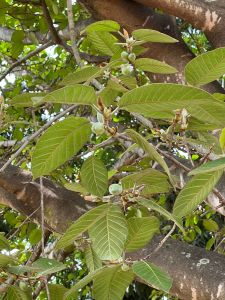
We came upon the Mysore fig, or Ficus drupacea, as we strolled along. Its branches were packed with sweet figs that spoke of life and nutrition. A magnificent Aloe arborescens was nearby, its soothing gel a wonder treatment for a variety of ills. We tried a piece of the sour mangosteen, Garcinia xanthochymus, with a joking grin, its tart flavor dancing delightfully on our tongues.
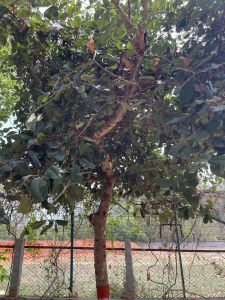
We soon came across the Manilkara hexandra, also referred to as Ulakka Palai in earlier times. This hardy tree provided the robust wood for the construction of Ulakkai, a component of the traditional mortar and pestle used by our forefathers to grind a wide variety of grains, pulses etc.
As soon as we encountered the wonderful language of botanical nomenclature, our adventure took a comical turn. Consider the Pseudocalymma alliaceum, often known as the Garlic Vine. Pseudo means false, and alliaceum refers to the scent, which is onion- and garlic-like, that the plant gives out. Isn’t it interesting?
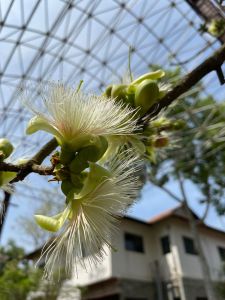
The enchanting beauty of Careya arborea(Wild Guava) blooms rapidly engulfed our gaze. We were compelled by their ethereal presence to immortalize them in photos, capturing their loveliness from every imaginable perspective. But the mysterious Mahua tree, which lay farther down our walk, was the real showpiece.
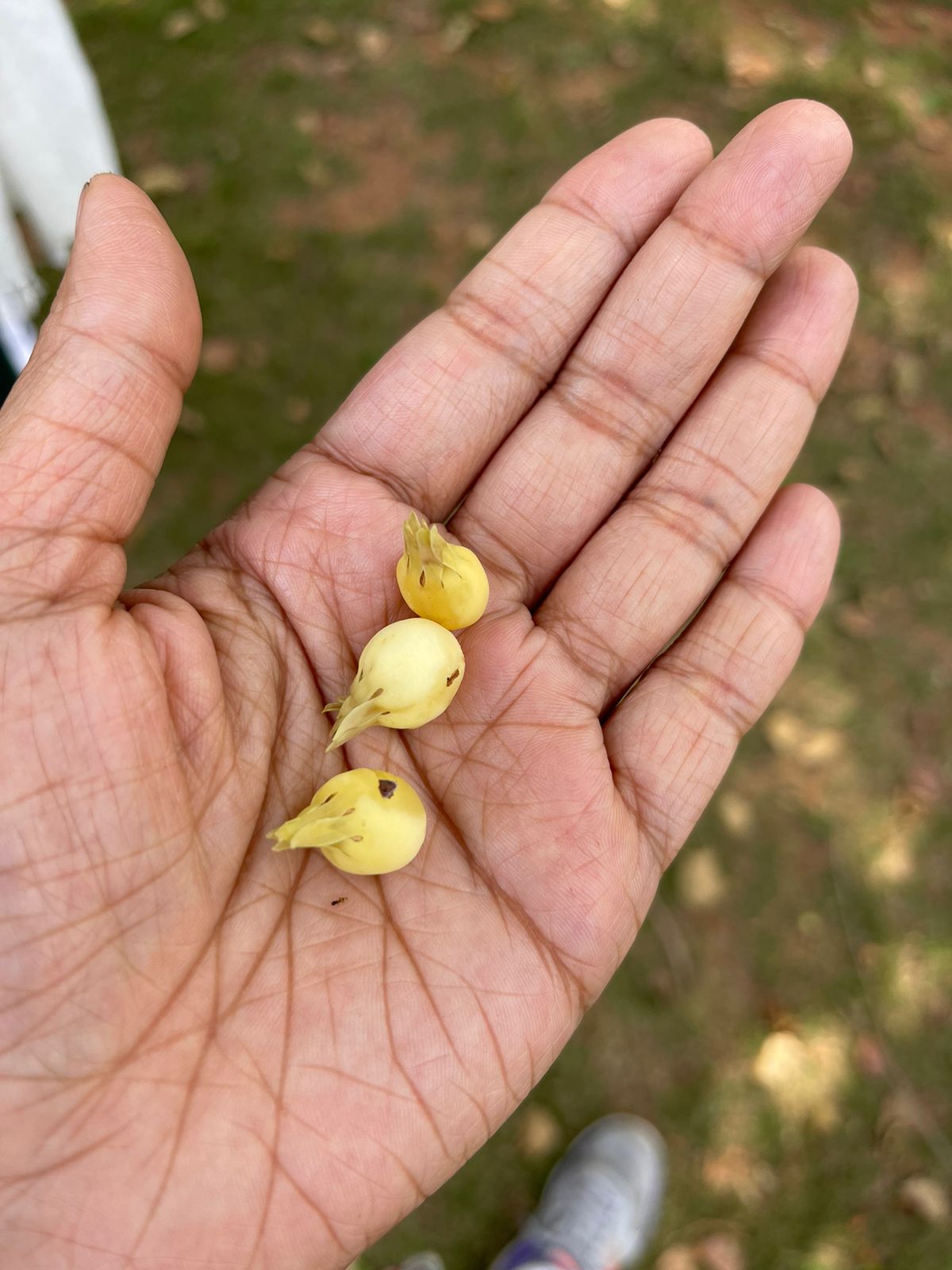
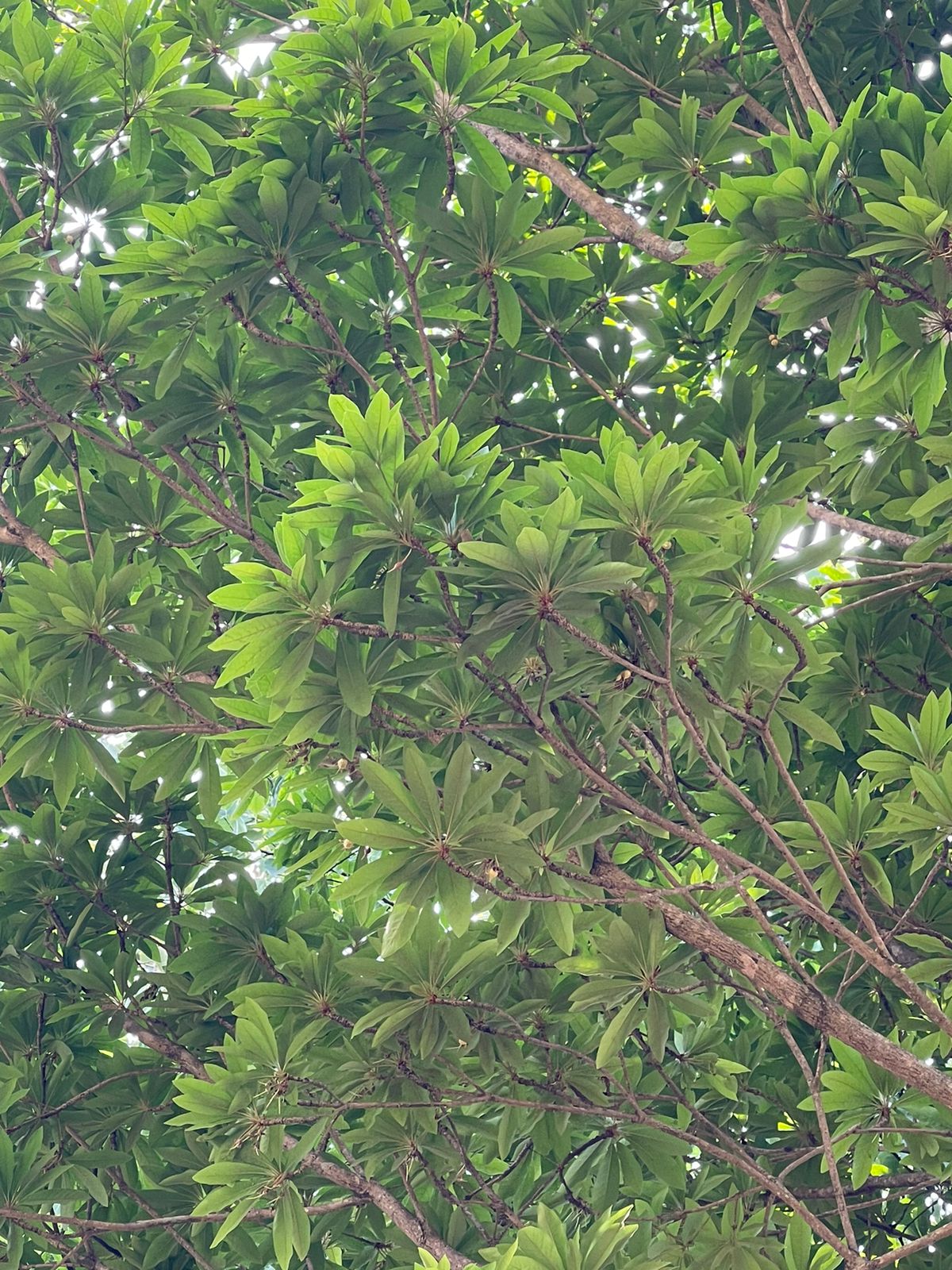
We were first-time visitors to this gigantic being, and the entrancing scent and flavor of its blossoms enthralled us. While some of our fellow participants claimed the flower tasted like toddy, others insisted it was more like Singapore cherries. We were surprised to learn that the flowers are one of the favorites for the wild elephants. Just imagine, how the big animals would eat such small sweet flowers! Whatever your thoughts, there was no denying that the Mahua tree had charmed us all.
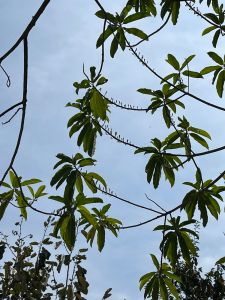
Our enchanted journey came to an end when we came upon the enigmatic Rudraksha tree, whose spiky blossom buds served as a reminder of the sublime balance between beauty and suffering. Then, as a bittersweet cap to a memorable day, we savored the hog plum’s soft, scarlet leaves.
Therefore, filled with awe and gratitude for the floral marvels we had found, we made our way back home. We discovered not just health and nourishment in the company of these knowledgeable and old plants, but also a closer connection to the limitless wisdom of the soil.
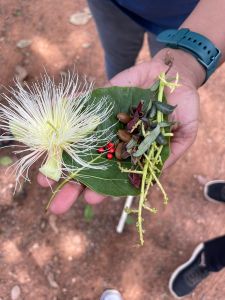
A heartful gratitude to the dedicated TDU team who organized and conducted this interactive and informational session. Their passion for sharing the wisdom of nature knows no bounds, and their enthusiasm for welcoming eager minds of all backgrounds is truly inspiring.
They hope that more individuals from all walks of life will participate in this stroll and pay attention to the nearby trees and flora. You do not have to be a scholar, expert, or seasoned botanist to participate in this wonderful walk, my dear friends, so do not be afraid. To comprehend the mysteries and beauties that are woven into the lush fabric of our planet, you simply need to keep an open mind and use all of your senses throughout the walk.
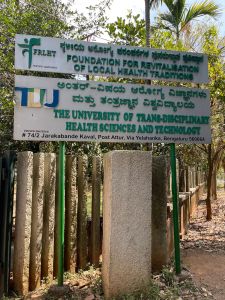
Venue details –
Location – TDU Campus Bangalore
Map – https://goo.gl/maps/yMBWNi7bba2LnBtE9
Instagram – https://www.instagram.com/tdufrlht/
Session Details – Every 4th Sunday of the month
A.
 MY LITTLE THOUGHTS LANE