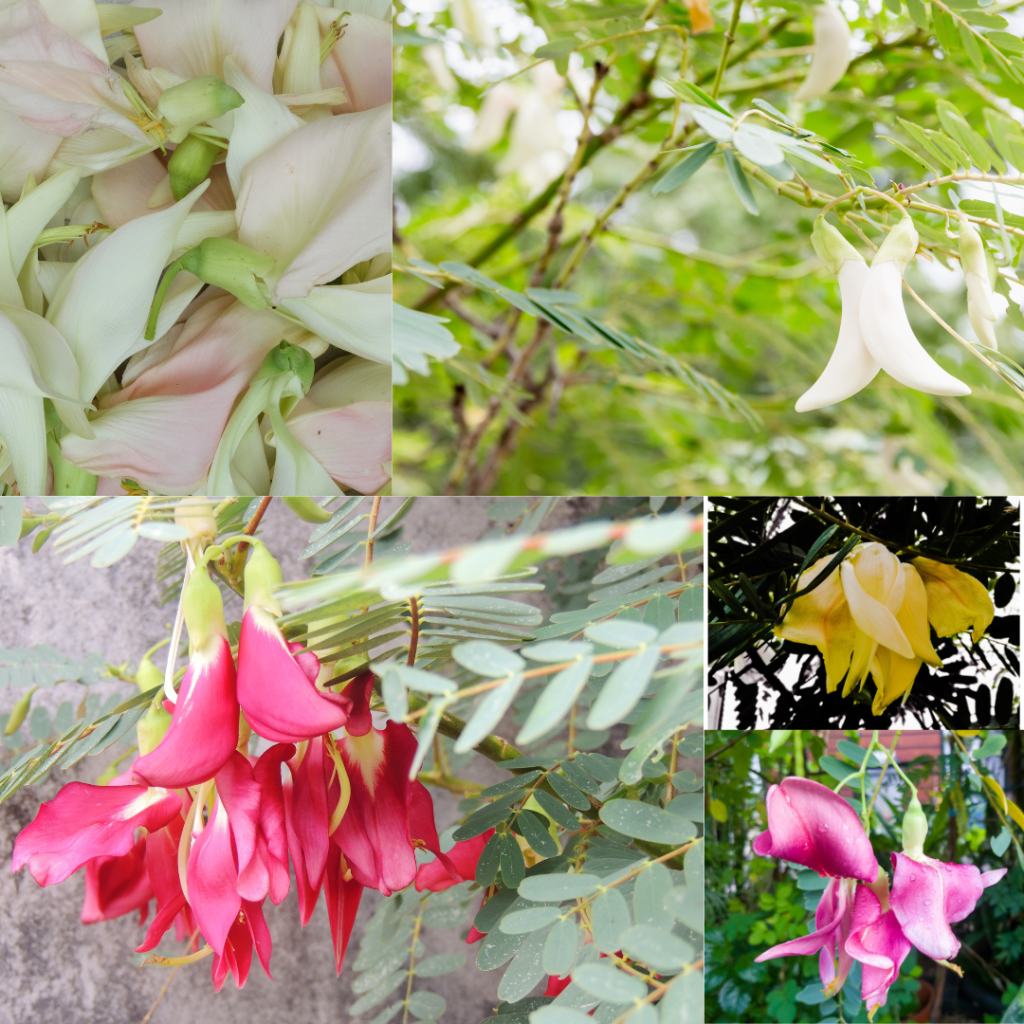
- Agathi is one of the 9 plants used for Navrathri (Nabopatrika: Nine plants representing the Mother Earth,a ritual perhaps predated the Durga puja). Jayanti plant(Agathi) represents Goddess Kartiki.
- Folklore says that this plant is one of the favorites of Muni Agastya and hence the name Agasti. The flower looks like a humming bird, hence the name humming bird tree.
- The pods of Agathi are the biggest in the legume family.
- The leaves are prepped on Dwadashi paranai(breaking the Ekadashi fasting) as well as fed to cattle as part of ritual.
- It is known for its benefits against night blindness, wound healing.
- Good for bio-fencing as it is considered as wind breakers as well as a nitrogen fixator.
- One of its folk uses is to treat or alleviate type 2 diabetes mellitus.
- Edible parts – Flowers, leaves, bark and tender pods.
Botanical Name: Sesbania grandiflora Family: Fabaceae (Pea family)
Common name: Agati • Hindi: गाछ मूंगा Gaach-munga, Hathya, अगस्ति Agasti • Manipuri: Hawaiman • Marathi: शेवरी Shevari, हतगा Hatga • Tamil: Sevvagatti, Muni • Malayalam: Akatti • Telugu: అవిశ Avisha, Ettagise, Sukanasamu • Kannada: ಅಗಸಿ Agasi, ಅಗಸೆ Agase, ಚಿನ್ನದಾರೆ Chinnadaare, ಅರಸಿನ ಜೀನಂಗಿ Arisina jeenangi • Bengali: Buko, Bak • Urdu: Agst • Gujarati: Agathio • Sanskrit: Varnari, Munipriya, Agasti, Drigapalaka
Etymology:
Sesbania: The genus name “Sesbania” is derived from the Arabic name “سسبان” (Sisban) for a type of Sesbania, which in turn is believed to have originated from the ancient Greek word “σεσβανια” (sesbania). This name reflects the historical use of Sesbania plants in various cultures.
Grandiflora: The species name “grandiflora” is Latin and can be broken down into two parts. “Grandi” comes from “grandis,” meaning “large” or “big.” “Flora” is derived from the Latin “flos” or “flora,” which means “flower.” So, “grandiflora” refers to the large flowers of this plant.
Recipes –
Agati flowers Stir Fry – A Konkani dish
Agastya Phulla Bhutthi – A Konkani dish
Agathi-banana stir fry
Agathi with moong dal
Agathipoo paruppu kulambu
Katuray flowers salad
Agathi poo fritters/pakora
Agastya with sweet potato
Agathi Keerai poriyal
Agathi flower thambuli
Agathi Keerai Thanni Saaru
Agathi Keerai Sambar
Agase Soppu kootu and palya
Agathi flower rice, Beans and flower poriyal and fritters
Agathi leaf Kulcha
Agasthi flower omelet – Wash and remove the pistils of 10-12 flowers, chop it nicely. In a spoon of coconut oil, stir fry the chopped flowers. Once cooked well, in a bowl, add 2 eggs, required salt and pepper powder. Add the stir fried flowers and make omelets.
Agasthi flowers salad, as shared by Rama Ramanee from Anemane Farms – Pick fresh flowers, remove the stamen and rinse gently. Saute just half a tsp of jeera and add the petals to the warm pan after it’s taken off the flame. Cool and add a pinch of pink salt and a cup of sweet curd! Do not ‘cook’ the petals. That’s it!
Precaution : Please cook(steam or stir fry) these greens or flowers before consuming in any form.
Read more about Agathi –
Agathi Kai – https://pinklemontree.in/agathi-kai/
A Journal with interesting study on Development and Popularisation of Agathi Leaves
(Sesbaniagrandiflora) Incorporated Food Products – –https://iosrjournals.org/iosr-jestft/papers/vol7-issue5/A0750110.pdf
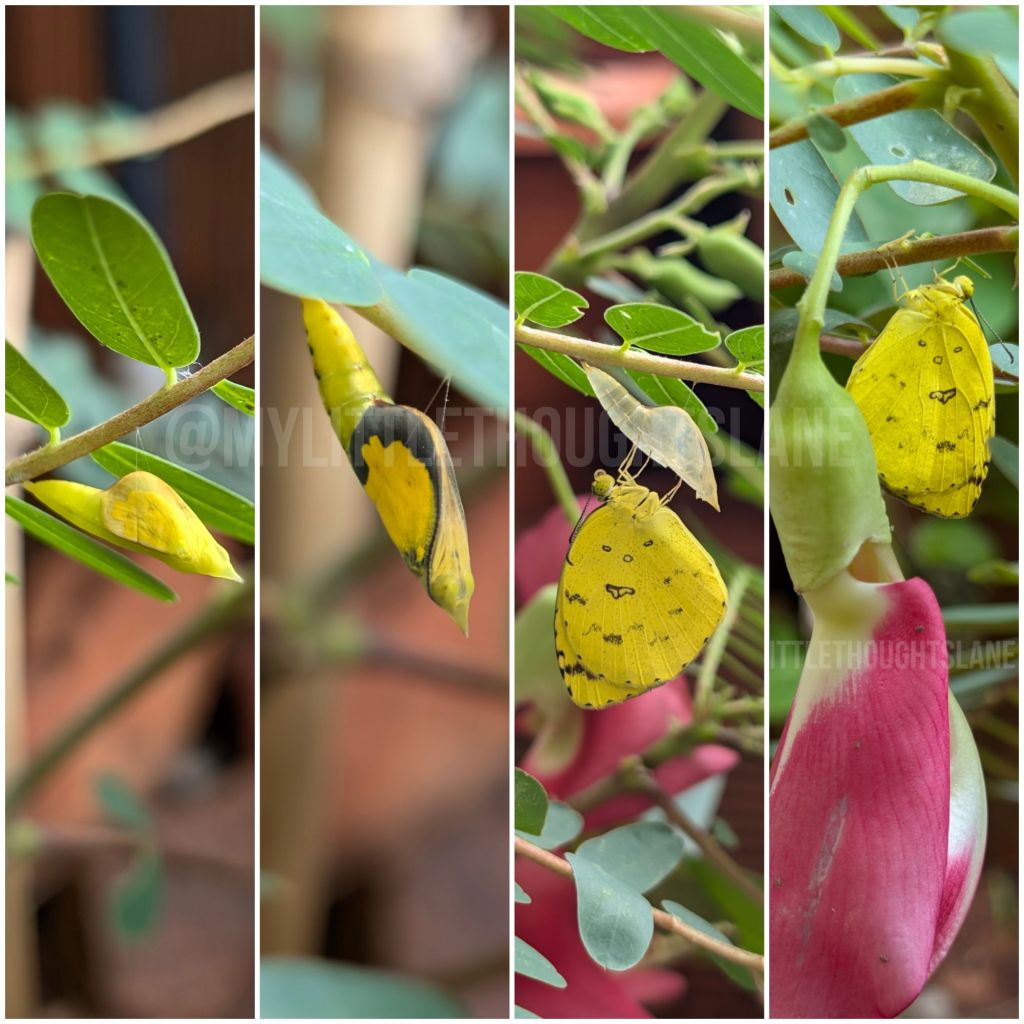
Larval Host Plant –
Catopsilia pomona – Lemon Emigrant
Catopsilia pyranthe – Mottled Emigrant
Eurema blanda – Three-spot Grass Yellow
Eurema hecabe – Common Grass Yellow

 MY LITTLE THOUGHTS LANE
Leave a comment