Day 6: Tabo – Dhankar – Pin Valley – Kaza
Tabo
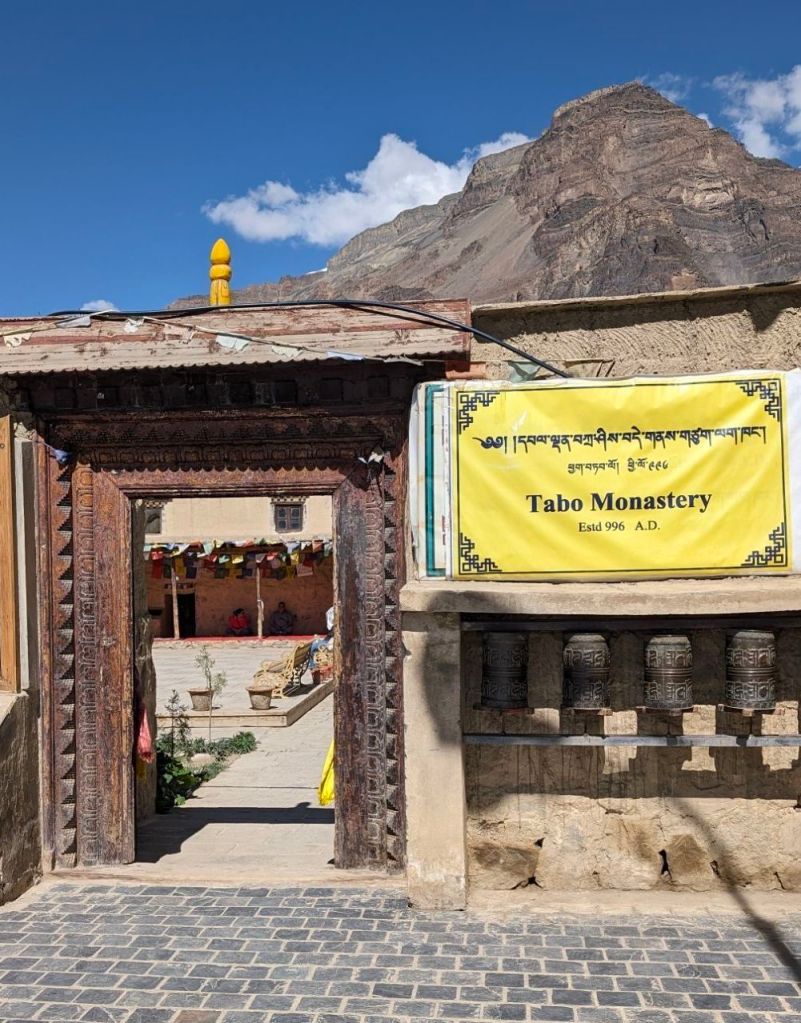

Our day began with a visit to one of the oldest monasteries in India, Tabo Monastery. The buildings, made entirely of mud, exuded an ancient charm. A monk guided us through the monastery’s history, though photos were not permitted inside.
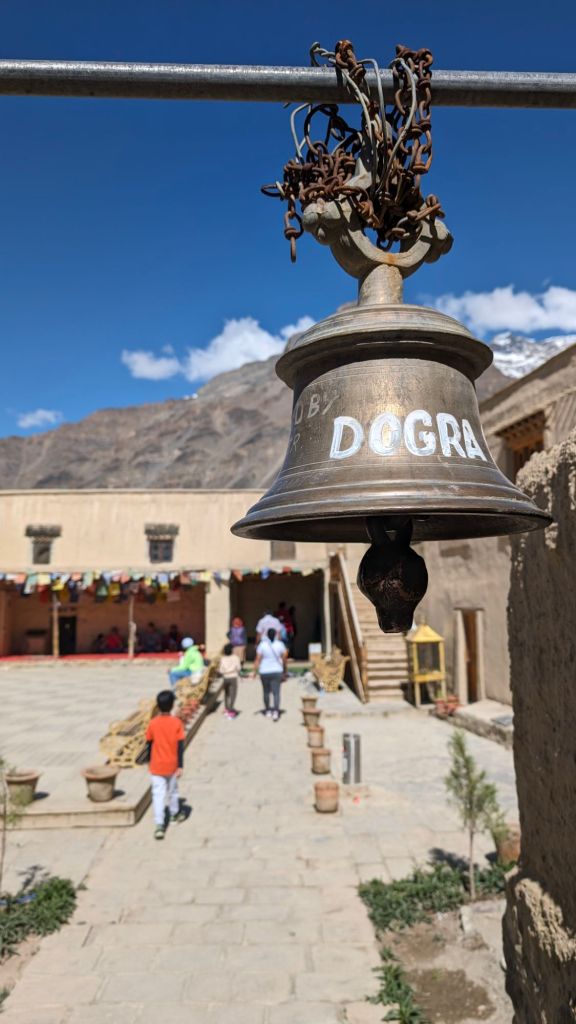
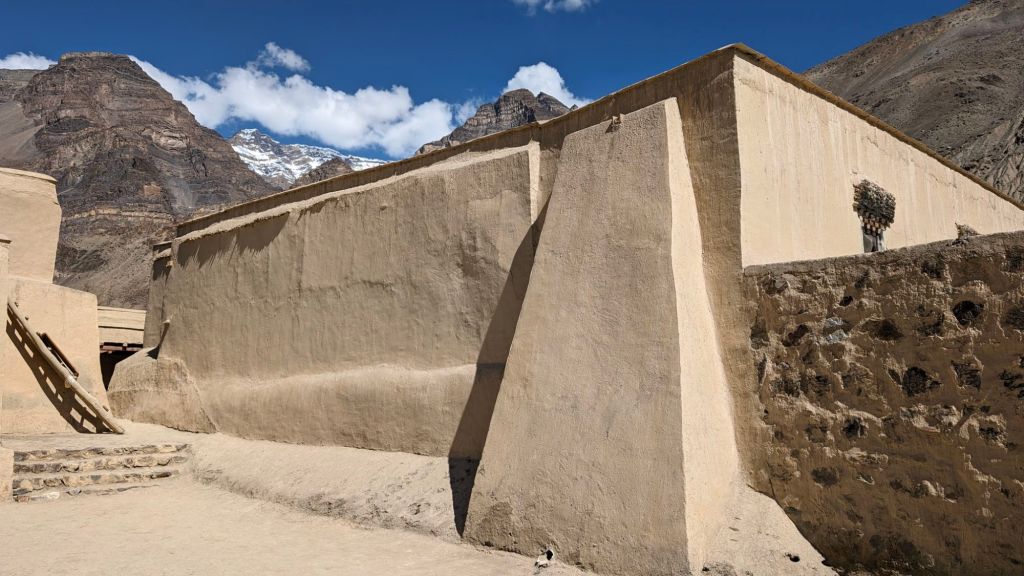

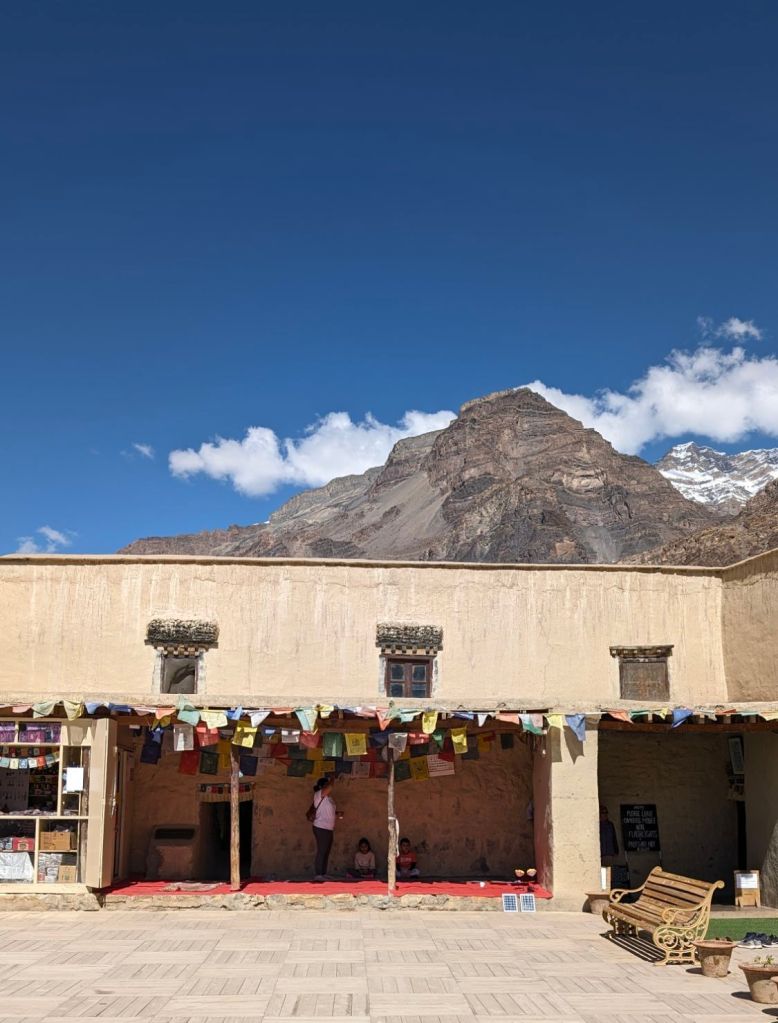
The monastery’s walls were adorned with mural paintings (frescoes). Some areas were dimly lit, requiring torches provided by the monastery to see the intricate details. The kids were excited to spot an idol resembling Lord Ganesha. A small window in the center of the rooms allowed sunlight to illuminate the main Buddha idol and a photo of the Dalai Lama.


From the monastery, we saw the Tabo caves and marveled at the resilience of those who came here to meditate in such harsh winters. The landscape was dotted with numerous mud stupas, some with stone piles inscribed with mantras or prayers. We also viewed the new monastery nearby where we watched the little monks doing their daily chores and in between having playful fights too.


When we came out of the monastery, I noticed a small green gate leading to a small and cute garden. The plant lover inside couldn’t help peeping in. It was filled with iris, alfa alfa, apple trees and many unknown plants for me.
Dhankar


Dhankar, meaning “fort” in the local dialect, was once the castle of Nono, the ruler of Spiti, and served as the capital of Spiti. You can read more about the village and its monastery here. We spent some tranquil moments in the main prayer room, lighting lamps and soaking in the peace. No photography was allowed inside these rooms.
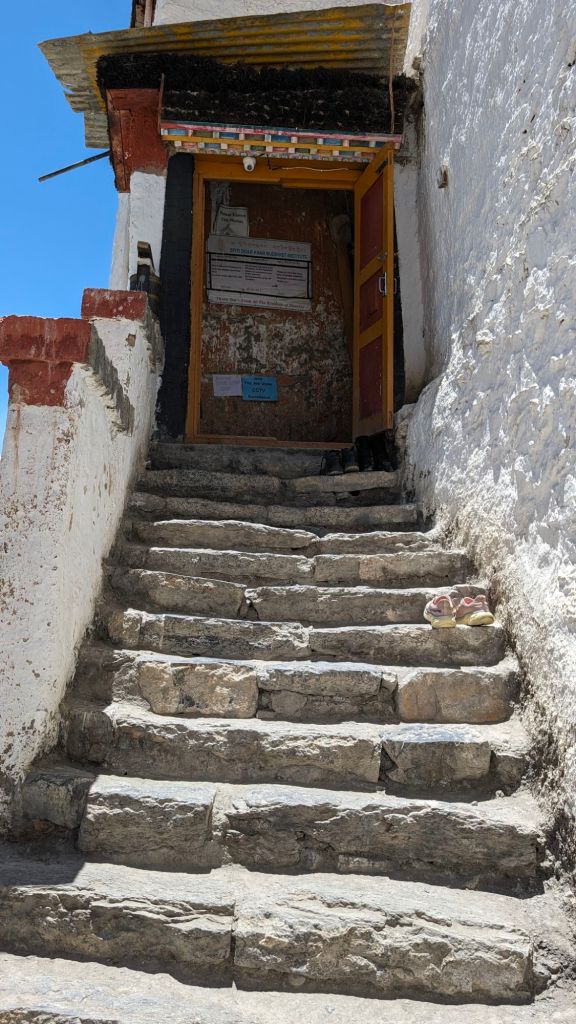

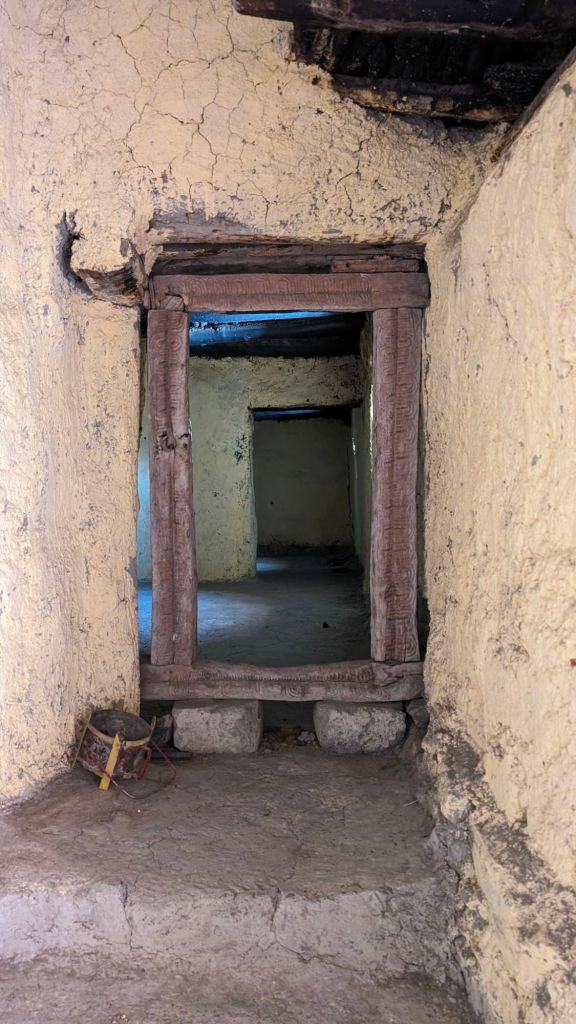
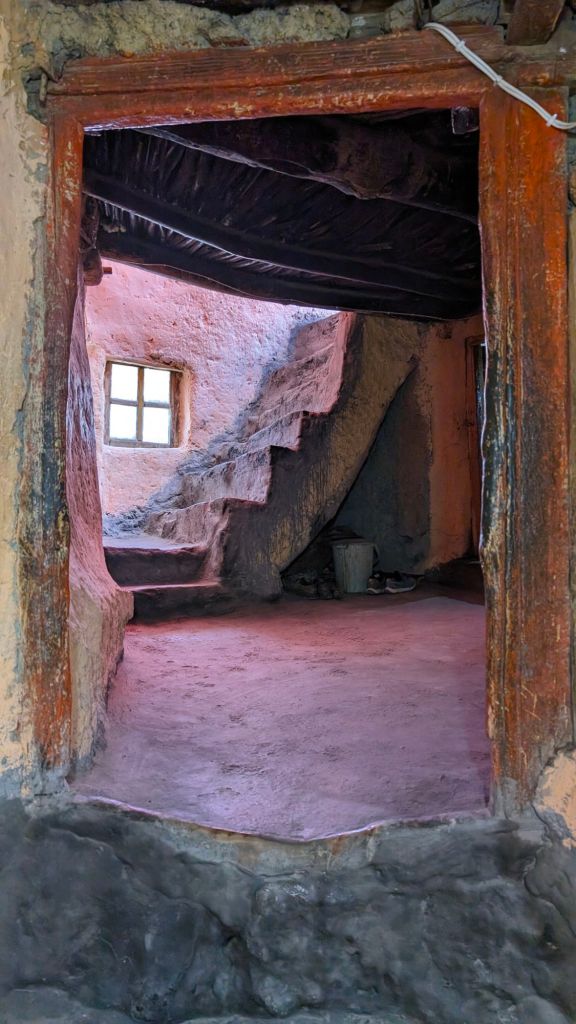


We also got to see the cave-like prayer room which is so silent and cold. The roof was very short and coins were stuck to the walls and roofs of it. We came out and explored the mountain views. Afterward, we enjoyed some Sea Buckthorn tea before setting off for Pin Valley.
Pin Valley


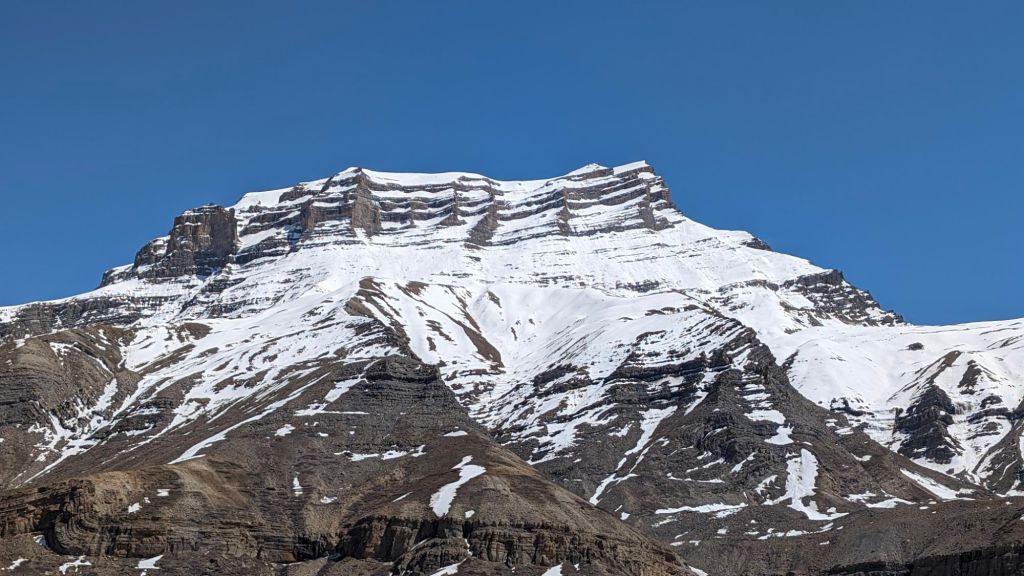


The drive to Pin Valley was bumpy but breathtaking, with small waterfalls of melted ice, snow-capped peaks, small villages, the Spiti River, metal bridges built by the army, and the grand mountains with their unique rock formations. We made this detour for the kids, and our kind driver took us through the villages of Pin Valley like Ka and Sangnam to let them experience snow.


On the way back, I craved tea but found no restaurants until we stumbled upon a small local tea shop. It turned out to be a great decision. We enjoyed local samosas made with potato filling and wheat flour covering, and the kids loved them so much they asked for more! We chatted with the shop owner about farming and education while school kids arrived, eager for chilled juice. The owner had to make fresh samosas for the kids as we had bought the only batch. The kids were requesting for a ride to their villages but we couldn’t fulfill it. Little N had many questions(and that’s our little question- kutty) on why they were walking and asking for a ride. It led to a beautiful discussion on the things which the kids think is normal.
Kaza
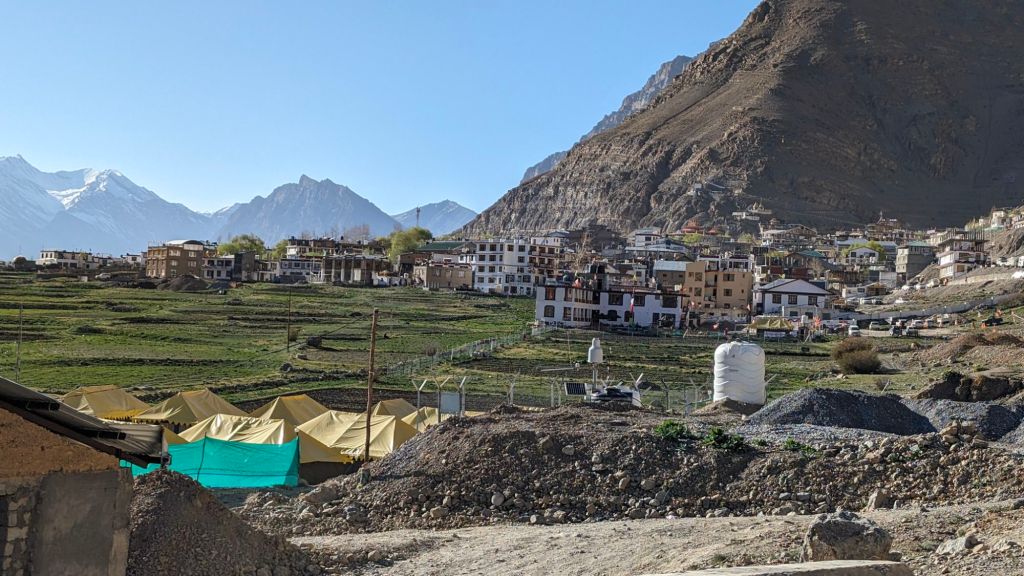
We arrived in Kaza, the subdivisional headquarters of the remote Spiti Valley. Our hotel was near the local market, but we lost our way on the narrow, crowded roads and decided to walk. The owner welcomed us with warm and tasty Sea Buckthorn tea.


Kaza’s market is a wonderful place to shop for souvenirs and gifts. After refreshing ourselves, we explored the stores. The first shop we visited was a vegetable stall. Amid the usual produce, I found Lingdi, a wild fern also known as Lungdu, Kissrore, or Kasrodh in Jammu. It needs thorough cleaning before being cooked into sabzis. We couldn’t find other local greens or vegetables, likely because we arrived just after winter.
We bought a few postcards and gifts for friends and family and decided to continue our shopping tomorrow.
A.
 MY LITTLE THOUGHTS LANE