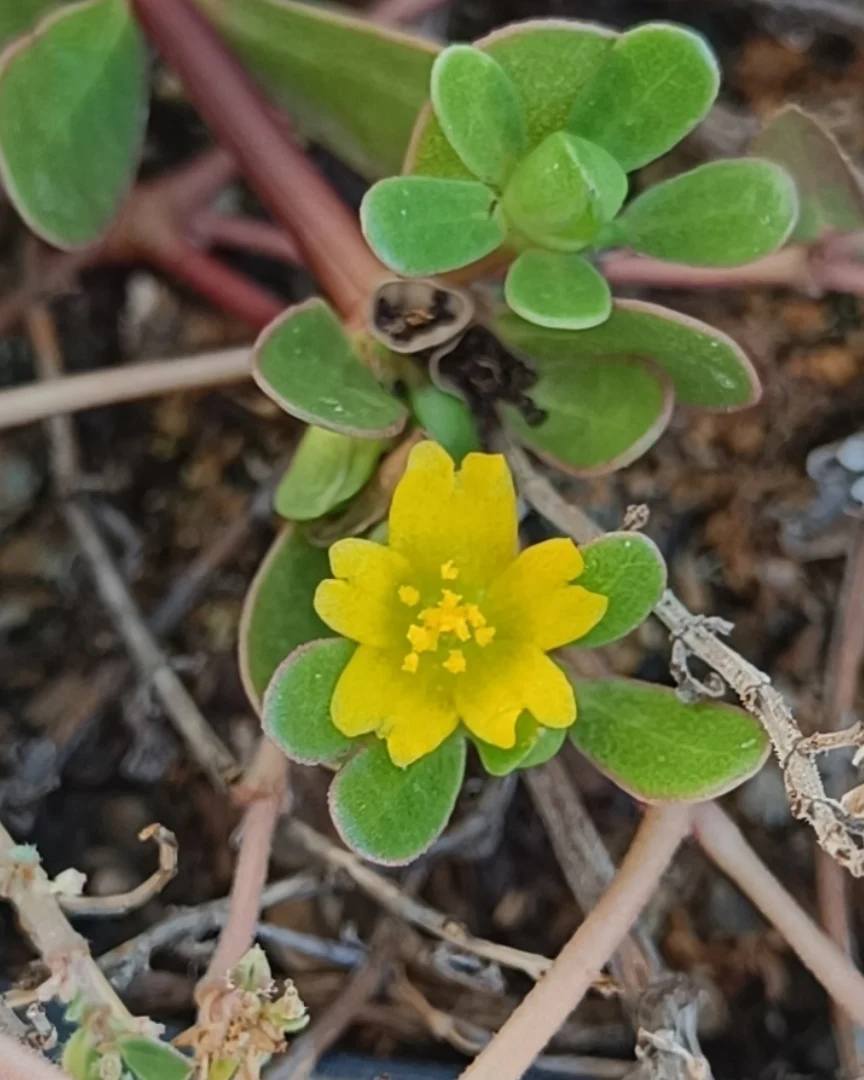
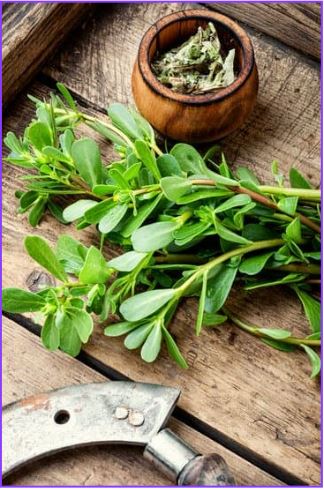
Purslane is found worldwide and is often considered a weed. Despite its humble status, it has been valued as a food source in many cultures for centuries. Purslane was used by ancient Greeks and Romans for its medicinal properties and as a food source. It was also known to be used in ancient Egyptian cuisine
It is highly drought-resistant and can thrive in poor soil conditions, making it a reliable food source in challenging environments. It is easily grown even in salty soils(and the taste is also citrusy-salty), hence it is called as ‘Uppu Cheera’ in Malayalam; Uppu means salt and Cheera means leafy vegetable/keerai. Its another name Manal cheera – because you can find it sandy soil(Manal- Sand). Another local name in Malayalam/Tamizh I heard is Parippu cheera, as its mainly cooked along with Dals. Kozhuppu cheera or Pasalai because it is little slimy(remember this plant is a succulent).
Isn’t it fascinating to know how our elders named the plants around?.
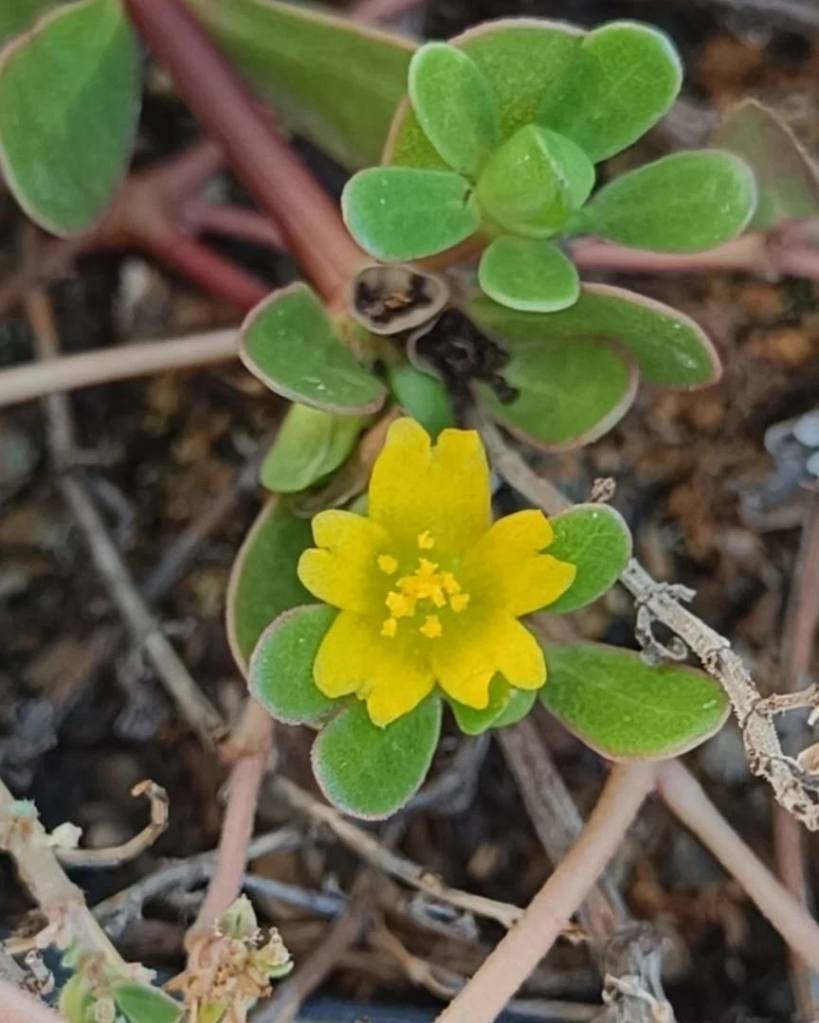
Botanical Name: Portulaca oleracea Family: Portulacaceae (Moss Rose family)
Common name from flowersofindia.net: Purslane • Adi: Dongal Oying, Gubor Oying • Apatani: Lai Hamang, Pathavi • Assamese: মালভোগ খুতুৰা শাক Malbhog Khutur Shaak • Bengali: বড় লনিয়া Bara Laniya, সি কলস Ghee Kalam, নুনিয়া Nunia • Bhojpuri: नोनीया साग Noneeya Saag • Bodo: Hangsogarmai • Dogri: कुल्फा Kulfa, लूनक Loonak • Garo: Gagakjapha • Gujarati: મોટી લુણી Moti Luni • Hindi: घोल Ghol, कांडली Kandli, लोणा Lona, लोनिया Loniya, नूनिया Nuniya • Kachchhi: કુનબો Kunbo, લાખા લુણી Lakha Luni, વડી લુણી Vadi Luni • Kannada: ದೊಡ್ಡ ಗೋಣಿ ಸೊಪ್ಪು Dodda Goni Soppu, ಕಿರುಗೋಣಿ Kirugoni • Kashmiri: नुनर् Nunar • Konkani: गोळ Gol • Malayalam: കൊഴുപ്പ Kozhuppa, മണൽചീര Manalcheera, ഉപ്പുചീര Uppucheera • Manipuri: Leibak Kundo • Marathi: घोळ Ghol • Mizo: An-Thau, Hlo-Thau • Nepali: गड्यॉउला झार Gadyaulaa Jhaar, कुल्फा साग Kulfaa Saag, नोना Nonaa, नून ढिकी Noon Dhikee, पाइते झार Paaite Jhaar • Nyishi: Osit Oyik, Pali Echi, Tadar-Oo • Odia: ଲୋଣୀ Loni • Persian: خرفه Khurfa • Punjabi: ਧਮਣੀ Dhamni, ਕੁਲਫਾ Kulfa, ਲੂਨਕ Lunak • Rajasthani: लूणखा Lunkha, लूंणक्यो Lunkio • Sanskrit: घोटिका Ghotica, लोणिका Lonika • Santali: ᱢᱚᱴᱟ ᱩᱨᱤᱪ ᱟᱞᱟᱝ Mota Uric Alan • Tagin: Tadar-Oo • Tamil: கோழிக்கீரை Koli-K-Kirai, பருப்புக்கீரை Paruppu-K-Kirai • Telugu: బొడ్డు పావిలికూర Boddu Pavilikura, గంగాబాయిలికూర Gangabaili Kura, పప్పుకూర Pappukura, పెద్ద పావిలికూర Pedda Pavilikura • Tulu: ಗೋಳಿಪದ್ಪೆ Golipadpe • Urdu: گهول Ghol, کانڐلي Kandli, لونا Lona, لونيا Loniya, نونيا Nuniya
Etymology:
Portulaca: The genus name “Portulaca” is derived from the Latin word “portula,” meaning “little gate.” This refers to the way the seed capsule of the plant opens. When the fruit is mature, the top part of the seed capsule pops off like a small gate, releasing the seeds.
oleracea: The species name “oleracea” comes from the Latin word “oleraceus,” which means “related to vegetables” or “edible.” This indicates that the plant is used as a vegetable or is edible.
Larval Host Plant
Hypolimnas bolina – Great Eggfly
Hypolimnas misippus – Danaid Eggfly
Nectar Plant
Talicada nyseus – Red Pierrot


Culinary Uses:
Did you know that the entire plant is edible, including the leaves, stems, flowers, and seeds? This versatility makes it a valuable addition to various dishes and cuisines. You can prepare Salads, dals, smoothies, pesto and a lot more with this greens. The seeds are grinded into flour!!! The ancient Greeks made a bread flour from purslane seeds and pickled its fleshy stems; Greek country cooks now serve purslane as a salad herb, either alone or with other greens. The Aboriginal folk use it as a binding agent when making seed cakes.
For now, I have shared a big list of the recipes in the last for you to try.
The nutrients in purslane are highly bioavailable, meaning they are easily absorbed and utilized by the human body.
- Rich in Omega-3 Fatty Acids: Purslane is one of the best plant sources of omega-3 fatty acids, which are essential for heart health.
- Vitamins and Minerals: It contains high levels of vitamins A, C, and E, as well as magnesium, calcium, potassium, and iron.
- Antioxidants: The plant is rich in antioxidants, which help protect cells from damage.
It also contains high amounts of oxalates (just as spinach does) so should not be consumed excessively by those susceptible to forming kidney stones.
Medicinal Uses:
- Traditional Medicine: Purslane has been used in traditional medicine to treat a variety of ailments, including inflammation, headaches, and gastrointestinal issues.
- Skin Health: It is sometimes used topically to treat burns, insect bites, and other skin irritations due to its soothing properties.
- Diabetes Management: Some studies suggest that purslane may help in managing blood sugar levels.
Gardening & Other Uses:
- Ground cover: A good low maintenance ground cover crop which is drought tolerant, creating a humid microclimate for nearby plants.
- Easily propagated: The seeds will mature in the pods even if the plant is pulled and left with its roots turned upward. Seeds can remain viable in the soil for several decades.
- Fodder Use: Used as fodder and is fed to poultry to reduce egg cholesterol
- Butterfly Host Plant of Danaid Eggfly(Hypolimnas misippus)
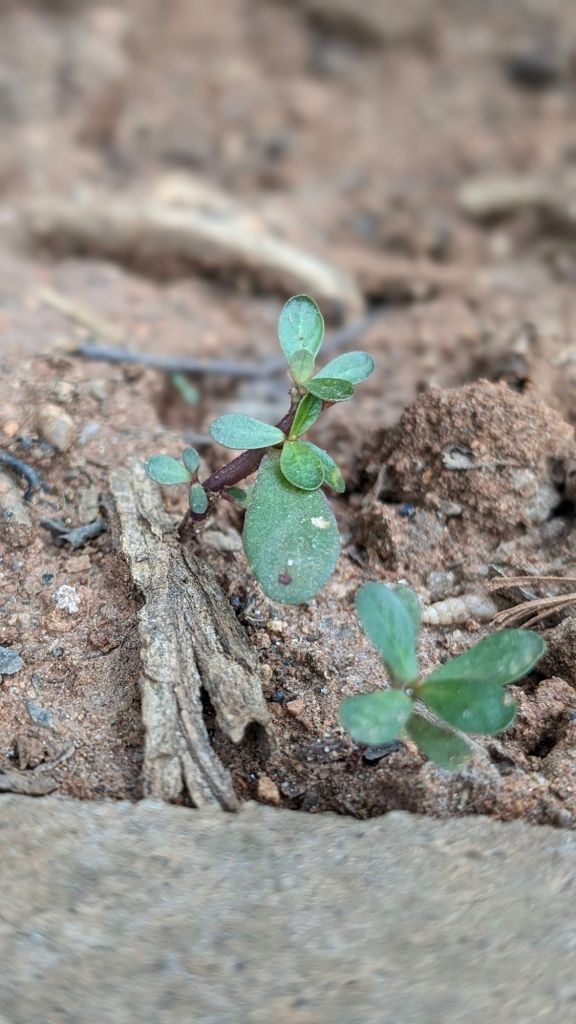
An interesting fact about this plant –
Source
The stems, leaves, and flower buds have a slightly tart or sour and salty taste. The intensity of flavor is influenced by the physiology of the plant. In hot, dry conditions purslane switches to photosynthesis using Crassulacean acid metabolism (C4) as a means of conserving moisture. In this system, the leaves trap carbon dioxide at night (instead of during the day as with normal photosynthetic process, when open stomata would allow valuable water to escape through transpiration) and convert this to malic acid. Then the malic acid, which has a sour flavor, is converted to glucose for storage during the day. So leaves picked early in the day when malic acid concentrations are highest will have the tartest flavor.
Note:
There are edible varieties as well as ornamental varieties, so please make sure what you harvest for cooking is edible species. The common names mentioned above can be same for other plants also as the local names are so confusing and can be interesting at the same time. For eg., kozhuppa cheera in Malayalam in some localities is Sessile joyweed. Noniya or Luni is Wild purslane or the summer purslane (or winter according to the region) aka Portulaca quadrifida. So make sure what you forage is edible :)
Also, if you are consuming it raw, please be mindful about the quantity. Consume less when raw as it may contain oxalate which may cause health issues.


Want to know more edible greens around us?
Check out this 400+ greens listed here!
Recipes
- Purslane Pesto
- Purslane Chimichurri – A garlicky, vinegary herb sauce/condiment from Argentina
- Purslane Dal
- Smoothie with Purslane, Pineapple & Ginger
- Salad #1
- Salad #2
- Salad #3
- Salad #4
- Stiry Fry with chayote
- Lentil Cheela with purslane
- Pumpkin Purslane Sabji
- Baby potatoes, brinjal and purslane curry
- Purslane Kadhi
- Dry Green Peas with Purslane
- Goat liver curry with purslane
- Purslane Fritter balls
- Purslane-Tuna Patties
- Fried/Baked Purslane
- Purslane Egg Cups
- Purslane Pistou
- Sweet Pickled Purslane
- Purslane Smoothie and Popsicle
- North African style Purslane
- Purslane Stew
- Cream of Purslane Soup
- Cucumber Purslane Slushie
- Salad #5
- Purslane and Avocado Tacos with Pico de Gallo
- Mushroom and Purslane soup
- Purslane pickle and Gazpacho recipes
- Salad #6
- Pickled purslane
- Sicilian Purslane Salad
- Turkish rice with tomato and purslane
- Purslane Dip
- Lebanese Bakleh
- Purslane chutney – Andhra style
- Purslane chicken curry
- Uppu cheera thoran
- Uppu cheera bonda
- Kozhuppa cheera thoran by Samagni
- Pasta sauce using Purslane
- Verdolaga sauce
- Verdolaga con queso
- Tacos de Verdolaga y Huevos – Tacos with Purslane and Eggs
- Scrambled Eggs and Purslane
- Purslane & Cilantro soup
- Goni Massoppu
- Goli bhajji Tambuli
- Kashmiri Nuner recipe
- Kashmiri Nunar chutney
- Turkish recipe with eggs
- Korean Purslane salad
- 4 Turkish Purslane recipes
- A Maharashtrian recipe
- Basil and Purslane pesto
Read more about Purslane:
- https://www.nativebatch.com/2019/08/16/purslane-the-omega-3-powerhouse/
- https://indianexpress.com/article/lifestyle/food-wine/beat-the-summer-heat-with-green-leafy-vegetable-kulfa-or-purslane-experts-answer-how-9211756/#:~:text=What%20is%20kulfa%3F,especially%20in%20the%20summer%20months.
- http://www.healthfooddesivideshi.com/2016/05/purslane-or-kulfa-ka-saag-greens-of.html
- https://www.paperwiff.com/juhiprakashsingh/post-7e4ba6e0-ad38-4613-96b0-d9e579337a17-6247eb2897770
- https://cnz.to/ingredients-fine-foods/45-things-to-do-with-purslane/
- https://www.youtube.com/watch?v=Rdcaj67nYAA&pp=ygUSdXBwdSBjaGVlcmEgcmVjaXBl
- The study here showed that purslane could cumulatively remove considerable amounts of salt from the soil if practical to cultivate as an intercrop all year round.
- A patented seed cake method of preparation
- https://www.growveg.com/guides/purslane-one-of-the-tastiest-edible-weeds/
A.

 MY LITTLE THOUGHTS LANE
Leave a comment