
Though the saying goes, “What’s in a name?”, I often find myself saying that names are highly subjective, especially when it comes to plants. Many local/common names overlap between different species, sparking endless confusion. The debate over which is the “real Ponnanganni”(Tamizh) or “Honagone”(Kannada) only gains more momentum and heat in gardening groups, turning a simple plant discussion into a passionate showdown. Another plant often caught in a web of confusion is Brahmi! (If you’d like to read more, check out my blog post dedicated to Brahmi.)
Ponnamganni name originates from Tamizh language and is a combination of two words: ‘Pon’ means gold and ‘aanganni’ can be ‘aagum-kanni(or kann-nee)’ means ‘your body will acquire a golden luster‘. It’s also said that eating these greens can sharpen your eyesight so much that you might even spot stars in broad daylight—a delightful nod to its traditional lore!
I fondly recall an elderly woman sharing her heartfelt description of naattu(native) ponnanganni and her words perfectly aligned with the characteristics of A. sessilis. With a tinge of sadness, she mentioned how difficult it has become to find these local, wild, and uncultivated greens in their neighborhoods, thanks to rampant urban development and relentless de-weeding programs. Her knowledge didn’t stop there. She eagerly shared that, to her understanding, there are different varieties of Ponnanganni: naattu Ponnanganni (the native kind), seemai/sikappu Ponnanganni (red-stemmed variety), vellai/pachai Ponnanganni (white/green-stemmed variety), and neer Ponnanganni (water-loving variety). She added that there might even be more varieties according to the region. She also explained how these plants adapt and behave differently based on factors like weather, soil type, and growing conditions. For eg- the leaves of A. sessilis would be much smaller if it is growing in dry, arid places compared to the places where it gets enough water/shade.
Here’s a look at the different plants I’ve come across that go by the name “Ponnanganni”:
Alternanthera sessilis

Common name from flowerofindia.net: Stalkless Joyweed, Sessile Joyweed, Dwarf copperleaf, Joyweed • Hindi: Garundi, Guroo • Manipuri: ꯐꯛꯆꯦꯠ Phakchet • Marathi: Kanchari • Tamil: Ponnanganni • Malayalam: Ponnankanni cheera, പൊന്നാംകണ്ണി ചീര • Telugu: Ponnagantikura • Kannada: ಹೊನಗೊನ್ನೆ Honagonne, ಹೊನಗೊನೆ, ಹೊನಗೋನೆ Honagone, ಹೊನಗನ್ನೆ Honaganne • Oriya: Madaranga • Konkani: Koypa • Sanskrit: Matsyaksi • Nepali: भिरिंगी झार Bhiringi Jhaar, आँख्ले झार AAnkhe Jhaar, भाले भृंगराज Bhaale Bhringaraaj, बिसाउने झार Bisaaune Jhaar, जिब्रे पाते Jibre Paate, दुबे झार Dube Jhaar • Mizo: Ngha-te-ril • Tangkhul: Phakchek
Etymology:
Alternanthera: Derived from the Latin words alternus (alternate) and anthera (anther), referring to the alternate arrangement of the flower’s anthers.
sessilis: This specific epithet comes from the Latin word sessilis, meaning “sitting” or “without a stalk,” referring to the plant’s leaves, which are typically sessile (attached directly to the stem without a petiole).
Most of the online/offline sites have mentioned Alternanathera sesslis as the botanical name for this greens but the photos of plant given is entirely messed up. My to-go site flowersofindia recently updated their pics with the right one for A. sessilis. Before that, eflora site gave me the detailed information on almost all Alternanthera species with accurate details and they also provided the right photo for the A. sessilis. Many botanists and similar enthusiasts, elderly people who have been growing and consuming across the Tamil Nadu/Kerala states have confirmed that this is the native and medicinal variety of Ponnanganni.
This is also called as koduppai keerai(Tamizh),kozhuppa cheera/കൊഴുപ്പ ചീര(Malayalam) as the leaves resembles the fish named as koduppai(koduva). Please note kozhuppa is another local name which is called for many varieties of greens.
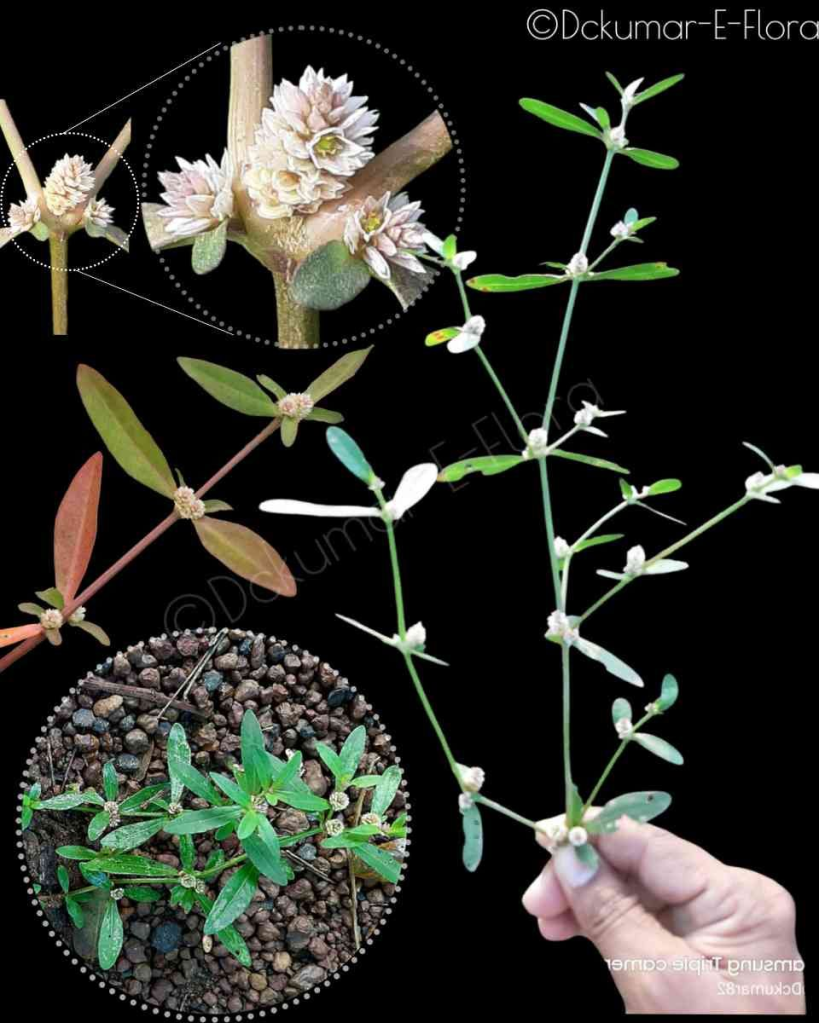
This variety is not only used for consumption but as a medicinal plant too. The juice of the leaves is used in the making of traditional kajal(കൺമഷി) along with other herbs like bhringraj(Eclipta prostata, കഞ്ഞുണ്ണി), Sahadevi(Vernoia cinerea, പൂവാംകുറുന്തൽ) etc.


I have noticed a red colored leaf variety in this but not sure of the ID. Hoping to find the photo I took from my 1000s of stash!
Alternanthera ficoidea

Common name from flowersofindia.net: Fig Joyweed • Marathi: कुसळ kusal • Telugu: అడవి పున్నాగంటె అలము Adavi Punnaganti Aalamu
From my notes: The local people in Bengaluru refer to it as Dodda Honagone/Hongone Soppu. A few of my Tamizh friends call this as Kaattu Poonannganni. In Malayalam it is Valiya ponnanganni(വലിയപൊന്നാങ്കണ്ണി)
Etymology:
Alternanthera: Derived from the Latin words alternus (alternate) and anthera (anther), referring to the alternate arrangement of the flower’s anthers.
ficoidea: This specific epithet derives from the Latin word ficus, meaning “fig,” and the suffix -oidea, which means “resembling” or “like.” The name suggests that the plant’s leaves may resemble those of the fig tree.
Nectar Plant – Source
Caleta decidia – Angled Pierrot
Euchrysops cnejus – Gram Blue
Tarucus balkanica – Little Tiger Pierrot
Zizula hylax – Tiny Grass Blue
Danaus chrysippus – Plain Tiger
Ypthima huebneri – Common Four-ring
Interestingly, I’ve noticed this plant growing almost everywhere, thriving in various conditions. A native to South America, and now naturalized & invasive in India. Its ability to spread and adapt so easily might be one of the reasons it has become such a familiar sight in the area. My mother and many like minded said that this wasn’t consumed in earlier days but now people are consuming it like any other greens. So if you are consuming, use the tender leaves after following the general guidelines.
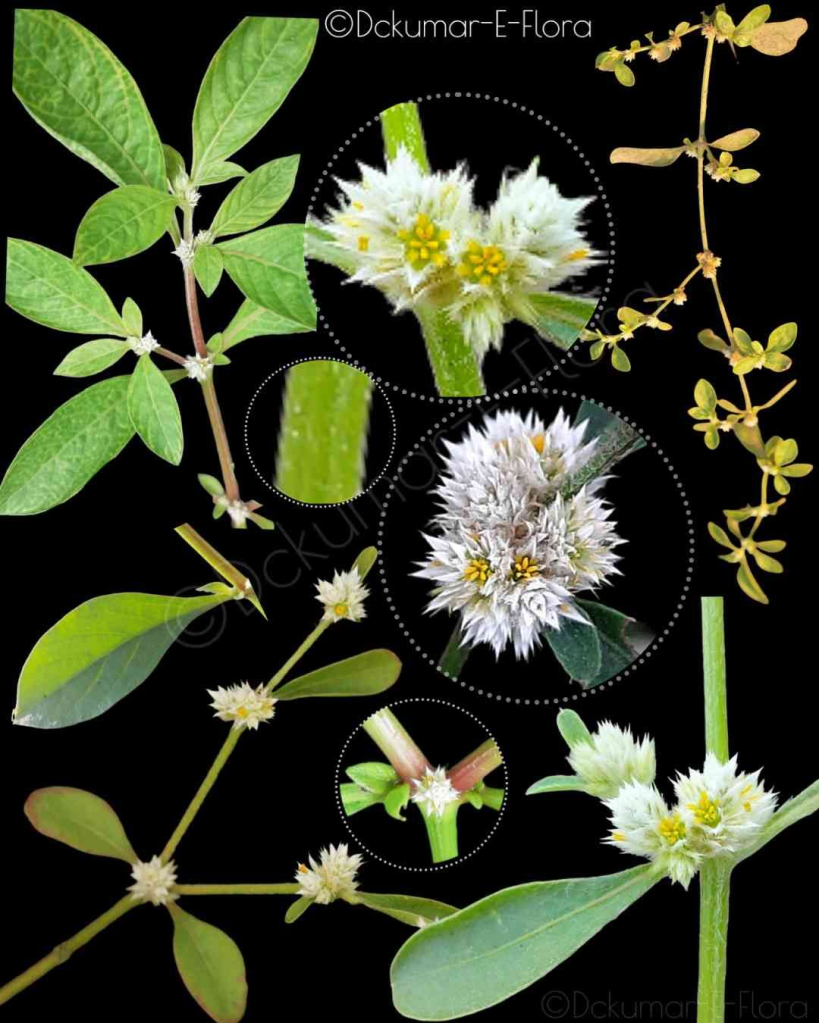

In the above picture, you can see 2 varieties of this. One with a smaller leaf and other with bigger ones. I am not sure if both of them are A. ficoidea.

This one was another species(I guess) which has red tinted stems. It has some features of A. paronychioides but wasn’t creeping like the main feature of the latter. .If you can help with the correct IDs, it would be of great help.
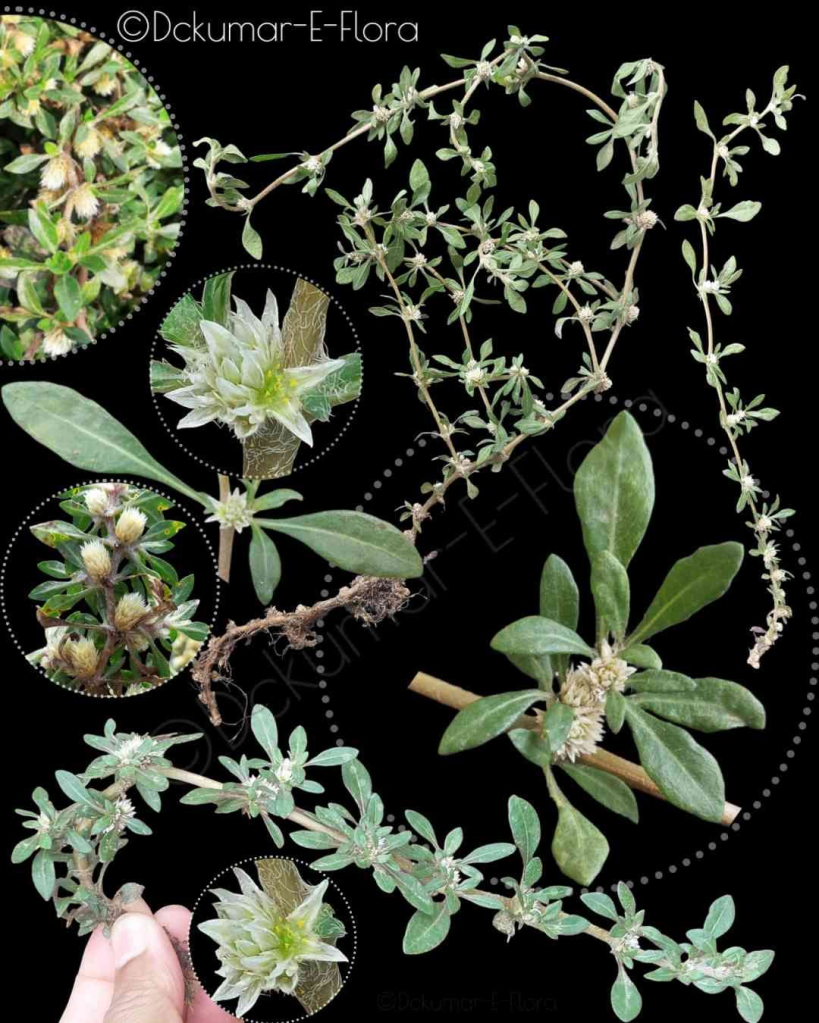
Alternanthera paronychioides


Common name: Smooth Joyweed
Etymology:
Alternanthera: Derived from the Latin words alternus (alternate) and anthera (anther), referring to the alternate arrangement of the flower’s anthers.
paronychioides: The name suggests resemblance to plants in the genus Paronychia, which share similar growth habits and morphology.
Low-growing, spreading ground cover that thrives in warm, wet climates.

During the Wild Edibles Walk held as part of Soppu Mela at Mysore, I learned from Shri Murali Gungurumale that there are as many as 12 different types of Honnagone Soppu.
Alternanthera brasiliana


Common name from flowersfindia.net: Joy Weed, Joseph’s Coat, Calico plant, Copperleaf, Bloodleaf
From my notes: Arunodayam,iodine,kaattu(കാട്ടു ചീര),murikootti(മുറി കൂട്ടി),chora cheera in Malayalam
Etymology:
Alternanthera: Derived from the Latin words alternus (alternate) and anthera (anther), referring to the alternate arrangement of the flower’s anthers.
brasiliana: Indicates its origin or initial discovery in Brazil, highlighting its native range.
A herbaceous plant used against inflammation, cough, and diarrhea in Brazilian popular medicine. The leaves are used in traditional medicine to treat cuts and minor wounds. The crushed leaf paste acts as an antiseptic and promotes healing. In folk medicine, the plant is used as an immune booster, particularly during fevers and infections.
The colorful foliage makes it a popular choice in landscaping, particularly in tropical and subtropical gardens. I have memories of chopping the leaves for Pookkalam during Onam ;)
Alternanthera bettzickiana/A. amoena/A. versicolor


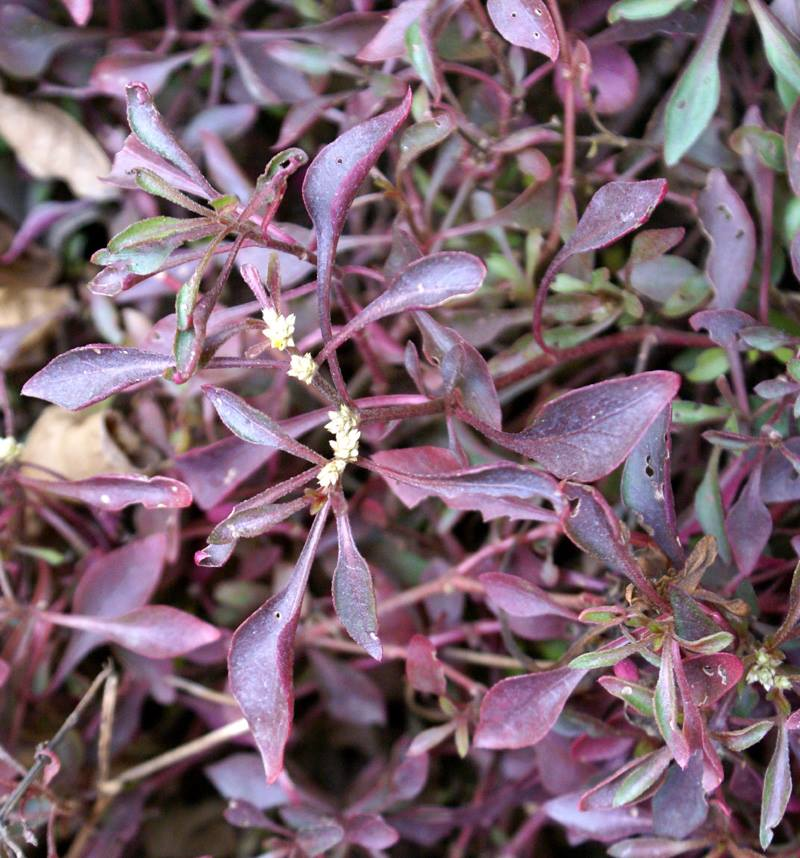
As per Kerala Agricultural University, Calico plant, is an invasive upland weed belonging to the family Amaranthaceae. Originating in tropical America, it is now widely found in the southern and north-eastern states of India, especially in Kerala, Karnataka, Tamil Nadu and Assam. In Kerala, A. bettzickiana is now appearing as a major weed in vegetable, fruit and tuber growing areas, and also in unutilized lands.


From my notes: Cheru cheera(), Akshara Cheera(അക്ഷരച്ചീര) in Malayalam, Sikappu/Seemai Ponnanganni in Tamizh
Etymology:
Alternanthera: Derived from the Latin words alternus (alternate) and anthera (anther), referring to the alternate arrangement of the flower’s anthers.
bettzickiana: Honors a person named Bettzick, likely a botanist or plant collector associated with the species’ discovery or description. Specific epithets named after individuals are a common tradition in botanical nomenclature.
This variety is known for its vibrant, colorful foliage, often cultivated as an ornamental plant in gardens and landscapes. It’s commonly used for decorative edging and thrives in tropical and subtropical climates. The color of leaves changes according to the temperature.
Alternanthera philoxeroides


From my notes: Known as Neer ponnanganni/Neeru honagone/Alligator weed/vellamkanni .
Etymology:
Alternanthera: Derived from the Latin words alternus (alternate) and anthera (anther), referring to the alternate arrangement of the flower’s anthers.
piloxeroides: This specific epithet comes from the Greek words philos (meaning “loving” or “fond of”) and xeros (meaning “dry”), combined with the suffix -oides, which means “resembling.” The name suggests that the plant thrives in dry or arid conditions, or it might be associated with an ability to survive in environments where water is scarce.
This plant is regarded as one of the most invasive aquatic species. While its tender leaves are edible, they tend to accumulate heavy metals such as iron (Fe), manganese (Mn), cadmium (Cd), lead (Pb), and zinc (Zn) in both roots and leaves. Therefore, it’s essential to carefully assess the surroundings where it grows before harvesting.
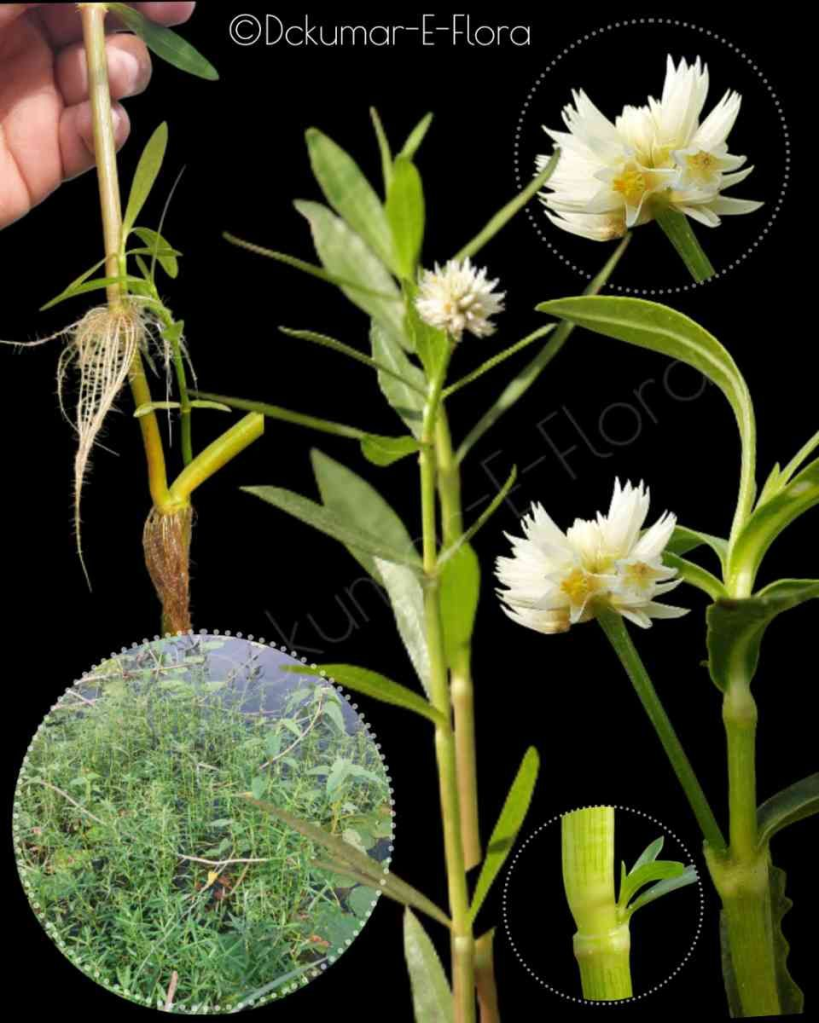
I have seen a variety in which the flowers are not on separate stalk like in the picture but more like A.sessilis. which means they are on the main stem itself.
Alternanthera pungens
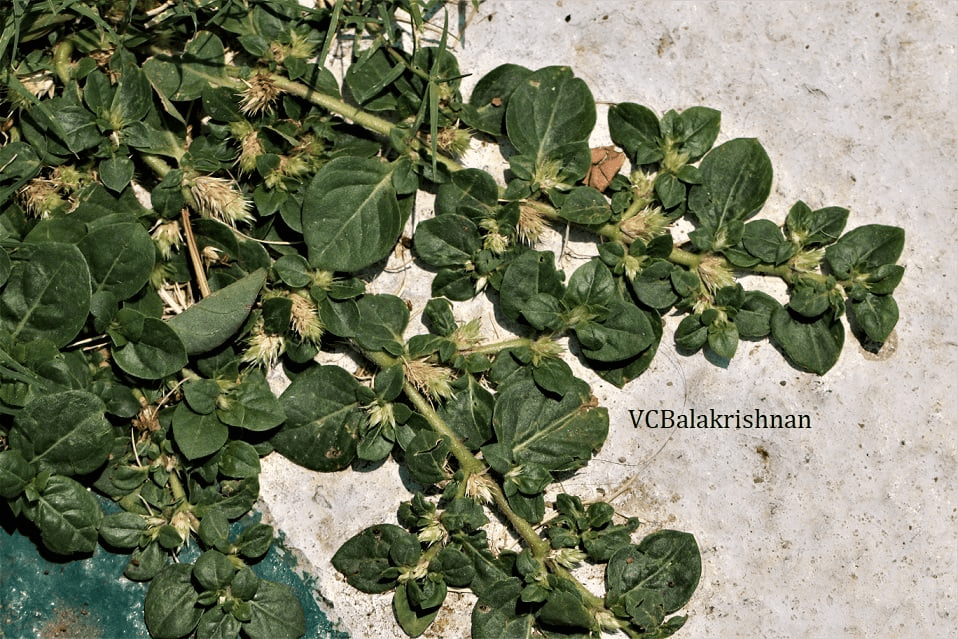
From my notes: Known as Mullu ponnanganni. Edible leaves
Common name from flowersofindia: Khaki Weed, Paper Thorn • Kannada: ಮುಳ್ಳುಹೊನಗೊನ್ನೆ Mullu honagonne .
Etymology:
Alternanthera: Derived from the Latin words alternus (alternate) and anthera (anther), referring to the alternate arrangement of the flower’s anthers.
pungens: This specific epithet comes from the Latin word pungens, meaning “sharp” or “prickly.” It refers to the spine-tipped flowers or other sharp features of the plant, distinguishing it from other species in the genus.
A Handy Guide to Identifying Confused Alternanthera Species
1.Inflorescence a head on raised stalk ……………………….(2)
1.Inflorescence a sessile head in leaf axils ………………….(3)
2.Plants with thick reddish leaves, atleast ¾ as broad as long;cultivated as hedge/border plant.. A. brasileana (incl.A. dentata)
2.Leaves not reddish, less than ½ as broad as long; wild plant of moist or aquatic habitats. …….2. A.philoxeroides.
3.Plants prostrate, mat-forming…………………………………..(4)
3.Plants erect or spreading not mat-forming………………….(5)
4.Leaves atleast ¾ as broad as long, stems and leaves rigid; flowers (tepals) spine-tipped……………. 3. A. pungens
4.Leaves usually less than ½ as broad as long, stems and leaves soft; flowers (tepals) not spine-tipped…..4. A. paronychioides
5.Leaves sessile, linear or narrowly oblanceolate; plant of moist or wet situations……………………. 5. A. sessilis
5.Leaves with distinct petiole; mostly cultivated……………….(6)
6.Leaves green or tinged with purple; mostly oblanceolate, gradually narrowed into petiole, less than ½ as broad
as long .6. A. bettzickiana (incl. A. amoena and A. versicolor)
6.Leaves green, not tinged with purple; mostly elliptic-ovate, more than ½ as broad as long, more sharply narrowed into short petiole…………………..…………………..……… 7. A. ficoidea
Sourced from eflora , collated by Satish Phadke & Gurcharan Singh
References
Social media articles from VC Balakrishnan, Eflora, local foragers
Note:
Plants popular in botany often come with their own set of challenges, primarily due to the development of an overwhelming number of hybrids and cultivars. This has created a significant gap in proper documentation, making accurate identification a daunting task.
In the case of Alternanthera, varieties like A. ficoidea, A. brasiliana, and A. bettzickiana are widely favored for their versatility. They are commonly used as ground covers, borders, short hedges, potted plants, and even on vertical wall gardens. Their appeal lies in the abundance of shapes, sizes, and vibrant shades they offer. However, this diversity often blurs the lines of identification, making it challenging to distinguish one from another. The need for comprehensive and accessible documentation is more crucial than ever in this evolving horticultural landscape.
This observation stems from an in-depth conversation in the Indian Flora group, highlighting the reasons behind the persistent confusion surrounding Alternanthera species. Sharing it here to understand why accurate identification is so challenging for this genus.
Disclaimer
Some of the Alternanthera species are known for its accumulation of heavy metals such as iron (Fe), manganese (Mn), cadmium (Cd), lead (Pb), and zinc (Zn) in both roots and leaves. Therefore, it’s essential to carefully assess the surroundings where it grows before harvesting. Especially, A. ficoidea and A. philoxeroides.
Recipes
Recipes often refer to ‘Ponnanganni’ or ‘Honagone’ but they may use any of the above varieties. For the best results, opt for tender leaves harvested from clean, uncontaminated areas. Ensure they are thoroughly washed and cooked well to avoid potential risks. Additionally, consume in moderation and avoid making it a daily part of your diet if you have any concerns or uncertainties.
- Kalavai Keerai by Deepa, Paticheri
- A set of recipes from cookpad
- Keerai kootu
- Keerai thogayal
- Keerai sambar
- Keerai poriyal
- Bhangru Saag, Soup & Kachru
- Magaru ghaa leaves saag, Masala oats, Raita
- Bassaru and Soppina Palya
- Honagone Soppu Pulav
If you are interested to learn more about wild edible greens, I have listed more than 400 wild edible greens which are around us but we were not aware of !
Now, tell me which is the real ponnaganni?
Archana.


 MY LITTLE THOUGHTS LANE
Leave a comment