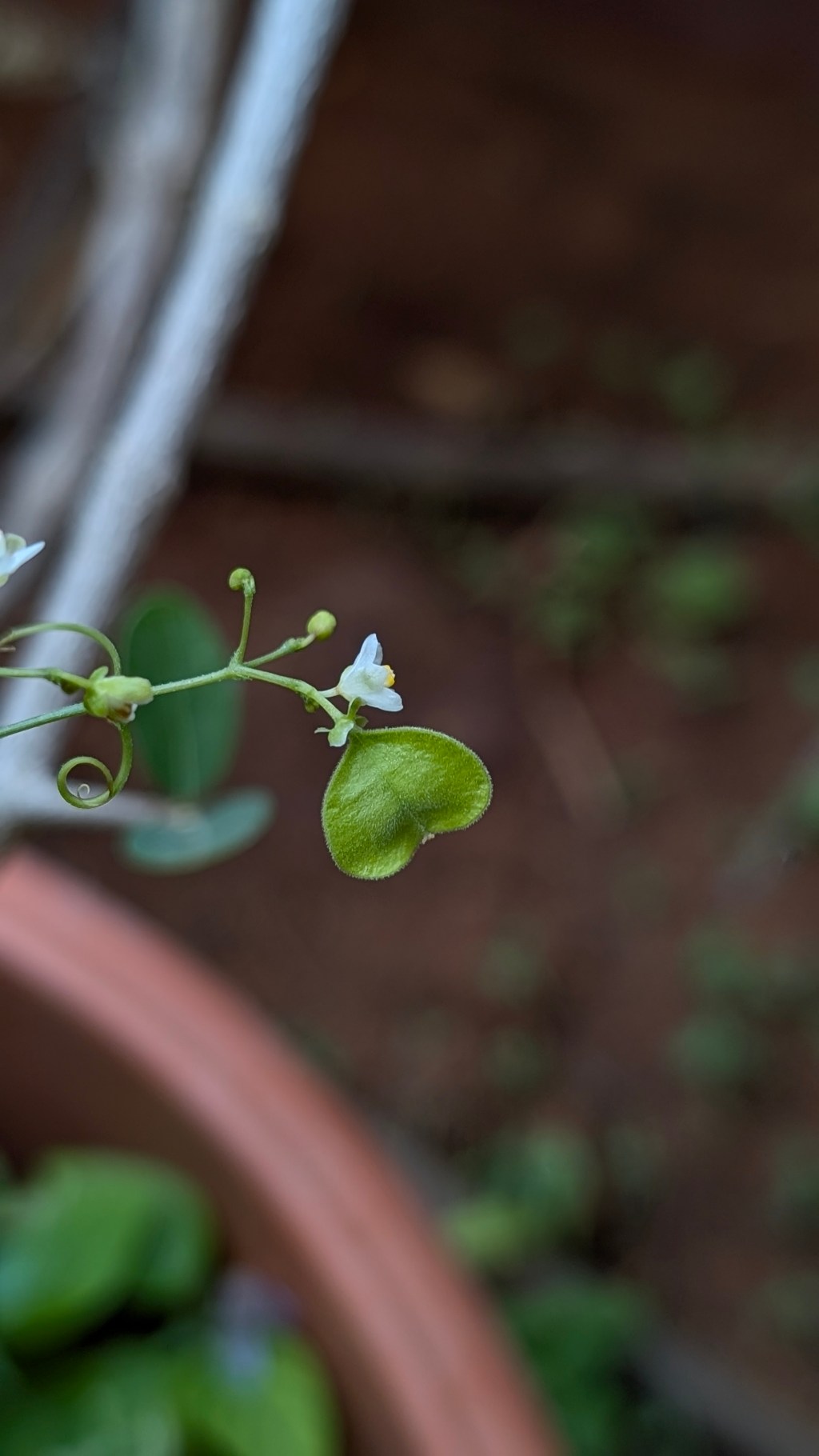
Balloon vine aka Uzhinja(ഉഴിഞ്ഞ) is one among the sacred Dashapushpams of Kerala and the first time I would have seen this plant was during the school youth festivals. Wondering how? I used to participate in Thiruvaathirakali dance competitions and its not just the synchronicity and elegance of dancers that matter, when it comes to the points, we must even get dressed the same way as per tradition. One of that list includes wearing the dashapushpam on hair. Unlike the name Dashapushpam which is 10 flowers, it is called for 10 plants. And it was our dance teacher’s responsibility to bring all the 10 plants for us. That’s how I met uzhinja!
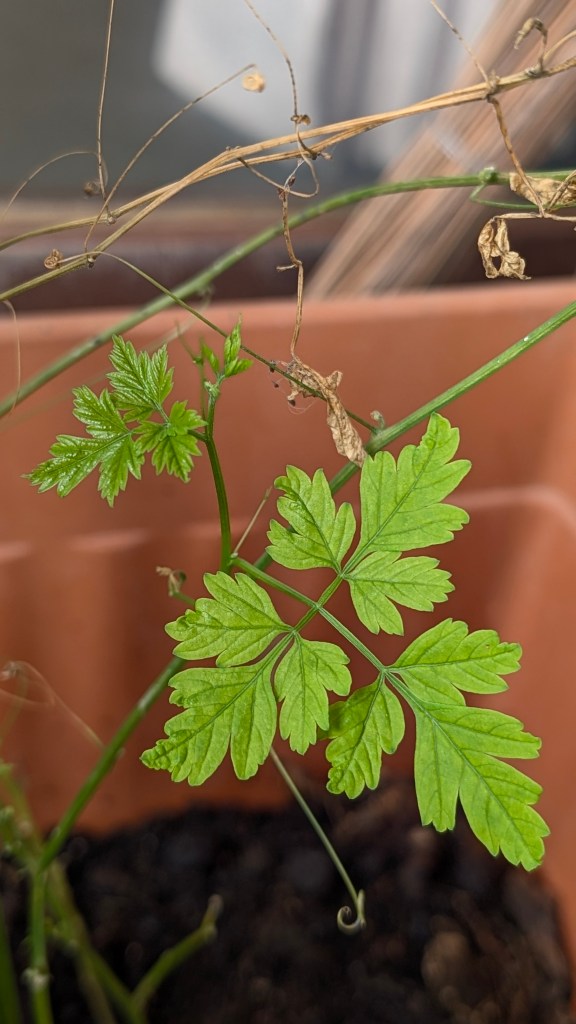
The plant is a climber which is quite sturdy, thrives in poor soil, adverse weather, drought , pollution or saline soil. Some of the countries have declared it as invasive also. As per eflora of India, there are 2 species Cardiospermum corindum(Kaattu mudakathan) and Cardiospermum halicabum. I also have noticed a few plants in my ancestral home shows a shrubby behavior also.
Botanical name: Cardiospermum halicacabum
Family: Sapindaceae (Soapberry family)
Common names from flowersofindia.net: Balloon Vine, Love-in-a-puff, heart pea, heartseed • Assamese: কপাল ফুটা লতা Kapaal Phuta Lata • Hindi: कानफूटा Kanphuta, कपालफोड़ी Kapalphodi • Kannada: ಅಗ್ನಿಬಳ್ಳಿ Agniballi, ಬೆಕ್ಕಿನ ಬುಡ್ಡೆ ಗಿಡ Bekkina Budde Gida, ಬೆಕ್ಕಿನ ತೊಡ್ಡಿನ ಬಳ್ಳಿ Bekkina Toddina Balli, ಚಿಟಕಿ ಹಂಬು Chitaki Hambu, ಎರುಂಬಳ್ಳಿ Erumballi, ಜೋತಿಷ್ಮತಿ Jotishmati, ಕನಕಾಯ Kanakaaya, ಮಿಂಚುಬಳ್ಳಿ Minchuballi, ಕಂಗುಂಗೆ Kangunge, ಕಂಗೊಂಗೆ Kangonge, ಬುಡ್ಡಕಾಕರತೀಗೆ Buddakaakarateege, ಕಟಭಿ Katabhi • Konkani: कानफुटी Kanphuti, कपाळ फोडी Kapala Phodi • Malayalam: ജ്യോതിഷ്മതി Jyotishmati, കറുത്തകുന്നി Karuttakunni, പാലുരുവം Paluruvam, ഉഴിഞ്ഞ Uzhinja • Manipuri: ꯄꯣꯛꯂꯥꯑꯣꯕꯤ Poklaobi • Marathi: कानफुटी Kanphuti, कपाळ फोडी Kapal Phodi • Nepali: ज्योतिष्मती Jyotishmati, कपाल फोडी Kapaal Phodi, केश लहरा Kesh Lahara • Odia: ଜ୍ଯୋତିଷ୍ମତୀ Jyotishmati, ଫୁଟୁ ଫୁଟୁକା Phutu Phutuka • Sanskrit: कर्णस्फोटा Karnasphota, स्फुटवल्कली Sphutavalkali • Tamil: கொற்றவன் Korravan, முடக்கொற்றான் Mutakkorran • Telugu: బుడ్డకాకర Buddakakara, జ్యోతిష్మతి Jyotishmati • Tibetan: ཀ་ཀེ་ད Ka Ke Da • Tulu: ಉರುಂಡೆ ಬೂರು Urunde Booru
Etymology:
Cardiospermum: From Greek: kardia (καρδία) = “heart” and sperma (σπέρμα) = “seed”. → “Heart-seeded plant” – the seeds of this climber are black with a distinct white heart-shaped spot, which inspired the name.
halicacabum: From Greek/Latin roots: halix = “salt” (sometimes interpreted as sea) and cacabum = “small container / capsule”
So collectively it is “twining water plant” or “water-loving vine.”
More accepted meaning: “small, salt-like bladder/capsule.”
This refers to the plant’s inflated, papery, balloon-like fruits, which look like little bladders or balls.
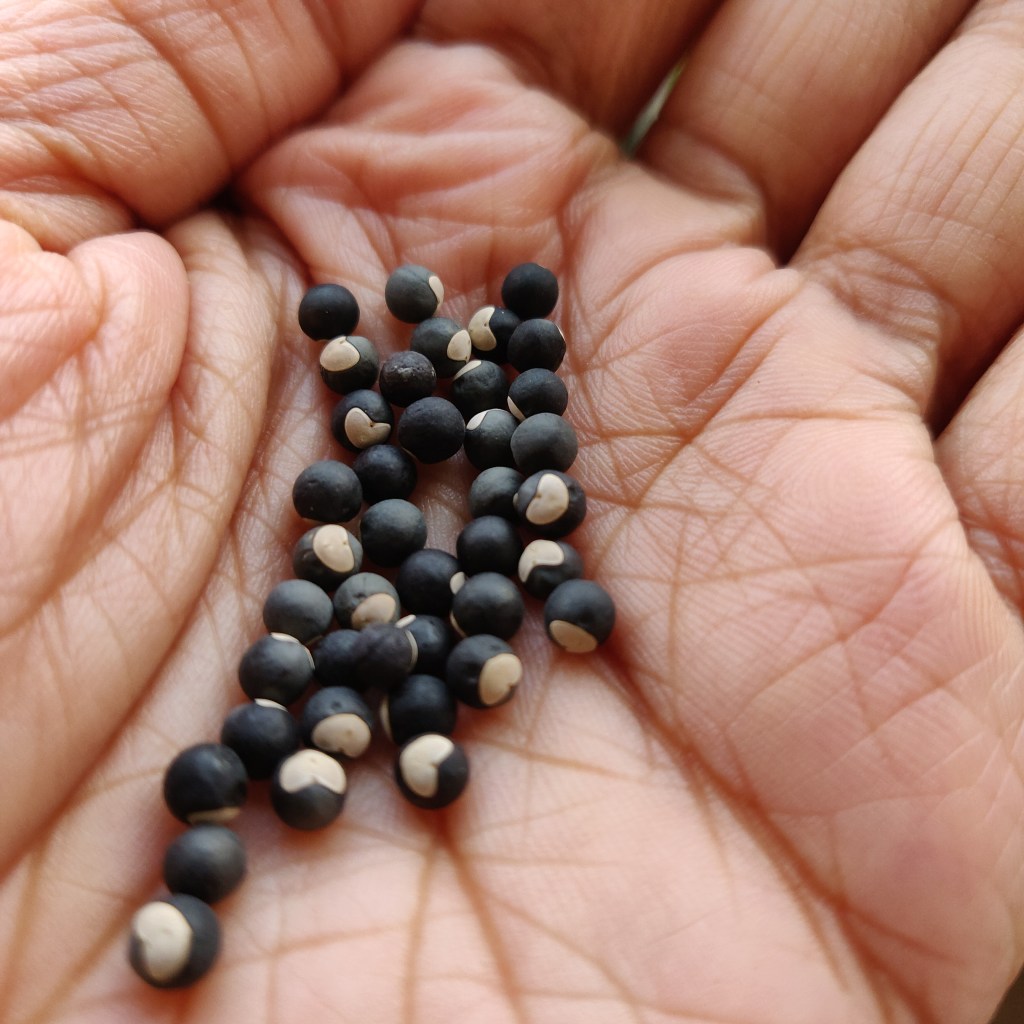
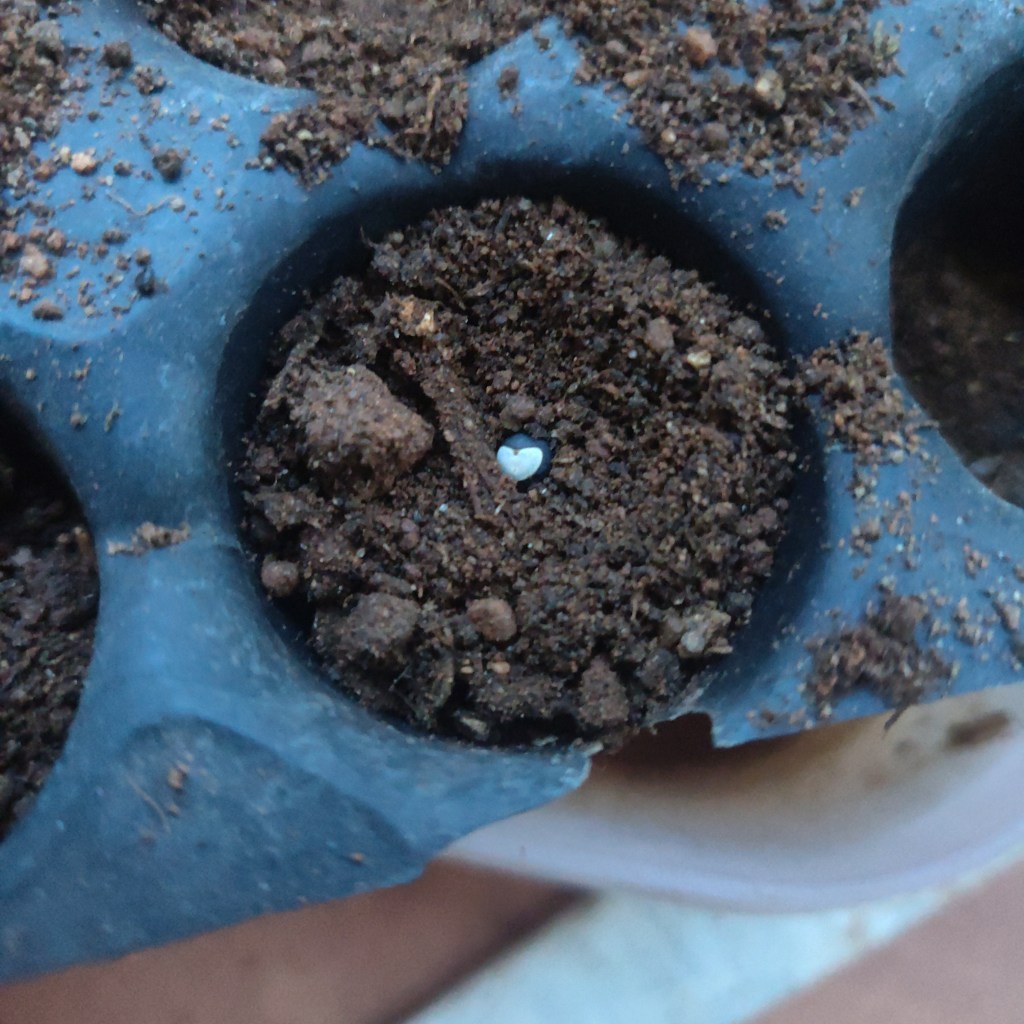
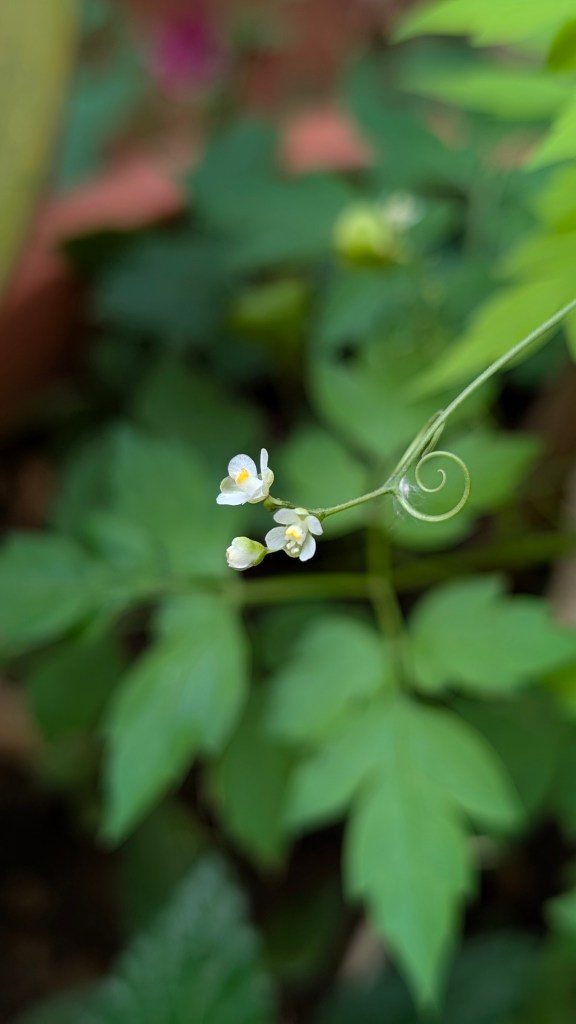
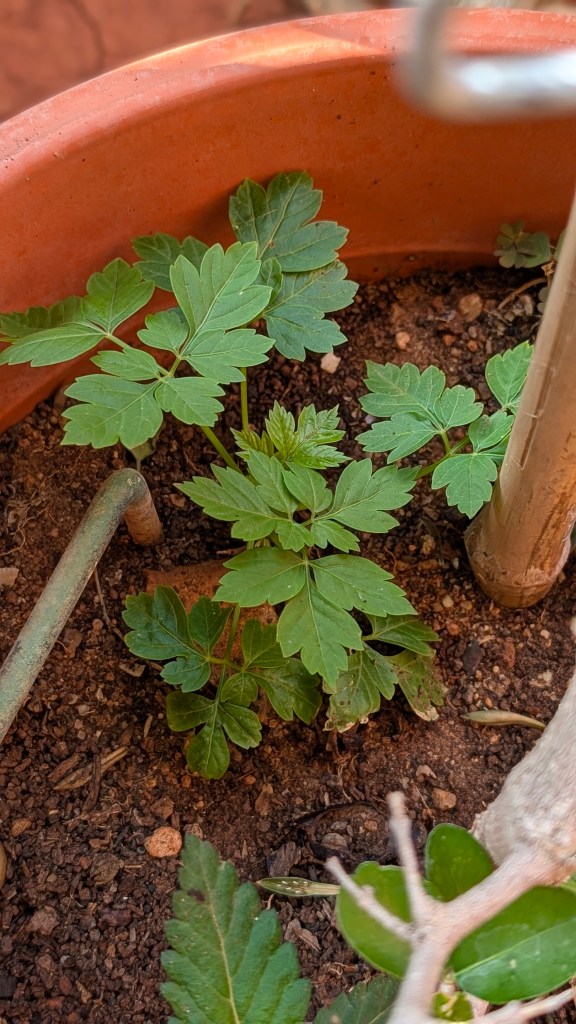
It is one of my favorite plants to click photographs. Though it widely grows in Kerala, I noticed it closely when a good friend of mine, Pradeep shared a small sapling during Covid times. Bounded to stay indoors those days. I have captured every single growth of that plant. I am not quite sure what attracts me more to this plant – Is it – the trifoliate leaves, the cute small white flowers attached to the tendrils, the balloon/lantern like seed pods or the little black seeds etched with a white heart 🤍. From sowing, getting the leaves, tendrils, buds, flowers and seeds, every single aspect of is beautiful. No wonder why it is called ‘love in a puff’!!
Family: Sapindaceae (Soapberry family)
Common names from flowersofindia.net: Small Balloon Vine • Kannada: dodda bekkina budde balli • Telugu: boodahcacarathega, buddakakaratige, chinna buddabusara
Etymology:
Cardiospermum: From Greek: kardia (καρδία) = “heart” and sperma (σπέρμα) = “seed”. → “Heart-seeded plant” – the seeds of this climber are black with a distinct white heart-shaped spot, which inspired the name.
corindum: The exact origin is less clear. It is likely derived from the Coromandel Coast (southeastern India), where this species was first described/collected by early European botanists. Hence, corindum can be interpreted as “from Coromandel” (India).
One day while talking to one of my aunts who also happened to be a homoeo doctor, mentioned a medicine in which this plant is used for treating skin ailments like psoriasis, itching , eczema etc. I started to ask more people about how they are using in Kerala. While a few use it as thaali, the natural shampoo, as the leaves has saponins, some vaguely remember the seeds being used instead of soap. When it comes to consumption, Keralites adds the leaves(along with other medicinal plants) in the marunnu kanji or karkkidaka kanji during the month of Karkkidaka. In Tamil Nadu, it is added in rasam, while making dosa, chutney etc.
In an informal conversation with a neighbor in my apartment, she said they used to make concoctions when they experience joint pain especially during/after a fever. She also shared couple of other things which is part of her paatti-vaidyam(grandmother’s medicine). She is from Tamil Nadu, so she could help me with the name – Mudakathan/Mudakarutan/Mudakatran Keerai – “Mudakku vaathathai pokkuvathal mudakarutan”. Mudakku Vaatham is Rheumatoid Arthritis (RA), a chronic autoimmune disease that causes inflammation, pain, and swelling in the joints, often affecting both sides of the body. The scientific studies have proved that the balloon vine possesses anti-inflammatory properties that may help with arthritis as it has potent anti-inflammatory compounds/flavonoids, such as apigenin, luteolin, and chrysoeriol.
The leaves have been used in cooking various dishes like rasam, adding it to dosa batter, chutney etc.
Recipes
- Green Dosa, Rasam and Thuvaiyal
- Indravalli Dosa by Deepa, Paticheri
- Dosa, Rasam, Podi, Soup, Chutney
 MY LITTLE THOUGHTS LANE
Leave a comment