
The first time I got to hear about Silver cockscomb was as ‘Kurdu’ in Pune from a lady whom I met at a local market .She said Kurdu comes in that local market during monsoons only. I tried searching it during the monsoons, but couldn’t find any.

Botanical Name: Celosia argentea L. var. argentea Family: Amaranthaceae (Amaranth family)
Common names from flowersofindia.net: Silver Cockscomb, White Cockscomb, Flamingo Feathers, Wheat Celosia • Hindi: सिलमिली Silmili, Gadrya, Garke, गरखा Garkha, सिलवारी Silvari • Kannada: ಅಣ್ಣೆಸೊಪ್ಪು Anne soppu, ಹಣ್ಣೆಸೊಪ್ಪು Hanne soppu • Marathi: कुरडू Kurdu, कुरदा Kurda, Morachendya • Nepali: Seto change, सिताभारका Sitavarka • Rajasthani: गर्खा Garkha, इमर्ती Imarti • Sanskrit: मयूरशिखा Mayurasikha, Rudrajata • Tamil: Makili-k-kirai, பந்நை கீரை Pannai keerai • Mizo: Zamzo
Etymology:
Celosia: From Greek kelos (κηλός) = “burned” or “flame-like.”
The name refers to the plant’s bright, flame-shaped flower clusters that resemble flickering fire. → So, Celosia means “flame-like plant.”
argentea: From Latin argenteus = “silvery.” This refers to the silvery or shining appearance of the flowers, especially in the wild form (before breeding produced red, pink, or yellow cultivars).
Celosia argentea is considered an invasive alien plant species and a troublesome weed in various regions of India.
Quick Identification Field Guide for Beginners
- Leaves: Long, narrow to lance-shaped leaves (about 5–15 cm), smooth edges, pointed tip; arranged alternately along the stem.
- Color: Bright green (some varieties slightly reddish on stems or veins).
- Texture: Soft and tender when young; not fleshy, not hairy.
- Stem: Upright, slender and branching; green to slightly reddish; plant usually grows 30–100 cm tall.
- Flowers: Very small flowers packed into a soft feathery spike (plume) at the top; silvery-white to pale pink in wild forms.
- Habitat: Common in open sunny places — wastelands, roadsides, fallow fields, garden edges and disturbed soil, especially after rains.
Later, when I moved to Bangalore(15 years back), I started to hear a lot about it as ‘Anne Soppu’, which many fondlingly recollected as their childhood favorite soppu(greens) which they have foraged from fields for free. Some even have some sweet memories collecting them along with their friends or siblings how they happily competed with each other to see who collected more. But I couldn’t find it in markets or any vegetable vendors then. Some call this as Kolu Anne soppu as the leaves are long and thin, some call another broad leaved variety as Battalu anne(Battalu means bowl) soppu or Battluanne soppu. My guess ~ it is must be either Digera muricata or Celosia polygonoides Retz.

Also called as Arkberike Soppu, False Amaranth

I grew up seeing many ornamental varieties of Celosia in my childhood. The most fascinating ‘Kozhipoo’ or the Cockscomb flower/ Celosia cristata which used to come during Onam is one among them. I hardly knew then that this particular variety, known as Mawal, is used in Kashmiri cuisines for natural food coloring. It is dried and used in making dishes like Rogan Josh or a tea. It not just imparts a color, it also gives an unique flavour as well as health benefits(a source of vitamins, minerals, and antioxidants, with some traditional uses to support digestion and eye health)

When me, along with my friend, Subhashini, started to conduct workshops on foraging the local wild edible greens and cooking traditional dishes with the harvest, we got to see this greens more often. Thanks to Nature and the farmers who still let them grow and consume them. It is naturally grown after the Ragi harvest and when the rains start.

Anne soppu is rich in Calcium, iron and other vitamins. It can be cooked with dal, or any lentils, or with mixed greens to make Massoppu and have it with rice or Ragi Mudde.

In Telangana as State festival Bathukamma* is approaching the demand for these flowers increase as it is used in decorating of Bathukamma, a plate of flower decoration but the sad part is these flowers are dyed in artificial colours which cause water pollution when immersed in water. Gunugu is one of the main flowers in the floral decoration(Bathukamma) offered to Devi.
*Bathukamma – a nine-day floral festival celebrated by women in Telangana, India, typically in September or October during the Navratri period. The festival celebrates life and nature, honoring Goddess Parvati, and involves arranging flowers in a conical shape, singing folk songs, and immersing them in water on the final day. Read more about this festival here and here
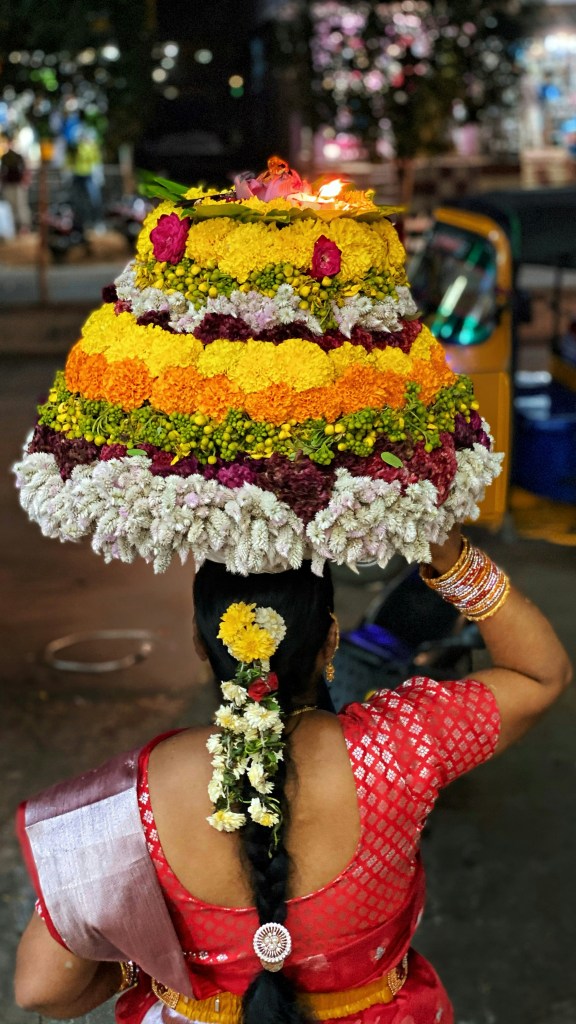
Men of the family go out early scouting these flowers so that their women can make Bathukamma. Though many varieties of flowers are used in making Bathukamma, White Celosia flowers are immersed into different colors in order to give a makeover to Bathukamma.
Isn’t it so fascinating to see how the festivals are woven so beautifully with the plants, flowers and food that grow around us in that very season? Our ancestors didn’t choose these elements randomly, they observed nature closely. They understood which plants thrived when, what foods nourished the body in each season, and how rituals could help communities stay connected to the land. Festivals became a celebration of abundance, ecology, and wellbeing, a beautiful reminder that culture and nature are deeply intertwined.
Even today, when life feels rushed and modern, these plant-based traditions quietly bring us back to our roots. They invite us to pause, notice seasonal changes, and honor the local biodiversity that has always supported us.
Recipes
Read more
- Memories about Pannai Keerai by Subhashini
 MY LITTLE THOUGHTS LANE
Leave a comment