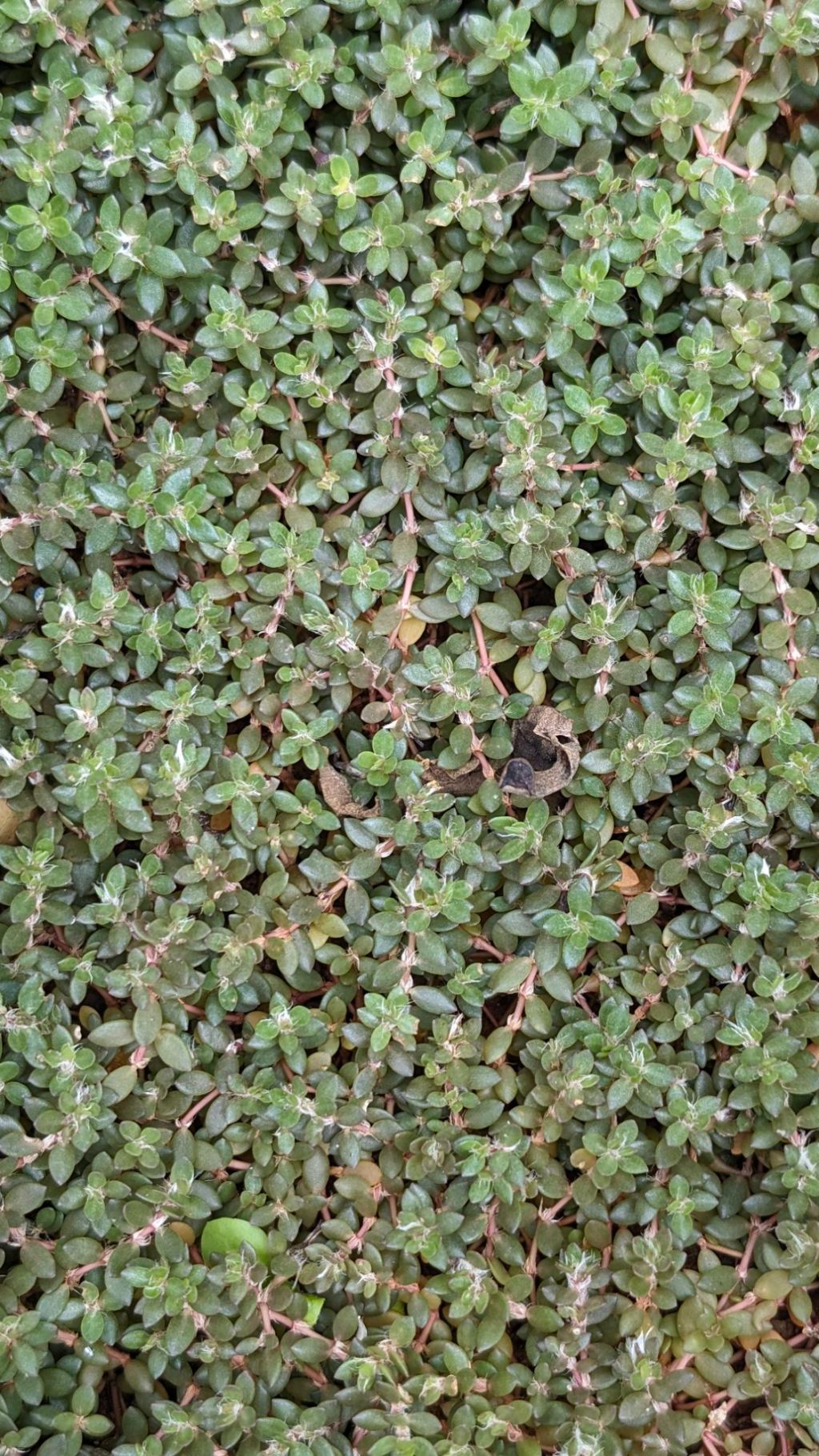
You may not find this greens/keerai in city or town markets. Or even in villages these days! While I have seen and consumed the Common Purslane, this little one seemed to be a rare find for me. My friends in the Forgotten Greens group used to share this plant from various parts of India but I have been always waiting for my turn.
Last week, I visited the Art of Living Ashram in Bangalore to buy a dress for my kid. And I “happened” to find this in one of the plant nurseries there, growing in a Brahmakamal(Nishagandhi) pot. I was literally jumping as this was my first time spotting it and it was all totally unexpected. The gardener in me urged to ask the plant seller a few saplings but was hesitant to do so. After few minutes of strolling in the entire nursery, I learnt that he is a Malayalee! Now for what should I wait for! “Chetta,… “, and told the entire story attaching my request in less than a minute. He agreed to keep few plants in a cover by the time I return from ‘what I came for’. I returned in less than 30 mins and here he is, ready with the plants!. Wait, remember he is an honest business man and he charged me 20 rs for a cover. And yes I got one home and replanted them in a pot. Now the wait for them to grow begins!!

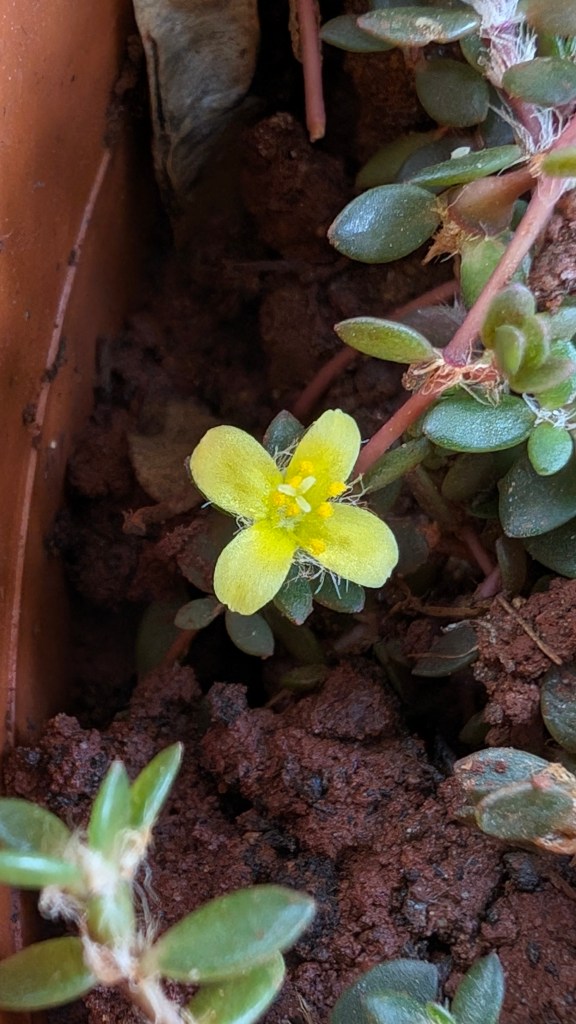
Botanical Name: Portulaca quadrifida Family: Portulacaceae (Moss Rose family)
Common name from flowersofindia.net: Chicken weed, Wild purslane • Kannada: ಗೋಳಿಸೊಪ್ಪು Goli soppu, ಗೋಣಿಸೊಪ್ಪು Goni soppu, ಹಾಲಿಬಚ್ಚೆಲೆ Haalibacchele, ಬಿಳಿಯಗಱುಕೆ Biliya garuke • Tamil: பசலை கீறை Pasalai keerai • Telugu: Goddu pavelli
Etymology:
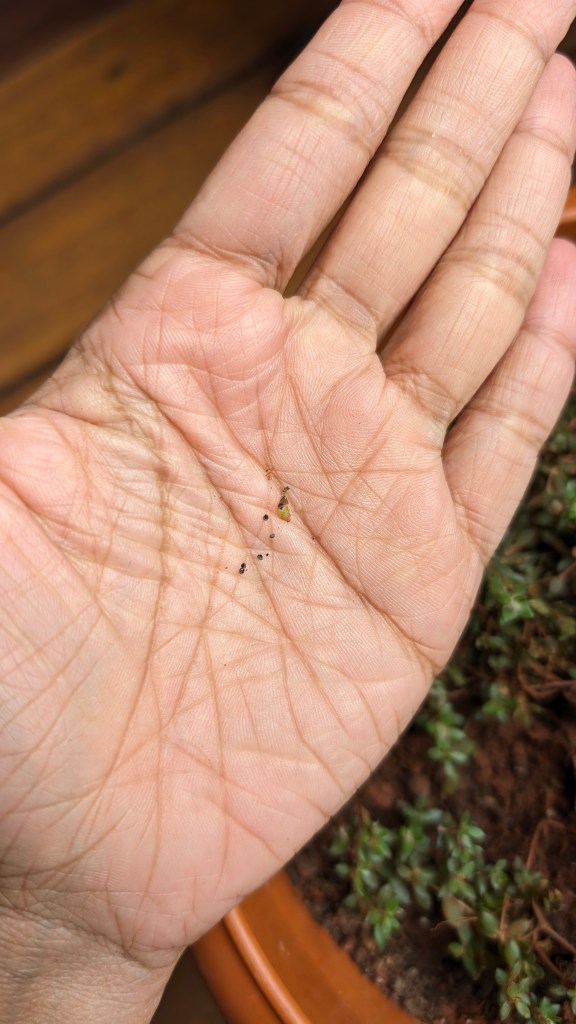
Portulaca: The genus name “Portulaca” is derived from the Latin word “portula,” meaning “little gate.” This refers to the way the seed capsule of the plant opens. When the fruit is mature, the top part of the seed capsule pops off like a small gate, releasing the seeds.
quadrifida: The species name “quadrifida” comes from the Latin words “quadri,” meaning “four,” and “fidus,” meaning “divided” or “split.” This refers to the characteristic of the plant having parts, such as leaves or petals, that are divided into four segments.
The Tamizh people call it in various names like Pasarai, Kodi Pasalai, Siru Pasalai, Tharai Pasalai keerai, payviri keerai(as it grows like thick floor carpet). It might feel little cumbersome to clean this keerai as it is teeny weeny plant with lots of roots at the nodes, but its worth the efforts considering its medicinal benefits.
Culinary Uses:
- Salads: The succulent leaves and stems are eaten raw in salads, adding a slightly sour and crisp texture.
- Cooked Dishes: The leaves can be sautéed, stir-fried, or added to soups and stews. It is used in various regional cuisines, particularly in South Asia.
- Pickling: The stems and leaves can be pickled for a tangy condiment.
- Herbal Teas: The plant is sometimes used to brew herbal teas with mild medicinal properties.
Nutritional Benefits:
- Rich in Omega-3 Fatty Acids: Like other Portulaca species, it is a good plant source of omega-3 fatty acids.
- Vitamins and Minerals: Contains vitamins A, C, and E, and essential minerals such as magnesium, potassium, and calcium.
- Antioxidants: Packed with antioxidants that help protect cells from oxidative damage.
Medicinal Uses:
- Traditional Medicine: Used in various traditional medicinal systems to treat conditions such as digestive issues, inflammation, and fever.
- Topical Applications: Applied externally to treat skin conditions like burns, insect bites, and rashes due to its soothing properties.
- Anti-inflammatory: The plant has anti-inflammatory properties that can help in reducing inflammation and pain.
Gardening and Other Uses
- Ground Cover: The plant is can be used as ground cover in gardens and farms to prevent soil erosion and retain moisture. It grows quickly and spreads efficiently, covering the soil surface.
- Rapid Growth: Portulaca quadrifida is known for its rapid growth and resilience, making it easy to cultivate. It can quickly establish itself in a new area and provide a reliable source of food and medicine.
- Fodder: It can be used as an excellent fodder.
Cultural Importance:
- Jitiya Vrat(Jivitputrika Vrat) is a significant fasting ritual observed primarily by mothers in the Indian states of Bihar, Jharkhand, Uttar Pradesh, and parts of Nepal. The fast is dedicated to the well-being and longevity of their children. The plant’s leaves are considered auspicious and are used in preparing specific dishes for the ritual.
Sargahi: On the day before the fast, known as “Nahai-Khai,” mothers prepare a special meal that includes a mandatory dish with noni saag, Maruwa roti(made with Ragi), a fish or any local & seasonal veggie dish etc. This day marks the beginning of the vrat, and the meal is eaten after bathing and purifying oneself.
Fasting Day: During the main fasting day, strict adherence to the rituals is observed, and the consumption of food is avoided from sunrise to the next sunrise.
Parana (Breaking the Fast): After completing the rigorous fast, the vrat is broken with a meal that may include dishes made from Portulaca quadrifida, as it is considered pure and beneficial.
I was wondering why this greens have so much of importance for a fasting. Then I remembered, in Kerala, during monsoons, we consume pathila thoran(പത്തില തോരൻ). It is prepared with easily and quickly available 10 types of greens in our own households or immediate surroundings. So the same way, this saag would be growing abundantly during that season and in those regions. How interesting the connection between nature, season and food is!
Recipes
- Ragi-noni Saag Chila
- Noni Saag Bhajiya(fritters)
- Noniya Saag Gosht
- Siru Pasalai Keeraimasiyal
- Pasarai Keerai thuvayal
- Siru Pasalai Paruppu Kadaiyal
Read More
A.

 MY LITTLE THOUGHTS LANE
Leave a comment