
After the first tuber of this series – Tapioca, here comes the Sweet Potato!
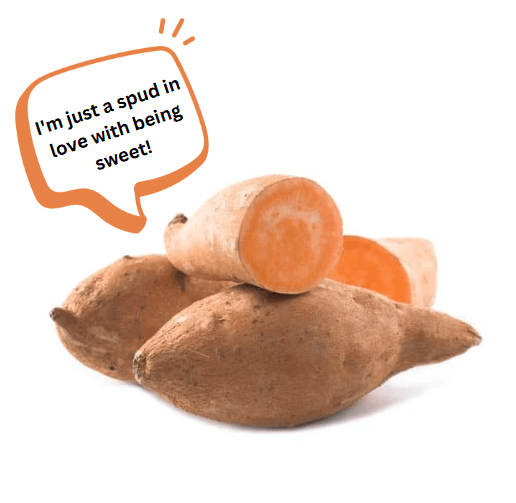
The modest sweet potato has journeyed across continents, sustained civilizations, and even ignited historical discussions. Coming from Central and South America, it was grown more than 5,000 years ago by the ancient civilizations of Peru and Mexico. When Christopher Columbus reached the Americas, he was so amazed by this naturally sweet, nutritious root that he brought it back to Spain, from which it disseminated worldwide.
Notably, sweet potatoes arrived in Asia and Africa well before the Columbian Exchange, potentially transported by Polynesian navigators who sailed across extensive oceanic expanses. In India, sweet potatoes (shakarkandi) are a popular winter treat, commonly roasted or boiled and served with a dash of salt and spices. They are also a significant feature in celebrations such as Navratri.
Pic courtesy – Link
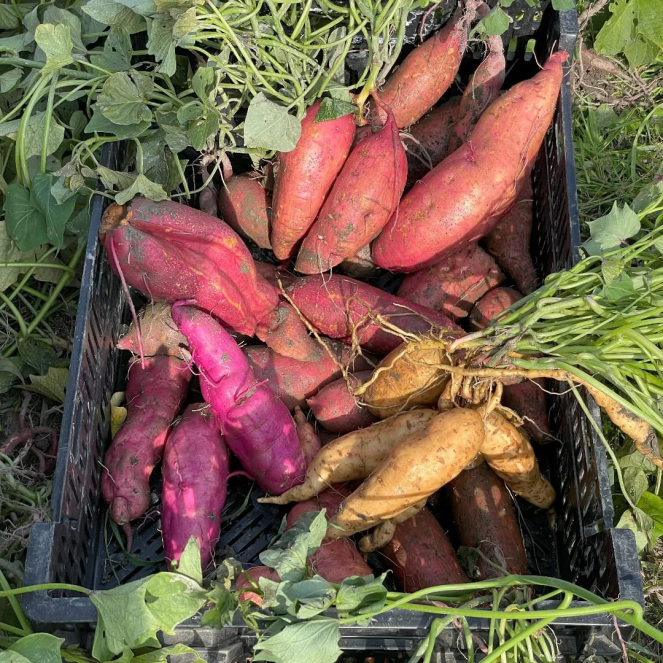
Although frequently mistaken for yams, sweet potatoes are a unique species, found in multiple colors—including orange, purple, white, and yellow. Full of beta-carotene, fiber, and vitamins, they serve not only as a tasty treat but also as a nutritional powerhouse.
From the dishes of ancient societies to contemporary kitchens, the sweet potato remains a representation of endurance and nourishment—its path intertwined with the essence of culinary traditions worldwide.
Botanical name: Ipomoea batatas
Common name from flowerofindia.net: Sweet Potato, Brazilian arrowroot • Assamese: মিঠা আলু mitha alu • Bengali: মৌআলু mau alu, মিষ্টি আলু mishti alu, রাঙাআলু rana alu, রাঙ্গা আলু ranga alu • Dogri: शकरकंदी shakarkandi • Gujarati: રક્તાળુ raktalu, રતાળુ ratalu, શક્કરીયાં shakkariyam • Hindi: मीठा आलू mitha alu, शकरकन्द shakarkand • Kannada: ಗೆಣಸುಗಡ್ಡೆ Genasu gadde, ಸೀಗೆಣಸು Seegenasu, ಸಿಹಿಗೆಣಸು Sihi genasu, ಗೆಳಸು, ಗೆೞಸು Gelasu, Gezhasu • Konkani: ಚಿನಿಕಣಂಗ chinikananga, कणंग kananga • Malayalam: ചക്കരക്കിഴങ്ങ് cakkarakkilangu, ചീനക്കിഴങ്ങു chinakkilangu, മധുരക്കിഴങ്ങ് madhurakkilangu, മരക്കിഴങ്ങു marakkilangu, വള്ളിക്കിഴങ്ങു vallikkilangu • Manipuri: ꯃꯡꯔꯥ Mangra • Marathi: रताळे ratale • Mizo: Bahra thlum, Kâwl ba-hra • Nepali: चाकुहि chakuhi, कन्दमूल kandamula, सख्खर खण्ड sakkhar khand • Odia: କନ୍ଦମୂଳ kandamula, କିରି kiri, କିଟି kiti, ଶକର କନ୍ଦ shakara kanda • Punjabi: ਸ਼ਕਰਕੰਦੀ shakarkandi • Sanskrit: किरि kiri, किटि kiti, किटिमूलाभ kitimulabha, सूकरी sukari, वराही varahi, वृद्धिद vrddhida • Santali: sakarkenda • Sindhi: گجر لاهوريِ gajar lahorei • Tamil: சர்க்கரைவள்ளி carkkarai valli, சீனிக்கிழங்கு cini-k-kilanku, வற்றாளை varralai • Tangkhul: meiteipai • Telugu: చిలగడదుంప chilagadadumpa, గెణుసు గడ్డ genasu gadda, కంద గడ్డ kanda gadda, మోహనము mohanamu, తెల్ల దుంప thella dumpa • Tulu: ಕೆರೆಂಗ್ kerengu • Urdu: شکر کند shakar kand • Angami: Rophie
Family: Convolvulaceae (Morning glory family)
Synonyms: Convolvulus batatas, Batatas edulis, Ipomoea edulis
Etymology:
Ipomoea: Derived from the Greek words ips (meaning “worm”) and homoios (meaning “resembling”). This refers to the plant’s twining, vine-like growth habit, which resembles a worm’s movement.
batatas: Derived from the Taino (an indigenous Caribbean language) word batata, meaning “sweet potato.”
Sweet potato provides a plentiful amount of complex carbohydrates, dietary fiber, and vital vitamins. Loaded with Vitamin A (beta-carotene), Vitamin C, potassium, and antioxidants, it enhances immunity, fosters eye health, and aids in regulating blood sugar levels. It is inherently gluten-free and a perfect choice for individuals adhering to healthy, plant-based eating plans. There are studies which reveals Sweet potato extracts slow breast and lung cancer growth.
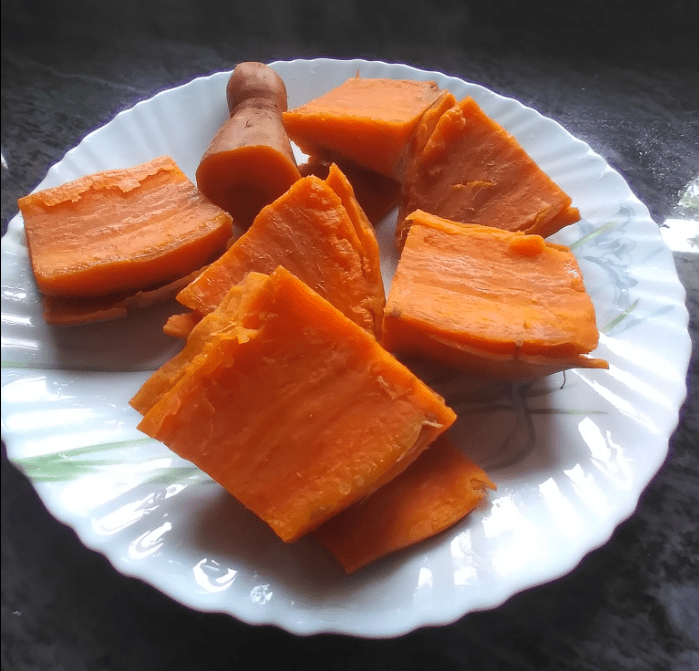
The edible tuberous root has a smooth skin with variable colours like red, purple, brown and white whereas the flesh colour ranges from white, yellow and orange to purple.
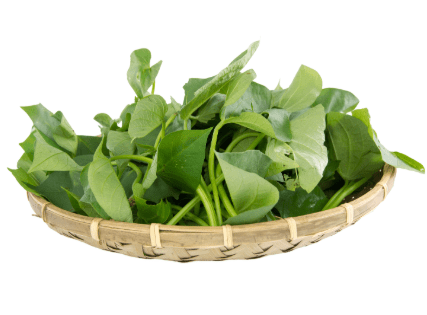
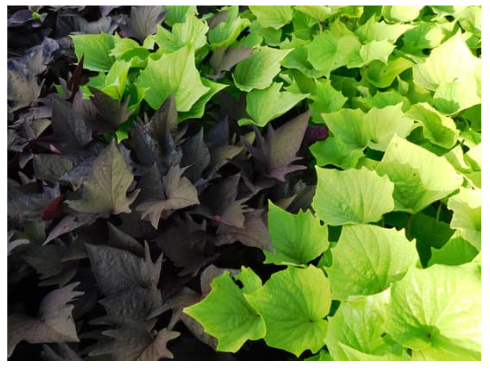
It can be eaten raw(certain varieties), boiled, roasted and a cooked vegetable. While the easiest method to consume these are boiled, the traditional way in Kerala used to be to leave them in the charcoal after cooking the dishes(roasted method). Once, a friend gifted me a delicious chocolate-flavored fudge. Later, she surprised me by revealing the main ingredient—sweet potato! We can even consume the tender leaves and make some yummy stir fry or can be added to our mixed greens dishes. The tubers are also used as a source if starch, glucose syrup, abd alcohol we well as for canning, dehydrating and the production of flour.
It is also fed to cattle, pigs and fowl as a source of high-carbohydrate feed.
Recipes
- Vegan Cake
- Brownies
- Quiche
- Air fryer sweet potato smileys
- Kumpir Sweet Potato
- Patties
- Bruschetta
- Sweet potato honey cornbread
- Ruth Chris Sweet Potato Casserole
- Savory Garlic and Parmesan Sweet Potato Wedges
- Kamote Balls
- Upvas Special Airfried Sweet Potato Chaat & Coriander Chutney
- Upkari
- Sweet potato with mixed greens
- Roti/Paratha
- Boiled & Roasted sweet potato with traditional chammanthi
- Mezhukkupuratti
- Payasam
- Puzhukku
- Noolappam/Idiyappam
- Sweet potato leaves stir fry by Sangeeta Khannaa
- A warm salad by Sangeeta Khanna
- Shakharkhand ki Rabdi by Sangeeta Khanna
- Sweet Potato and Water Chestnut salad by Sangeeta Khanna
- Chicken Salad with Zucchini, Sweet potato.. by Sangeeta Khanna
- Maffe Hakko Putay – Sweet potato leaf curry – By Fulani(ethnic group in Sahara, Sahel and West Africa)
- Matembele – A Congolese recipe using sweet potato leaves
- Sweet potato leaf Kootu
- Navratri chat
- Tikki recipe
- Peanut-Sweet potato chat
- Sweet potato rotis by Shrikripa
- Seasoned poha with Sweet potato by Shrikripa
- Sweet potao Mukimo
- Sweet potato recipe book by ASARECA(Association for Strengthening Agricultural Research in Eastern and Central Africa), The Regional Network for Improvement of Potato and Sweetpotato in Eastern and Central Africa (PRAPACE) and International Potato Center (CIP).
- Sweet Potato dishes from one of my fav youtubers, all the way from Srilanka
- Kue Ubi Panggang, Kue Indonesian sweet potato snack/dessert
Additional reading-
- Sweet potato from CTCRI
- Wiki
- ICAR-CTCRI implementing ‘rainbow diet’ campaign in Attappady, An initiative aimed at tackling malnutrition among tribal population
- NDTV news article on ‘rainbow diet’
A.


Leave a comment