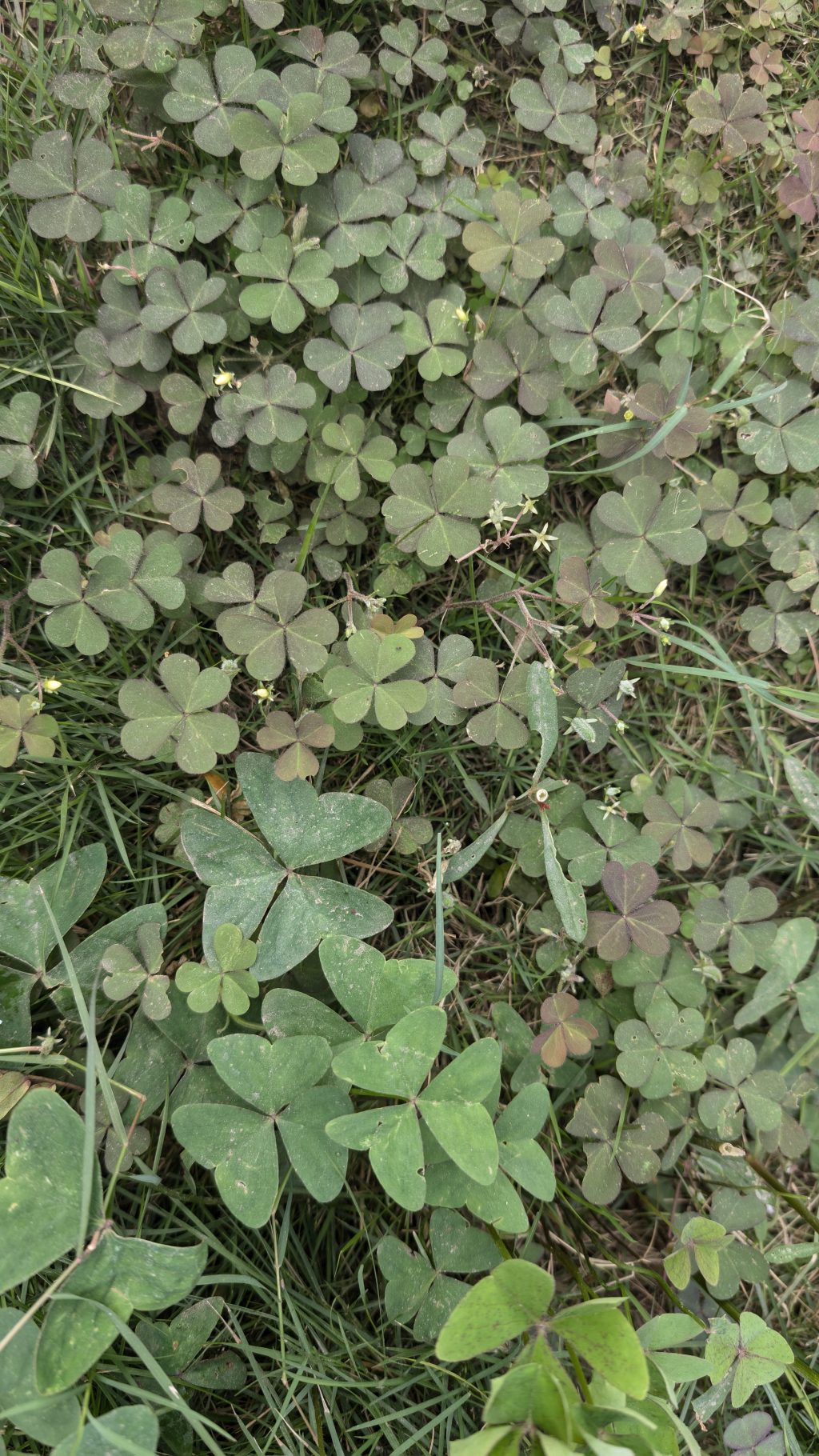
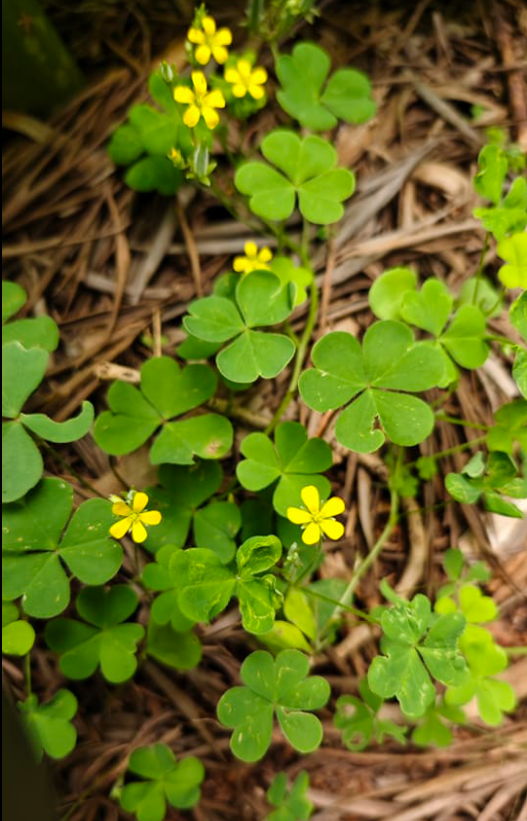
Botanical Name: Oxalis corniculata
Family: Oxalidaceae (Wood Sorrel Family)
Common names from flowersofindia.net: Creeping Wood Sorrel, Creeping Oxalis • Adi: Piyag Miu • Bengali: অমৰুলশাক Amrulshak • Hindi: Amrul अम्रुल • Kannada: ಪುಳ್ಳಂಪುರುಚೆ Pullampuruche, ಪುಳ್ಳಂಪುರಚಿ Pullampurachi, ಪುಳ್ಳಂಪುರಿಚೆ Pullampuriche ಹುಳಿಹುಳಿಸೆ Hulihulise, ನೀರುಗೋಲಿ Neerugoli, ಚಾಂಗೇರಿ Chaangeri • Manipuri: ꯌꯦꯟꯁꯤꯜ Yensil • Marathi: आंबुशी Ambushi, चांगेरी Changeri • Malayalam: Puliyarala • Nepali: चरी अमिलो Charee Amilo • Mizo: Siakthur • Sanskrit: चांगेरी Changeri, अम्लः Amla, अम्ली Amli • Santali: ᱴᱟᱹᱱᱰᱤ ᱪᱷᱟᱹᱛᱟᱹᱢ ᱟᱨᱟ Tandi chatam ara • Tangkhul: Sithur • Tamil: Paliakiri
Etymology:
Oxalis: From Greek oxys = “sour” or “sharp.” This refers to the plant’s distinctly sour taste, caused by oxalic acid present in the leaves and stems.
corniculata: From Latin: corniculum = “small horn” and -ata = “provided with”. This describes the small horn-like projections on the seed capsules (fruits), which are a key identifying feature.
Host plant – Pale Grass Blue, Dark Grass Blue, Grass Jewel, Small Grass Jewel butterflies
I am sure many of you would remember munching on this tiny, cute plant leaves during childhood or even now! The one plant which often gets misidentified as ‘Clover’! It is one of the most common “weeds“(nah, I wont call any plant a weed) which you can find in a home garden or even on road sides. Sometimes, it is really tough to remove/uproot the entire plant, it is an useful medicinal plant! It is also used as a souring agent in cooking.
Medicinal Uses from the site – FlowersofIndia – Creeping Wood Sorrel is used in the treatment of influenza, fever, urinary tract infections, enteritis, diarrhoea, traumatic injuries, sprains and poisonous snake bites. The juice of the plant, mixed with butter, is applied to muscular swellings, boils and pimples. An infusion can be used as a wash to rid children of hookworms. The plant is a good source of vitamin C and is used as an antiscorbutic in the treatment of scurvy. The leaves are used as an antidote to poisoning by the seeds of Datura spp, arsenic and mercury. The leaf juice is applied to insect bites, burns and skin eruptions. It has an antibacterial activity.
A few days back my Insta feed suggested me this reel by a doctor from Kerala in which he says how to use Changeri leaves to treat Grahani rogam(a functional bowel disorder, often correlated with Irritable Bowel Syndrome (IBS), characterized by alternating diarrhea and constipation, abdominal pain, and poor digestion.) This reminded me of my grandmother, who used to prepare something similar for me during my childhood, something I now deeply regret not noting down.
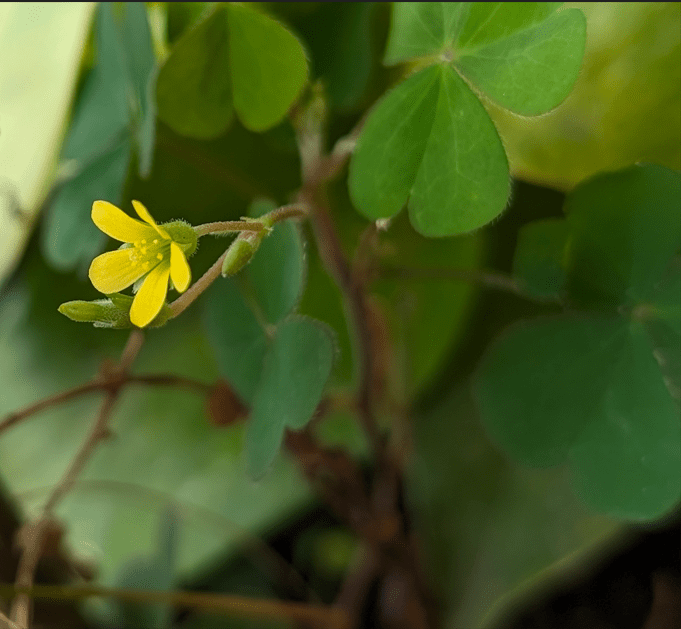

Quick Identification Field Guide for Beginners
- Small creeping plant forming mats close to the ground
- Heart-shaped leaflets in groups of three (often mistaken for clover)
- Yellow 5-petalled flowers
- Slender seed pods that burst open when touched
- Sour taste when chewed(Confirm before tasting and wash the greens if you are particular)
- Found in gardens, pots, roadside cracks, lawns
Puliyarila, a traditional medicine and a story
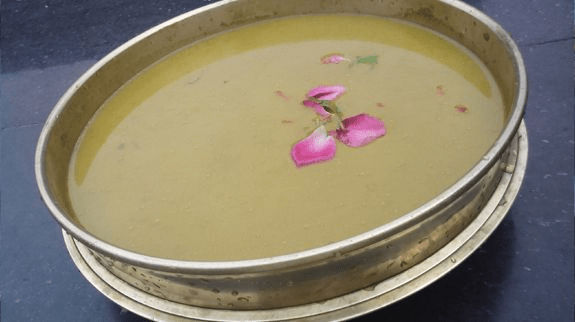
A local(oral) tradition says that Saint Vilwamangalam Swamiyar once could not see the deity inside Koodalmanikyam Temple(situated at Irinjalakkuda, Thrissur district, Kerala). Searching outside the temple, he found a radiant boy in a paddy field. He had the visual power to see Gods or feel God’s presence using his sixth sense, realized that, the boy was the Lord himself in disguise. The boy said that he got a tummy ache as he had a full feast that day being ‘Puthari'(first day of harvesting rice). And he handed him some medicinal leaves and asked that a herbal preparation be offered the next day. Understanding the divine message, Swamiyar informed the temple priests. The leaves were taken to the traditional physician (Kuttancheri Mooss), who prepared an herbal mixture. The next day, it was offered to the deity as naivedyam. That offering later became the temple’s famous Mukkudi naivedyam, whose recipe is still preserved as a family secret by Mooss family.
Why this story? – It is believed that one of the herbal leaves which was handed over by the boy was our Puliyaarila. This naivedyam is been distributed to the devotees at this temple in the month of Karkkidakam.
The naivdeyam is also prepared in a few more temples across Kerala, like Thottuva Shri Dhanwanthari temple (Ernakulam district) on Thiruvonam star of Makaram and Karkkidakam months. Nelluvaaya Shri Dhanwanthari temple , Erumappetti, Thrissur district.
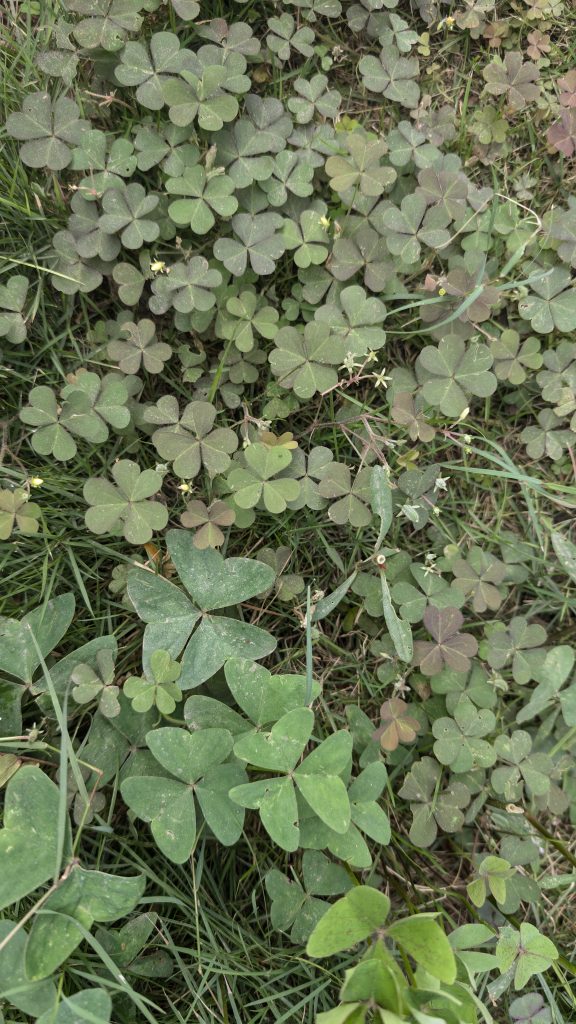
While there are different varieties of edible and ornamental oxalis, make sure you take only the edible ones for consumption. Also, these plants are often confused with the Clover varieties.
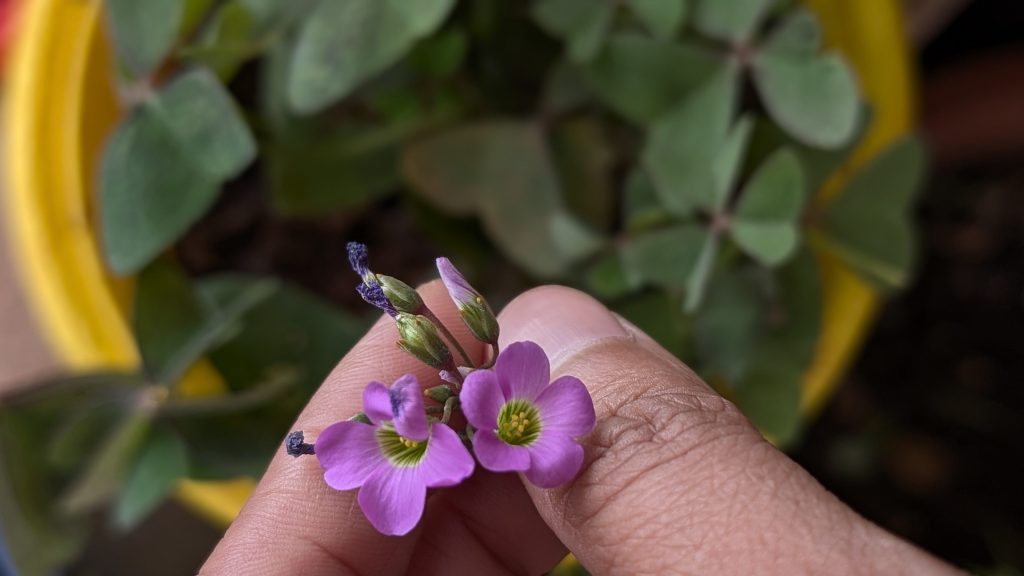
A kindred soul back in Kerala, who doesn’t want his/her name mentioned, shared this rasam recipe with me while I was searching for more uses of this little greens. In her words – “Puliyarila is best to make Rasam. Take juice of the leaves, say half cup. Take 1 tomato, sauté well and puree it. In a pan, pour 2tsp of oil, then sauté six Garlic pods, 3 fresh green slitted chillies, 6 lightly pounded peppercorns, a half an inch ginger, half spoon jeera, asafetida and salt to taste. Once it is sautéed, add the juices and cook well. Add in tadka with ghee and mustard.”
Her mother uses it for removing the stains on her hands, just squish the leaves in hands and apply that juice. Interesting isn’t it?
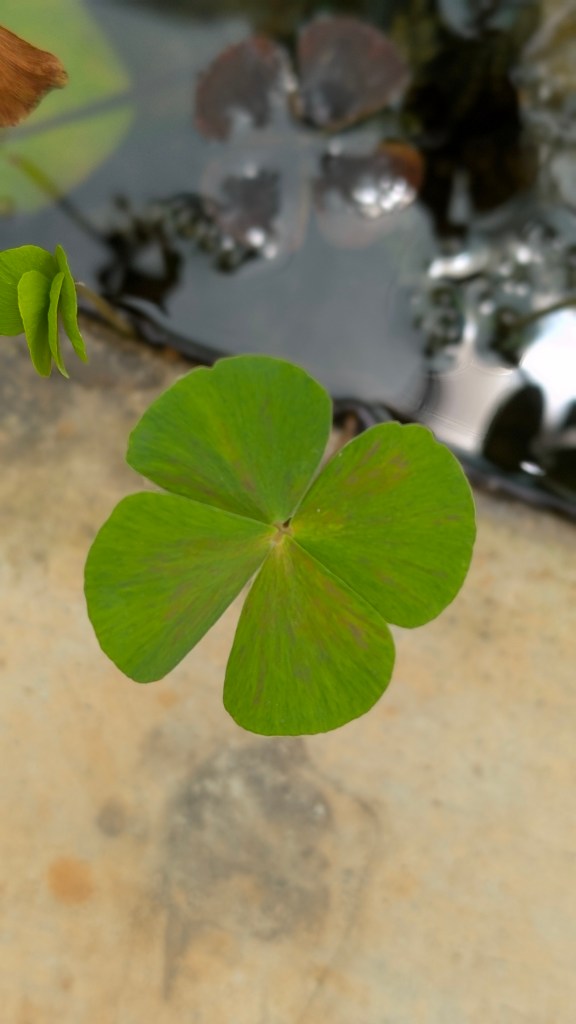
She also mentioned the other variety we see near the water bodies – Neeraaral(നീരാറില/നീരാരല്). പുളി ഉള്ളത് പുളിയാറില, വെള്ളത്തിൽ വളരുന്നത് നീരാറില/നീരാരല്. പുളിയാറില കൊണ്ട് ചമ്മന്തി ഉണ്ടാക്കും, എന്നാല് നീരാരല് തോരനാക്കാറാണ് പതിവ്. This translates to – The sour one is Puliyarila and the one which grows in water is Neeraaral. While we make chutney(Chammanthi is more like dry version of chutney) with Puliarila, Neeraaral(Marsilea quadrifolia) is usually used for making thoran(dry sabji made with grated coconut)
Botanical Name: Marsilea quadrifolia
Family: Marsileaceae (Pepperwort Family)
Common names : European Water Clover, Chunchuniya/Sushni Saag in Jharkhand and Chattisgarh, Neerarai in Tamizh,
Etymology:
Marsilea: Named after Luigi Ferdinando Marsili (1658–1730), an Italian naturalist and botanist who studied aquatic life and plants.
quadrifolia: From Latin, this refers to the plant’s four leaflets(quadri=four, folia= leaves) arranged like a clover.
Hearing the name Water Clover, if you think it is a type of clover, know that its not! Its actually a fern and not a clover.
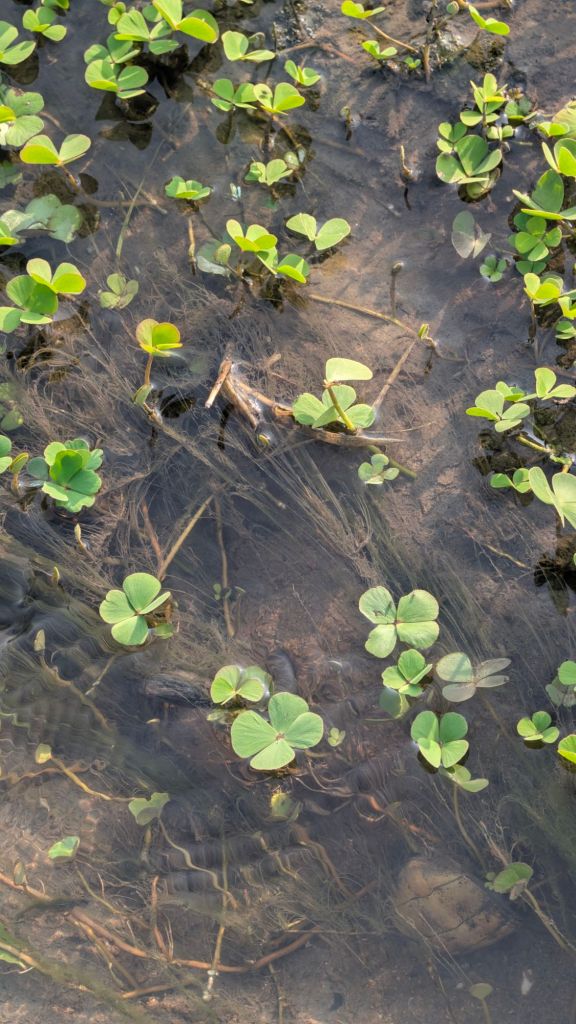
Quick Identification Field Guide for Beginners
- Grows in shallow water, paddy fields, marshy soil or pond edges
- Long thin stalk rises directly from the mud or underwater rhizome
- At the top: four wedge-shaped leaflets arranged like a four-leaf clover
- Leaflets are smooth, soft and slightly fan-shaped (not heart-shaped like O. corniculata)
- No visible flowers (because it is a fern)
- Produces small hard bean-like spore bodies near the base in mud
- Leaves often close or droop in evening
Clovers
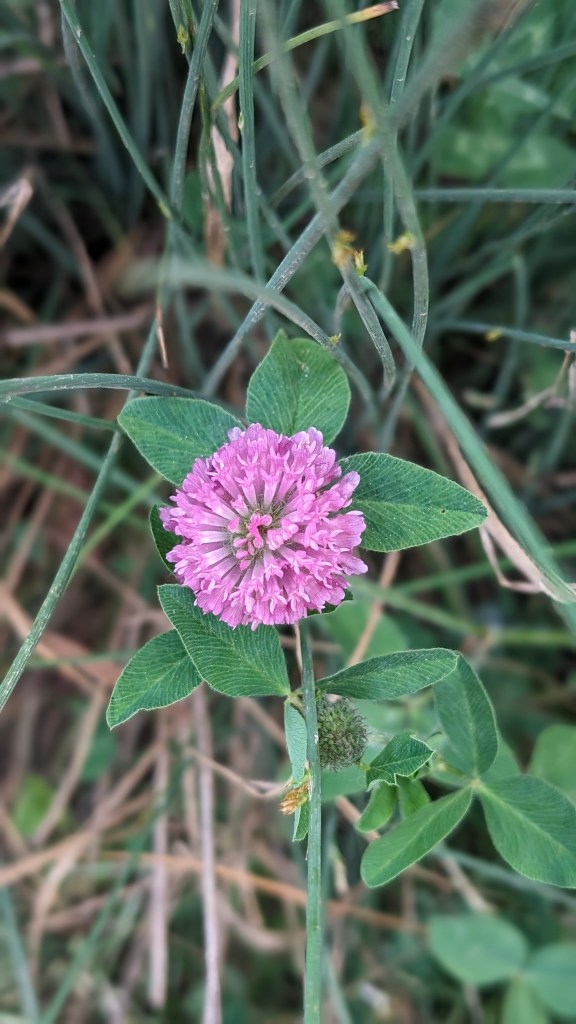
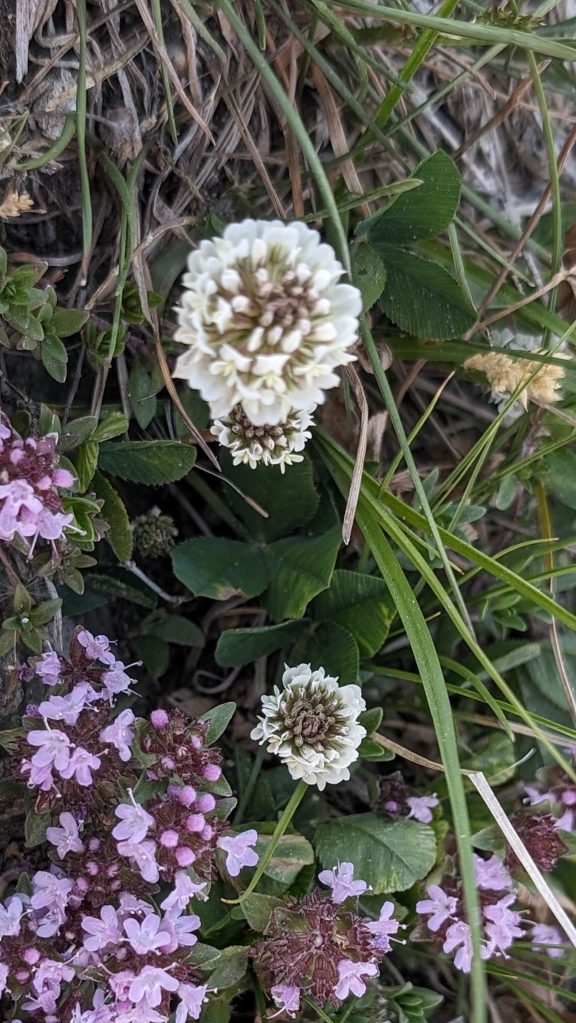
While I would be covering Clovers in detail in another post, I am sharing the pics of the ones I have got to see in India for reference. You can clearly see the difference in flowers and leaf shapes.
Disclaimer – People who are suffering with/prone to kidney stones, gout, arthritis, rheumatism must avoid this greens as there is a chance to aggravate the disease. Also if you are taking any specific medication esp like blood thinners, its better to avoid this. As a precautionary measure, always cook this greens along with other greens or consume a very limited quantity as raw.
Recipes
- Puliyarila Chammanthi
- Puliyarila Chammanthi 2
- Chutney
- Khat malori ka chilla
- Tengesi – Assamese fish recipe
- Patot Diya Tengesi Shaak – Roasted Indian Sorrel(Assamese recipe)
- Wood sorrel salad
- Neeraral thoran
- Amrul Shak – A Bengali recipe
- Sushni Shak
- Woodsorrel lemonade
- Can be used as garnish on salads like this!
P.S – If you are worried about the oxalates, please munch one or 2 leaves and taste the sourness at least once!
This plant is part of my guide: Lesser Known Edible Weeds of India
Do you use these greens at home? Share more in comments.
 MY LITTLE THOUGHTS LANE
Leave a comment