This blog would be my journey of learnings about the different bathuas!
The first time I saw this greens was during the Covid time when a dear friend, Pradeep, gifted me a small sapling along with a few other plants. What caught my attention were the tender leaves, carrying a tint of beautiful pink blush. When I searched online, bathua appeared as ‘Chenopodium album’ and I believed that, until just a few days ago!
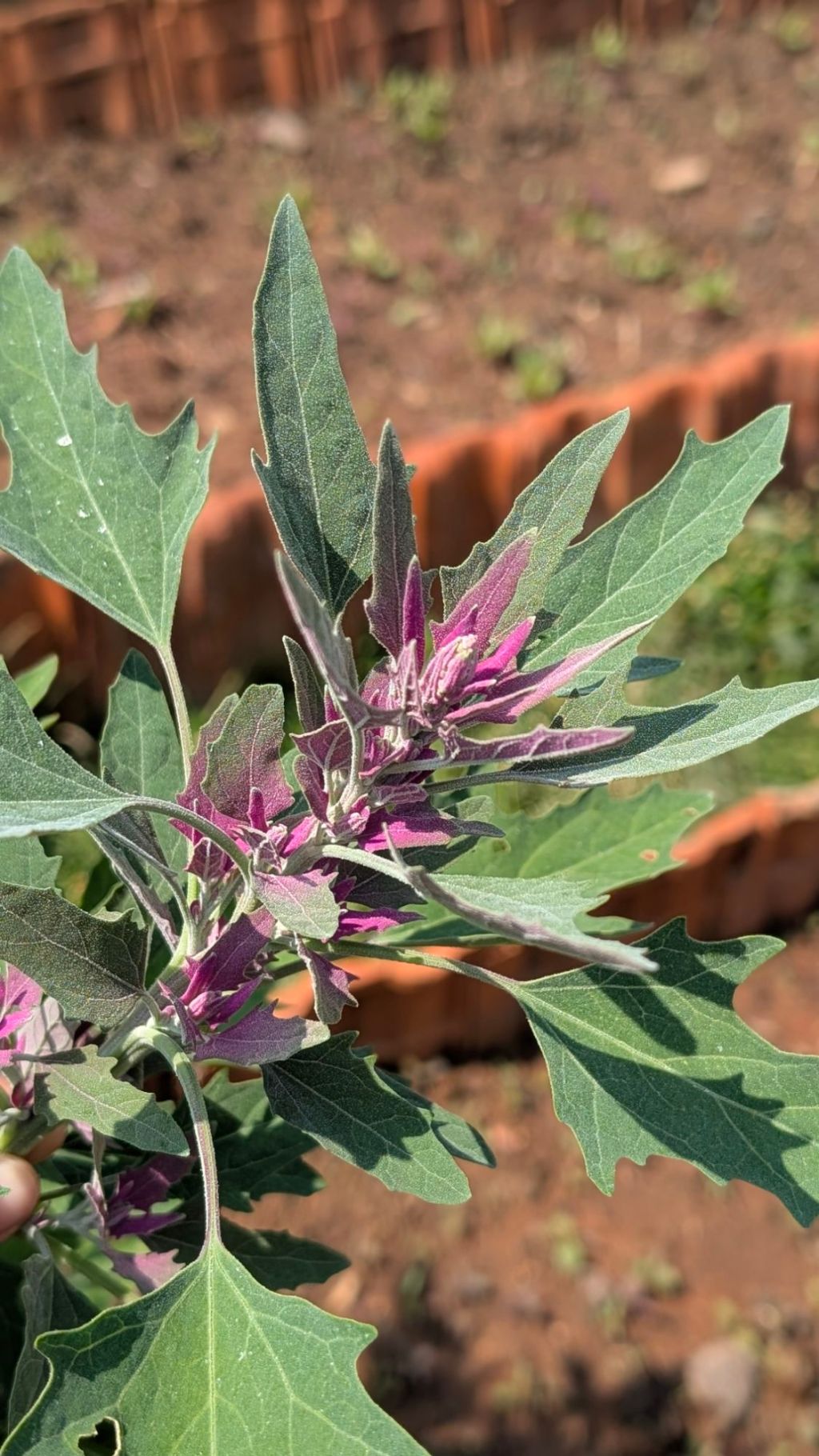
Meet Chenopodium gigantuem!
Chenopodium giganteum
Botanical Name: Chenopodium giganteum
Family: Amaranthaceae(Amaranth family)
Common names from flowersofindia.net: Purple Goosefoot, Tree Spinach, Magenta Spreen, Giant Lambsquarters
Etymology:
Chenopodium: From Greek: chēn (χήν) = “goose” and pous / podion (πούς / πόδιον) = “foot”. So it is the “Goose-foot plant.”
giganteum: From Latin giganteus = “giant” or “very large.”
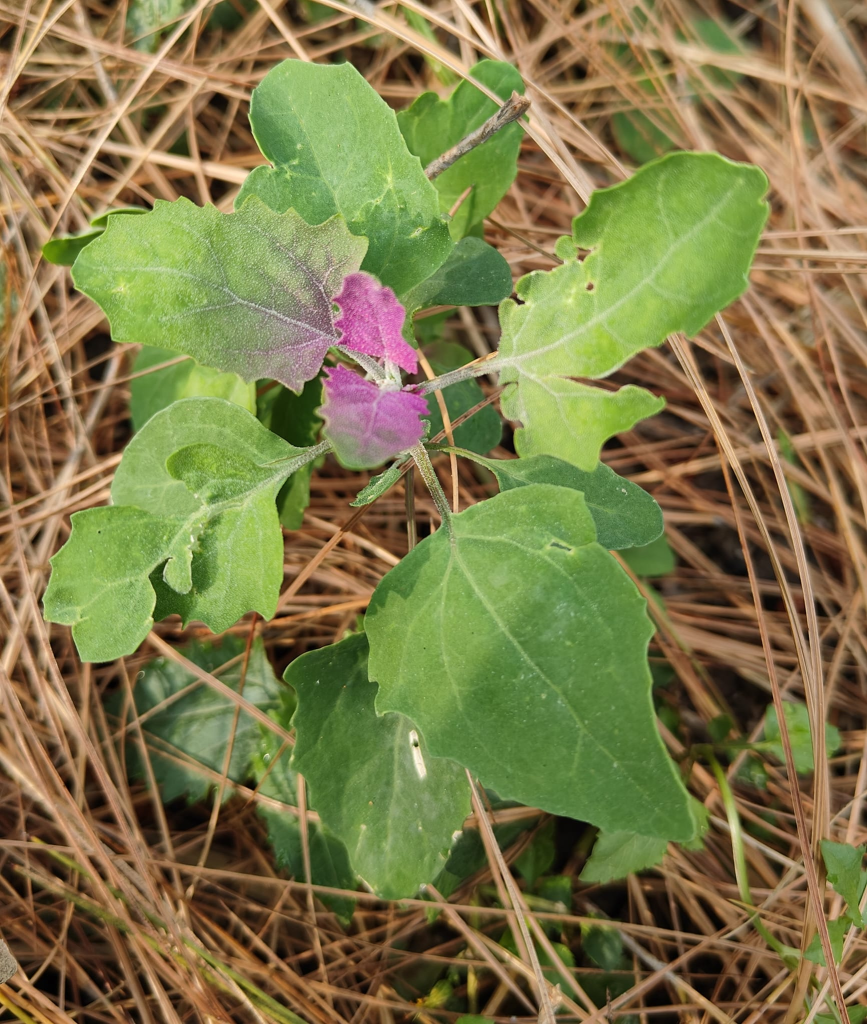
Quick Identification Field Guide for Beginners
- Leaves: Broad triangular to diamond-shaped leaves, about 5–15 cm long. Young leaves are tender and mild in taste, similar to spinach.
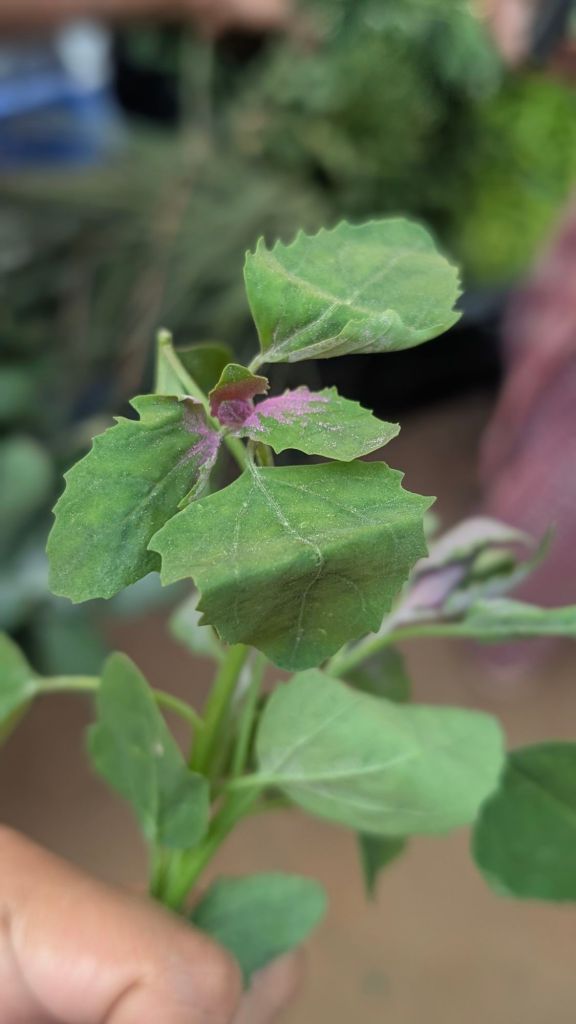
- Color: Light green leaves with a distinctive magenta-pink centre on the young growth (the colour fades as the leaf matures).
- Texture: Young leaves appear soft and slightly powdery/mealy due to a natural waxy coating.
- Stem: Thick, erect and branching stem, green to purplish, usually growing 1–2 meters tall.
- Flowers: Tiny greenish flower clusters forming dense, branched panicles at the top of the plant (not showy).
- Habitat: Common in kitchen gardens, compost heaps, field margins and disturbed soil, especially during cooler seasons and post-monsoon periods.
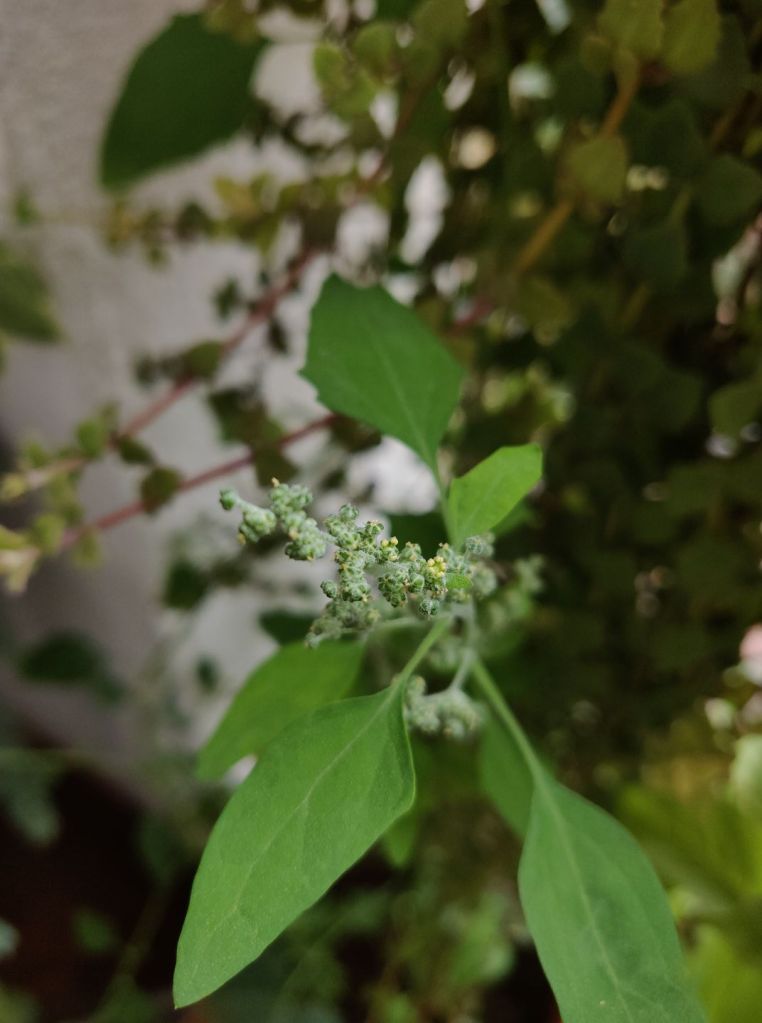
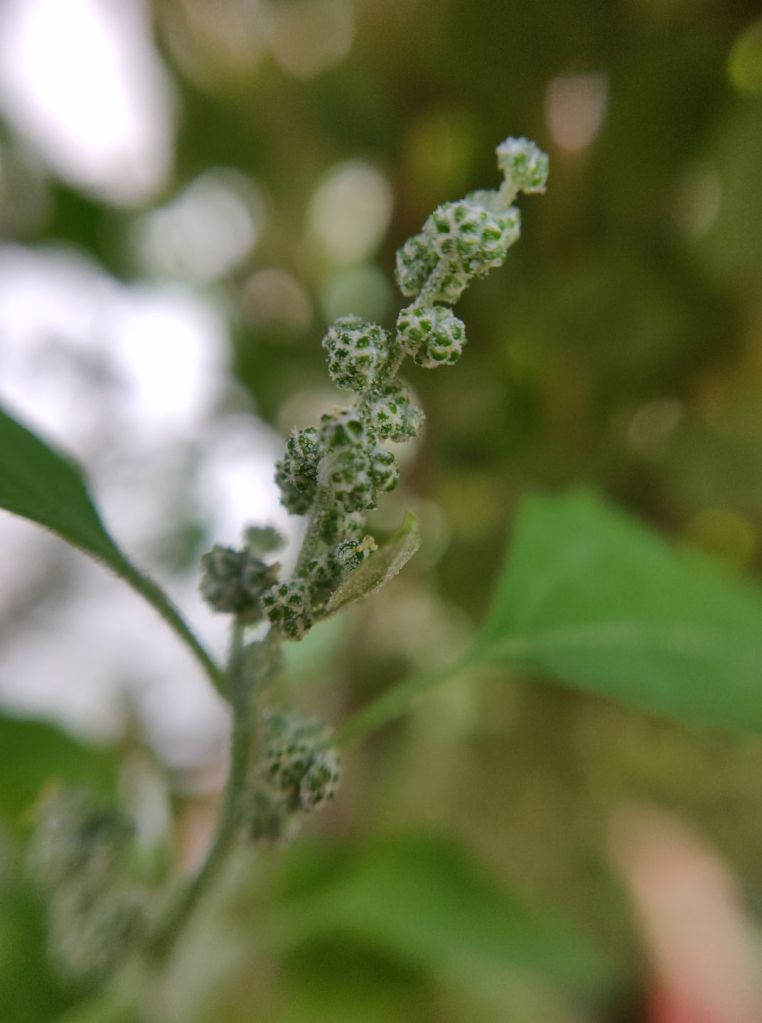
The plant develops a lovely pink tint when it receives a good amount of sunlight, at least that’s my guess as you can see here the leaves has no pinkish shade since the plant wasn’t getting enough sun.
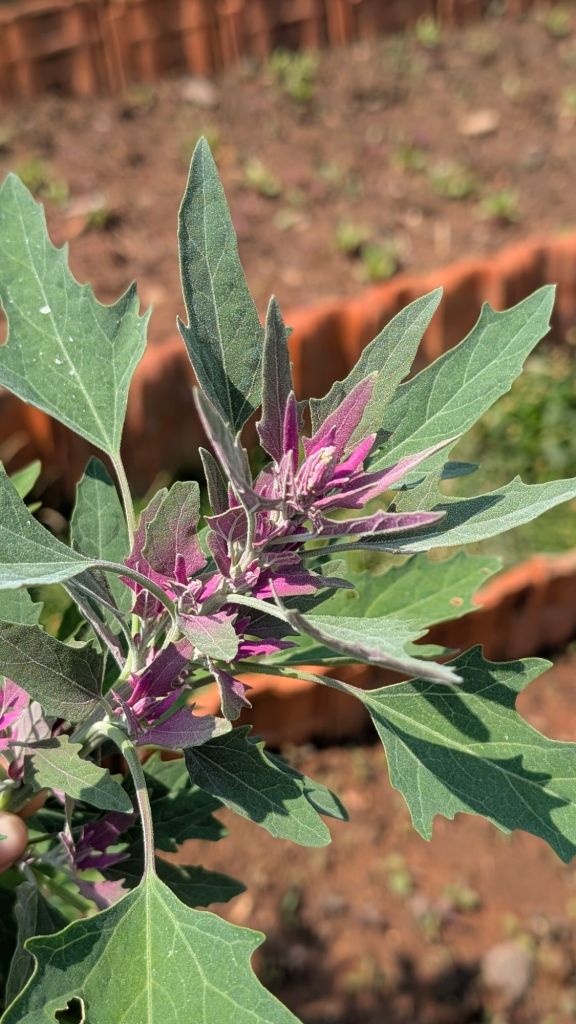
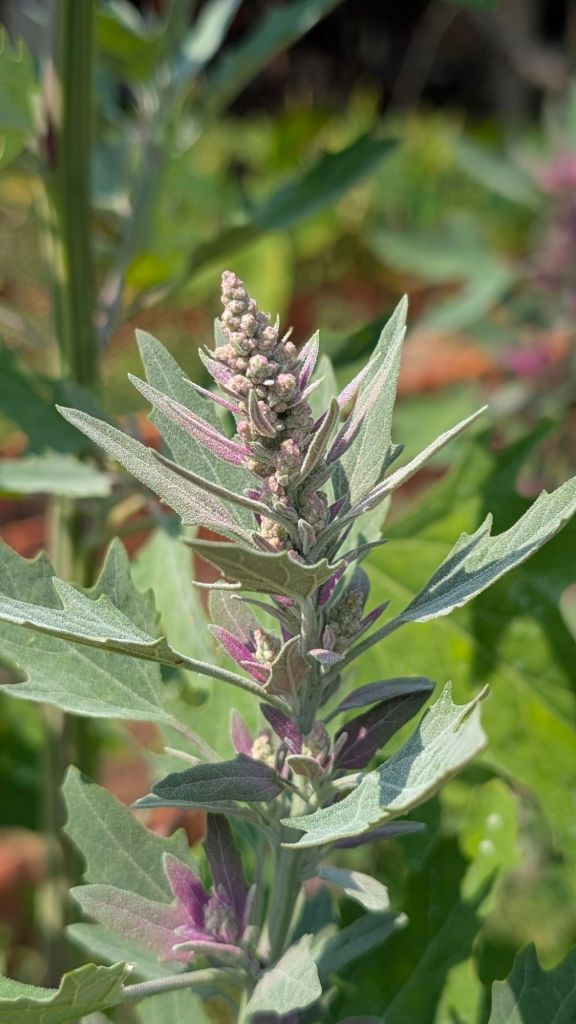
The above plant was spotted at Sarjapura Curries farm was growing under full sun. Also the matured leaves at the bottom were wider than the ones on top(younger leaves)
Recently, I came across a discussion in one of the FB groups about Bathua and Chakothina/chakotha Soppu. While some said both are the same, others argued they are 2 different plants within the same species. This made me even more curious, because the Chakothina soppu sold in Bengaluru is totally different from what I have always known as ‘Bathua’. It is one of the common winter greens, easily found in many markets or with push cart vendors.
That search led me to discover that there are different types of bathua. I am sharing my learnings here, and I would truly appreciate your help in correcting me if I have misunderstood anything.
Chenopodiastrum murale
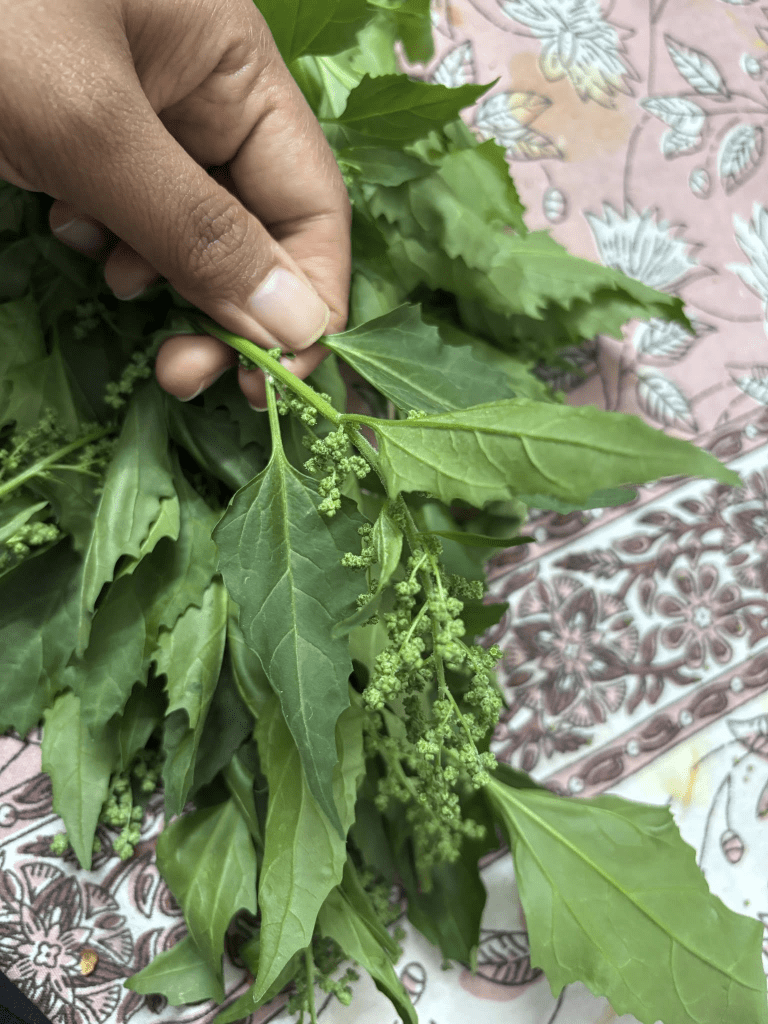
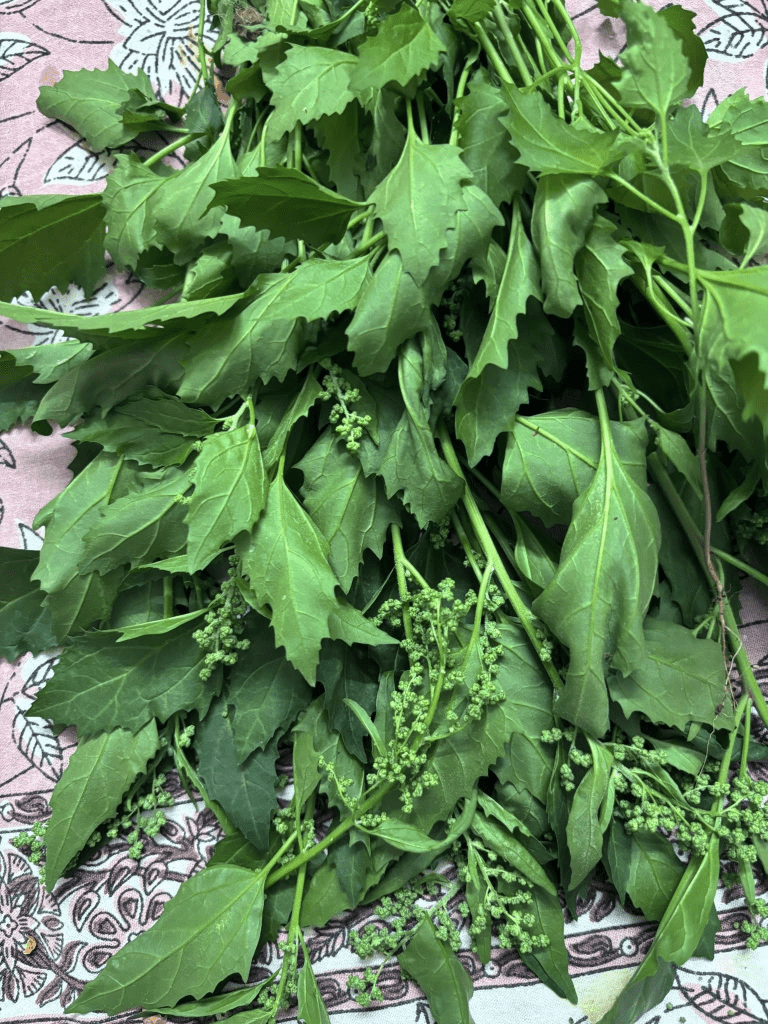
In a FB group, a member had posted the above pics asking which bathua it was. At first glance, the flowers/buds looked similar to the pinkish tinted Bathua(C. giganteum). But the leaves seemed quite different from the C. giganteum. After quite a bit of hunting for the right ID, it turned out to be another Bathua altogether. Enters C. murale!
Botanical Name: Chenopodiastrum murale
Synonyms: Chenopodium murale, Chenopodium biforme, Chenopodium ilicifolium
Family: Chenopodiaceae (Cat tail family)
Common names from flowersofindia.net: Nettle-Leaved Goosefoot, Australian-spinach, salt-green • Hindi: Goyalo
Etymology:
Chenopodiastrum: From Greek roots: chēn (χήν) = “goose” and pous / podion (πούς) = “foot”, -astrum = “resembling” or “somewhat like”
murale: From Latin muralis = “of walls” or “growing on walls.”
This refers to its habit of appearing along walls, waste places, pathways, and disturbed soils.
Quick Identification Field Guide for Beginners
- Leaves: Triangular to rhomboid leaves, 3–8 cm long, often with irregular toothed or wavy margins. Leaves are slightly thicker than bathua and may feel faintly greasy when rubbed.
- Color: Dull green to grey-green.
- Texture: Surface often looks mealy or dusty (powdery coating especially on young leaves).
- Stem: Erect to spreading, much-branched plant, usually 20–80 cm tall; stems green and often grooved.
- Flowers: Very small green clustered flowers packed tightly along short spikes at the leaf axils and stem tips.
- Habitat: Common in disturbed soils, roadsides, waste grounds, old walls, garden edges and dry open areas; frequently seen in urban vacant plots and near habitation.
I am yet to meet this Bathua, neither have heard more details. So let’s dive into the next.
Chenopodium album
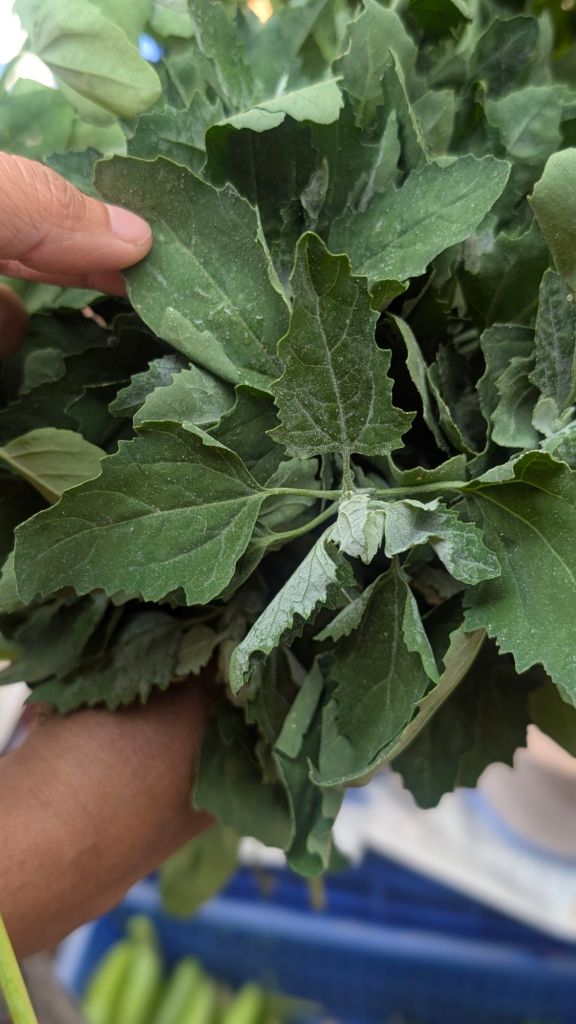
Finally, I went looking for Chenopodium album, the true bathua(?). I then realised that this is the variety some Vegetable vendors in Bengaluru sell under the same name, ‘Bathua’. Its leaves carry a whitish, powdery coating on the surface. This variety is also called as Chandan Bathua in North India. It is one of the winter greens which is easily available across India.
Botanical Name: Chenopodium album
Synonyms:
Family: Chenopodiaceae (Cat tail family)
Common names from flowersofindia.net: Bathua, fat hen, lamb’s quarters, white goosefoot • Adi: Jilimili • Assamese: বথুৱা শাক bathuwa shaak, জিলমিল শাক jilmil shaak • Bengali: বেথো শাক betho shaak, বেথুয়া শাক bethuya shaak • Gujarati: બથવો bathavo, ચીલની ભાજી chilani bhaji • Hindi: बथुवा bathuwa • Kannada: ಚಕ್ರವರ್ತಿ Chakravarti, ಚಕ್ಕವತ್ತ Chakkavatta, ಹುಚ್ಚುಚಕ್ಕೋತ Huchchu chakkotha • Malayalam: പരിപ്പുചീര parippuchira, വാസ്തുചീര vastuchira • Manipuri: ꯃꯣꯟꯁꯑꯥꯣꯕꯤ মোনশাওবী Monsaobi • Marathi: चाकवत chakvat, वासुकें vasukem • Nepali: बेथे bethe • Oriya: ବଥୁଆ ଶାଗ bathua sag • Punjabi: ਲੂਨਕ lunak • Sanskrit: वास्तुक vastuka • Tamil: சக்கரவர்த்தி கீரை chakravarthi keerai, பருப்புக்கீரை paruppu-k-kirai • Tangkhul: Kazingtareihan • Telugu: పప్పుకూర pappukura, వాస్తుకము vastukamu • Mizo: Kawlbuh • Angami: Therhie, Tierhietiepfu
Etymology:
Chenopodium: From Greek: chēn (χήν) = “goose” and pous / podion (πούς / πόδιον) = “foot”. So it is the “Goose-foot plant.”
album: From Latin albus = “white.”
This points to the whitish, mealy coating (a fine powder) on the young leaves and stems.
Quick Identification Field Guide for Beginners
- Leaves: Variable in shape — triangular, diamond or goosefoot-shaped, about 2–8 cm long, with irregular toothed margins. Young leaves are tender and mild in taste.
- Color: Grey-green to bluish-green.
- Texture: Young leaves have a characteristic mealy, flour-like coating (whitish powder) on the surface, especially on the underside.
- Stem: Erect, angular and branching stem, green with pale streaks, usually growing 30–100 cm tall.
- Flowers: Tiny greenish flowers forming dense clusters in spikes at the top and along upper branches.
- Habitat: Very common winter weed in cultivated fields, vegetable gardens, compost heaps and disturbed soils, especially in cooler season crops and open sunny areas.
‘Bathua can be eaten as a vegetable, either steamed in entirety, or the leaves cooked like spinach as a leaf vegetable. Each plant produces tens of thousands of black seeds. These are very nutritious, high in protein, vitamin A, calcium, phosphorus, and potassium. As the english common name suggests, it is also a very good feed (both the leaves and the seeds) for chickens (hens) and other poultry.’ ~ FlowersofIndia.net
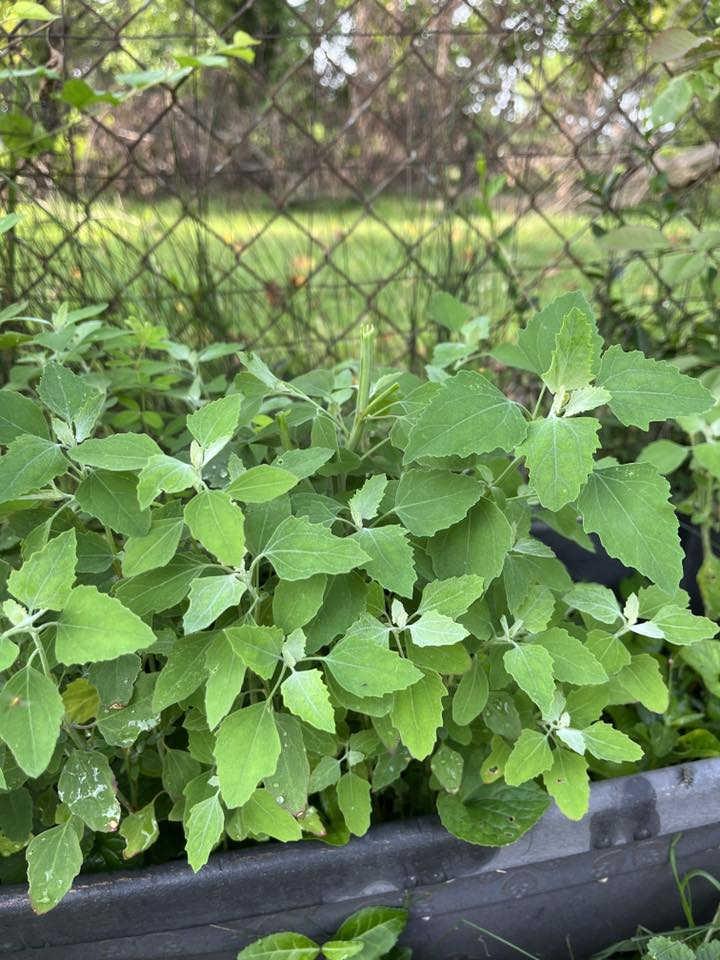
Each of these plants produces tens of thousands of black seeds. Quinoa, is a closely related species to this. Archaeologists analyzing carbonized plant remains found in storage pits and ovens at Iron Age, Viking Age, and Roman sites in Europe have found its seeds mixed with conventional grains and even inside the stomachs of Danish bog bodies. The juice of this plant is a potent ingredient for a mixture of wall plaster, according to the Samarāṅgaṇa Sūtradhāra, which is a Sanskrit treatise dealing with Śilpaśāstra (Hindu science of art and construction)~ WIki
A Research article from Current Botany gave me some more insights –
The genus Chenopodium of family Amaranthaceae is one of the neglected and underutilized plant species known for its higher content of protein, minerals, vitamins and abiotic stress tolerance. However, taxonomically this genus is known to be a complex genus due to the lack of good morphological characters that can distinguish species. This genus has around 132 accepted species worldwide. In the present study, we have briefly described four Chenopodium species viz. Chenopodium murale, C. ficifolium, C. giganteum and C. album from Manipur, India. Of these, three species viz. C. murale, C. ficifolium,and C. giganteum are new records from Manipur, India.
This also says that there are more species found in India. But my friends from various social media groups aren’t aware of other varieties.
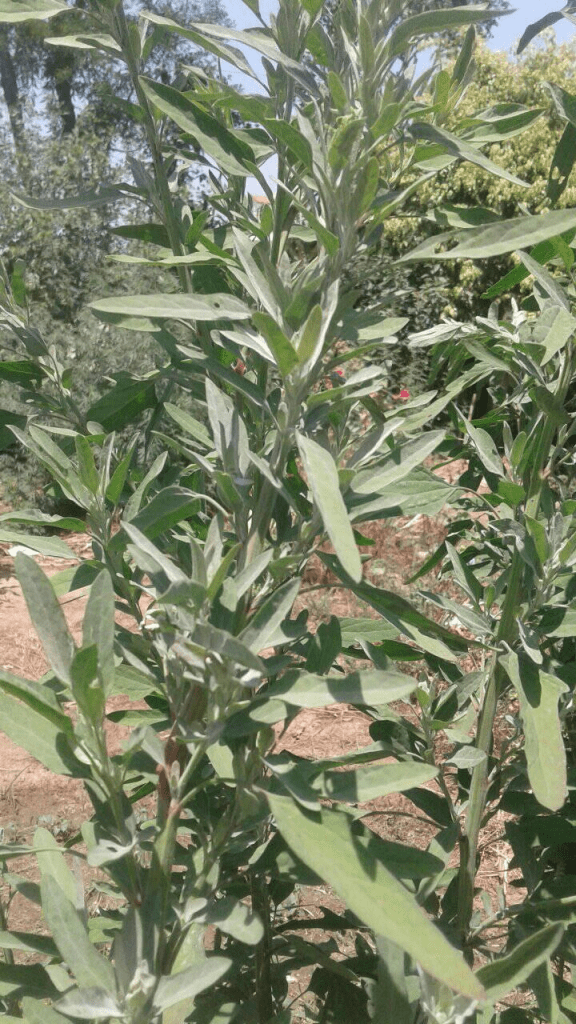
Source -Baghelsingh Sohi
Bathuas are generally considered as famine & war foods. During periods of drought, flooding, and severe famine—such as the Bengal Famine of 1943 or various droughts in Uttar Pradesh—traditional crops often failed. Bathua, growing as a weed along roadsides, in fallow land, and within wheat fields, became a crucial, easily accessible food source for the poor. It was used as a survival food in Europe during World War II. It was also a key food source for Native Americans.
Sharing more info from an FB post by Mukherjee BK-
The plant has antibacterial, antioxidant, digestive, carminative, cardiotonic, hypotensive, blood purifier, diuretic, hepatoprotective, antiscorbutic, anthelmintic, antirheumatic, laxative, contraceptive, sedative, refrigerant and odantalgic activities. It is used to treat rheumatism, bug bites, sunstroke, urinary and skin diseases. Leaves are used as a poultice to soothe burns. Leaf juice is also used against burns. Decoction of aerial parts mixed with alcohol is rubbed on the body affected by arthritis and rheumatism. It is also used to treat hepatic disorders, spleen enlargement and intestinal ulcers. The phytochemicals present are saponin, chemoalbicin alkaloid, apocarotenoids xylocide, phenols and lignans, phenolic acids (gallic acid, protocatechuric acid, vanillic acid, caffeic acid, syringic acid and vanillin). The herb is useful in peptic ulcer, dyspepsia, flatulence, spleenopathy, opthalmopathy and general debility. Leaves and young shoots may be eaten as a leafy vegetable, cooked like spinach. It is a famous vegetable in northern India, Assam, west Bengal and Punjab. The vegetable is highly nutritious as it contains fat, proteins, fibre, minerals like Ca, Fe, Mg, Mn, P, Na, K, vitamins such as A, B1,B2,B3,B5,B6,B9,C and essential amino acids (lysine, leucine). Each plant produces thousands of black seeds which are high in protein, vitamin A, minerals like Ca, P and K. The vegetable should be eaten in moderation due to high levels of oxalic acid. The leaves and young shoots are used in dishes such as soups, curries and parathas stuffed breads, specially popular in Punjab. The seeds are used in phambra or laafi in HP and in mildly alcoholic beverages such as sorra and ghanti. It is also used as feed for chickens and other poultry. The juice of the plant is a potent ingredient for a mixture of wall plaster as per Sutradhara -a Sanskrit treatise dealing with Silpasastra (Hindu science of art and construction).
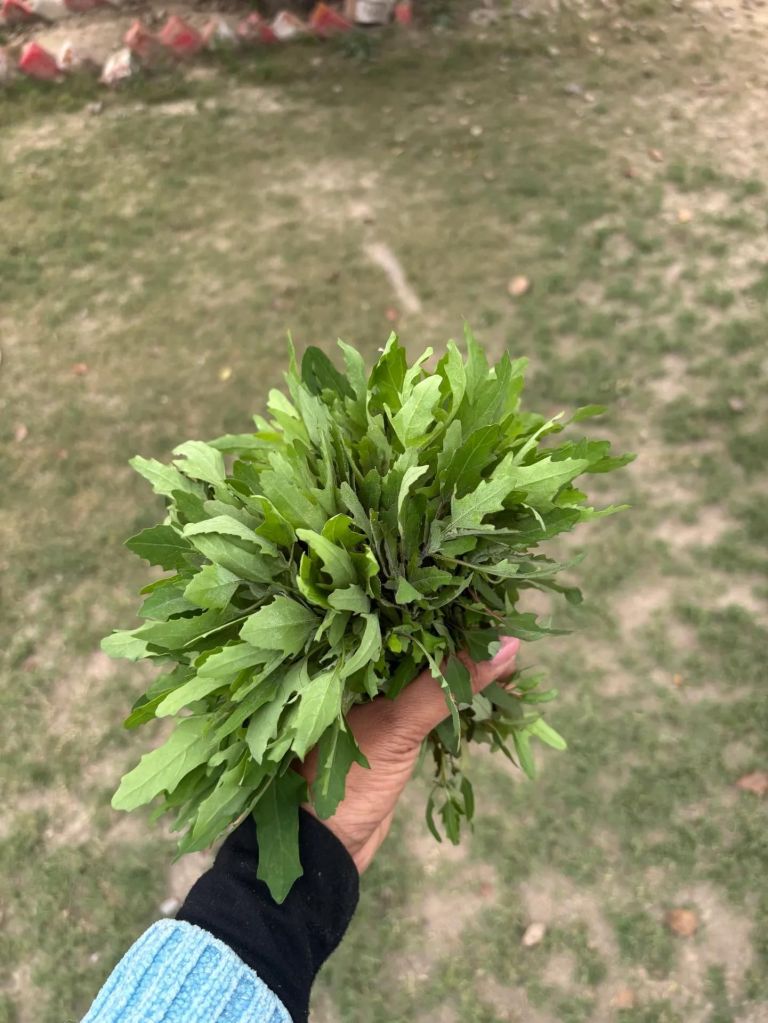
Atriplex hortensis
You might be wondering why this green now! This is another greens commonly sold in Bengaluru in the name of ‘Chakothina Soppu’ or ‘Bathua’. Unlike the other varieties, this seems more tender/succulenty for me. The leaves are more softer and fleshy.
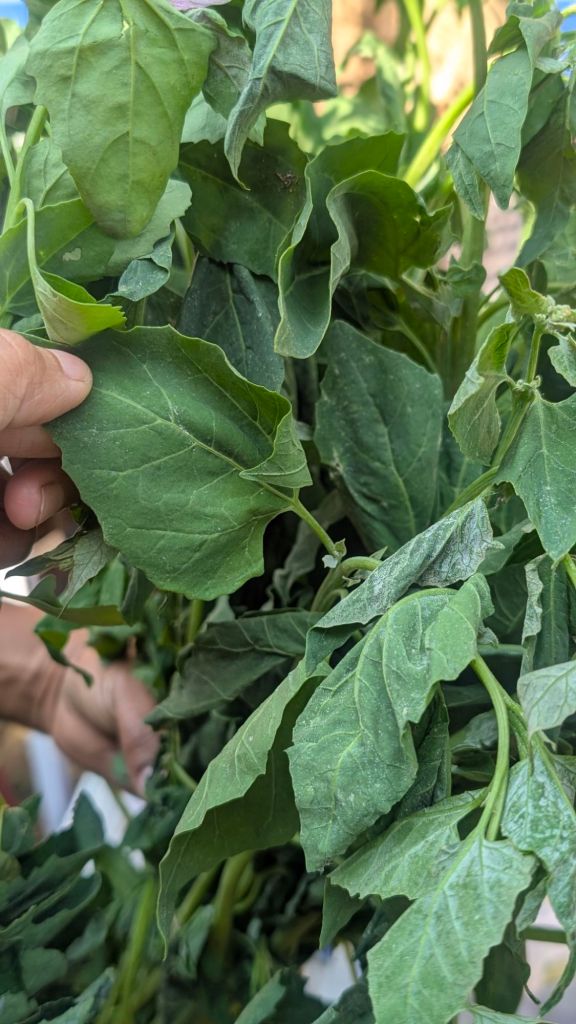
Botanical Name: Atriplex hortensis
Family: Amaranthaceae (Amaranth family)
Common names from flowersofindia.net: Garden Orache • Kashmiri: Vasta Haak • Kannada: ಚಕ್ವಾತ chakvata, ಚಕ್ಕೋತನಸೊಪ್ಪು chakkotanasoppu
Etymology:
Atriplex: From Latin atriplex (an ancient Roman plant name). It likely comes from ater = “dark” or “blackish” and plexus / plicare = “folded” or “layered”. The name was historically used for salt-tolerant leafy plants (oraches/saltbushes) known since Roman times. The slightly scurfy or dusty coating on the leaves may also have contributed to the name.
hortensis: From Latin hortus = “garden.” horthensis means “of the garden” or “grown in gardens.”
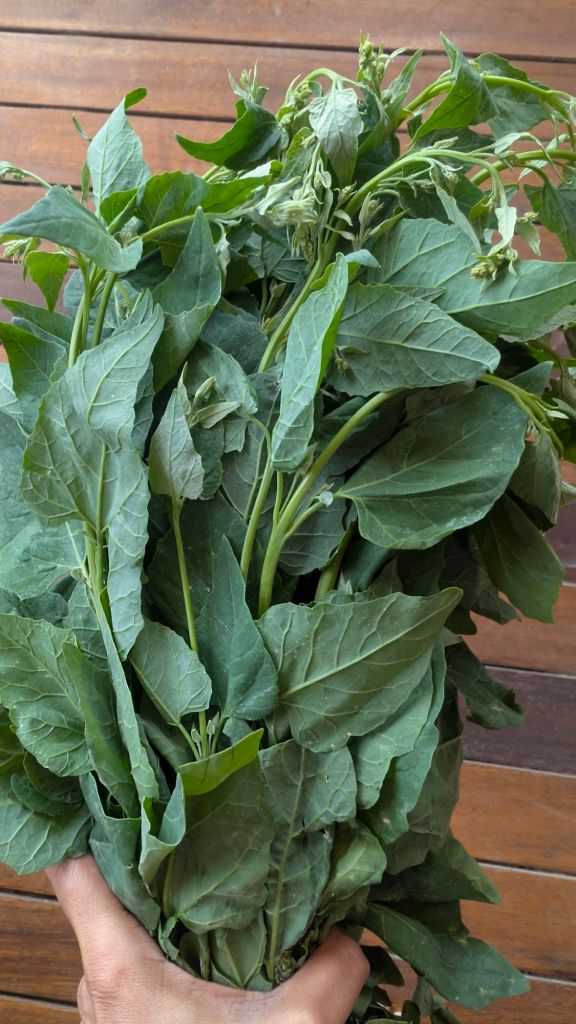
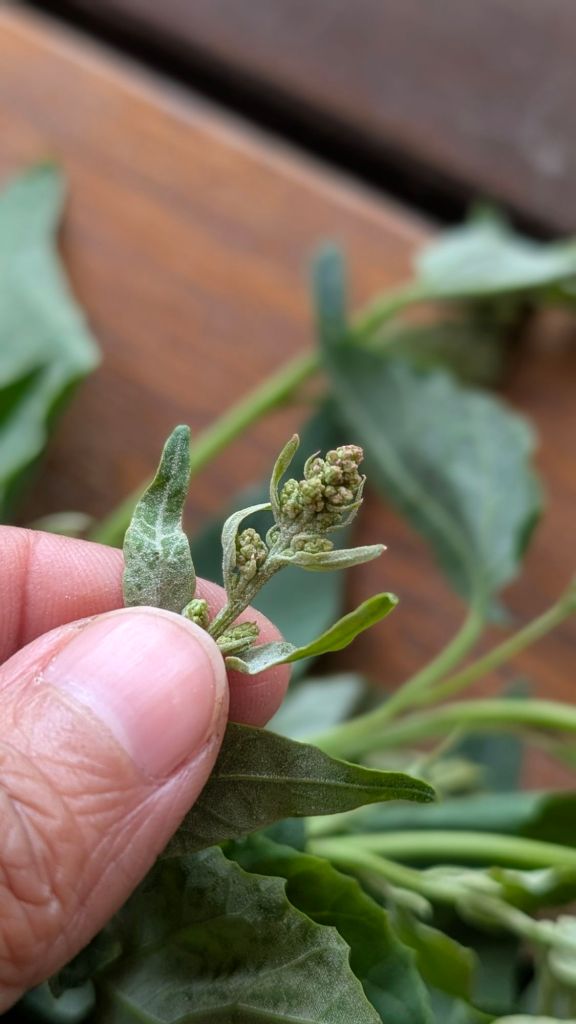
Quick Identification Field Guide for Beginners
- Leaves: Often triangular or heart-shaped, 4-9 cm long. They can be quite thin and sometimes have a slightly acidic & salty taste.
- Color: Pale green.(Another variety is red)
- Texture: Young leaves have a slightly mealy or powdery appearance (due to epicuticular wax).
- Stem: Erect, branched, and often reddish at the nodes, growing 0.6 to 1.8 meters in height.
- Flowers: Small, green, or reddish clusters that appear at the top of the plant.
- Habitat: Commonly found in cultivated gardens as a heat-tolerant spinach substitute, but also found in disturbed areas
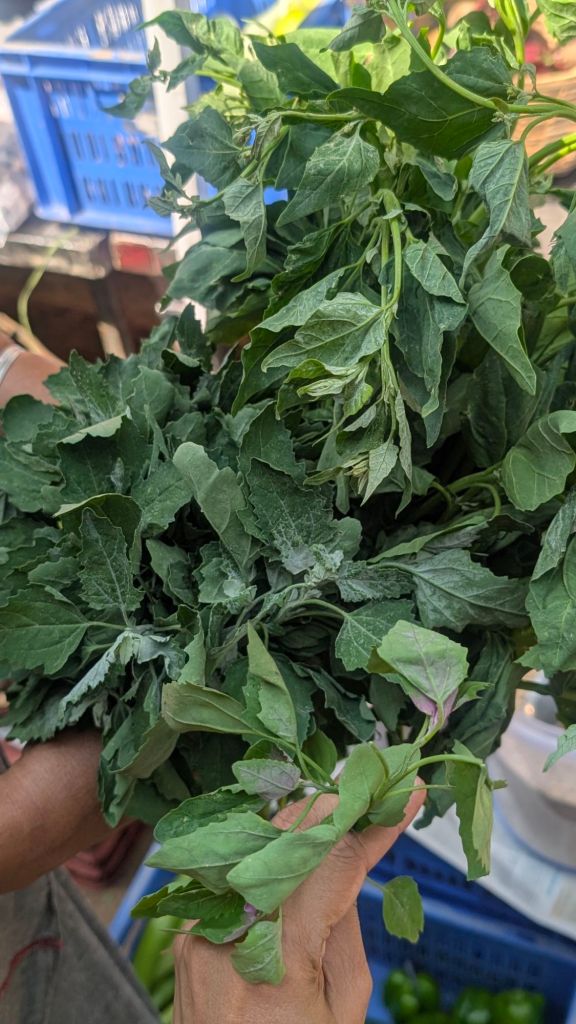
P.S – Many get confused chakotha(A. hortensis) with Chukka kura/Khatta Palak/Green Sorrel or Spinach Dock/Rumex vesicarius. Chukka kura is totally different plant.
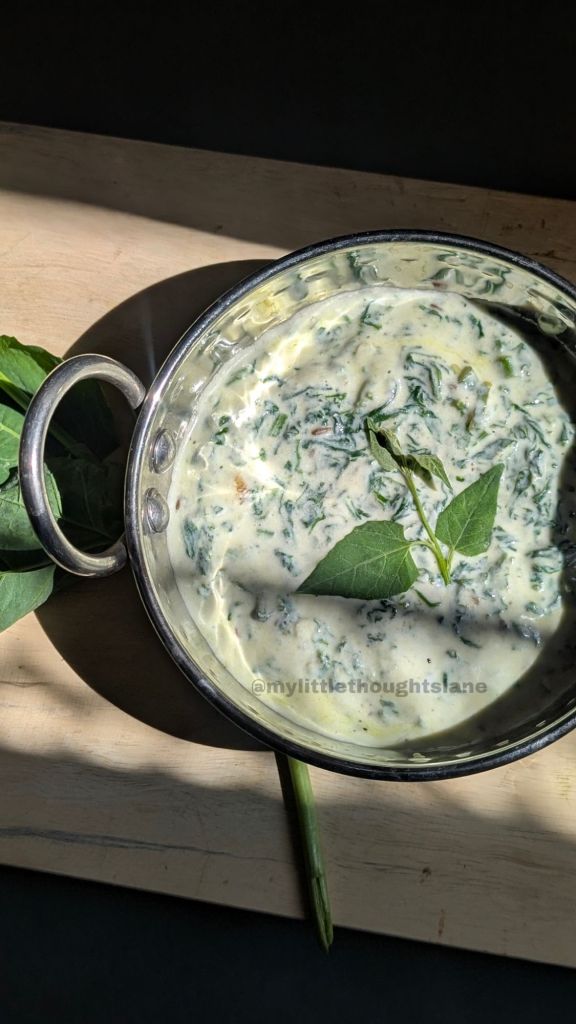
Recipes
- Bethe Shaak Stir fry
- Chilaachi bhaji
- Pesto
- Raita
- Bathua Raita and Kadhi
- Bathua saag
- Bathua paratha
- Lasuni Bathua Paratha
- Bathua Alooki sabji
- Chakothina soppu majjige huli – With yogurt gravy
- Chakota Huli
- Chakotha Soppu Pachadi
- Sambar
- Simple Steamed Lambsquarters
- Myeongaju-namul (Seasoned Goosefoot Greens) – A Korean dish
- Stir fry recipe from US
- Cheel pakoda
- Chenopodium stem mish mash curry
- Cream of lambsquarter Soup
- Sudanese lambsquarter with Peanut butter
- Chakotha Soppina Haal Saaru
- Chakotha Soppu Bele Saaru
- Chakotha Soppina Seekootu
- Sarson Ka Saag – It is one of the many greens which is added in making this famous dish.
- Chakvat bhaji
- Chilaachi bhaaji
- Chaakvatchi ambat
- Chakvatachi takatli bhaji
- Chakvat Gargat
Read more
This plant is part of my guide: Lesser Known Edible Weeds of India
Archana.
 MY LITTLE THOUGHTS LANE
Leave a comment