If you are new here and wondering what is this series all about, I planned to jot down the tuber crops which is a lesser known and explored Tapioca/cassava was the first item in this series. Sweet potatoes, winged bean tubers, arrowroot, edible canna, Taro and Tannia were in the next. Please read them if you haven’t already and let me know what you would like to add.
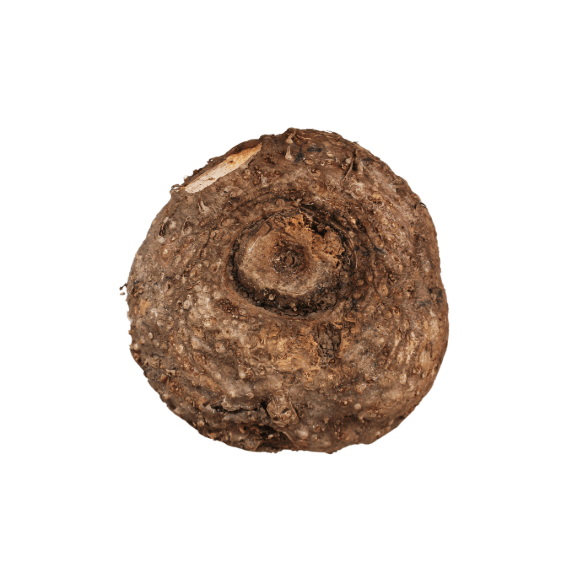
During my childhood years in Kerala, Elephant Yam aka Chena in Malayalam and Soornu in Konkani was always the antagonist. However, I absolutely detested it when it was presented to me. Fast forward, I’ve been craving this vegetable ever since I moved to Bangalore for work years ago.. This isn’t because I don’t get yams here; rather, the ones I do get here never tasted as good or smell as good when cooked like the ones we get in Kerala. I initially believed that there was a problem with my way of cooking, so I bought various yams from the various stores, cooked them whenever my family came to visit. Isn’t that so much of experiment just for a taste aroma? I think that the soil or yams grown back in Kerala have a magical quality. Do you also believe that – there is a magic in the soil which affects the taste of veggies grown in it?
Botanical name: Amorphophallus paeoniifolius
Synonyms: Amorphophallus campanulatus
Common names from flowersofindia.net : Elephant Foot Yam • Hindi: Oal, Gandira, Jangli suran, Kanda, Madana masta • Kannada: ಗಂಡೀರ Gandira, ಸುವರ್ಣಗೆಡ್ಡೆ Suvarna gadde, ಸೂರಣ Soorana, ಕಂದಗಡ್ಡೆ Kandagaḍḍe, ಚೂರ್ಣಗಡ್ಡೆ Choornagadde • Malayalam: cinapavu, karunakarang, kizhanna • Manipuri: Haopan • Marathi: suran • Sanskrit: arsaghna, arshoghna, arsoghna, bahukanda • Tamil: anaittantu, boomi sallaraikilangu, camattilai • Telugu: daradakandagadda, ghemikanda, kanda • Urdu: ज़मीनक़न्द zamin-kand
Family: Araceae (Arum family)
Etymology:
Amorphophallus: Derived from Greek words: amorphos = “shapeless” or “deformed” and phallos= “phallus” or “male reproductive organ”. This refers to the plant’s large, unusual, and somewhat phallic-shaped inflorescence (flower structure), which is characteristic of the genus.
paeoniifolius: From Latin: paeonia = “peony” (a flowering plant with divided leaves) and folius = “leaved”. This indicates that the plant’s leaves resemble those of peony plants.
Elephant Foot Yam is perhaps one of the ugliest flowers in the world and to accompany it, it has one of the worst scents that you can imagine. It’s hard to get close to the flower when it’s releasing its smell. But the foul odor only lasts for a few hours after the flower opens. The plant only blooms when mature and even so it doesn’t bloom every year. Flowers last only about 5 days. Even more interesting, during this phase the plant generates heat. The heat and the smell mimics rotting flesh to attract the flies that will pollinate the flower. ~ From flowersofindia.net. I remember the day I experienced this smell in my room once which next to my garden. An elephant yam decided to flower and it smelled similar to a dead rat!

Source: Panchami Sivaprasad
Years later, when I had the opportunity to sample yam pickle, or surna edgayi(Konkani) as we call it, at a wedding feast, my love for yams began. Later on, it concentrated on Soyi Bhajjilli ghassi, which is made with premade masala or massolu as we call it, and is another dish that I used to detest when I was growing up in Kerala. Once my mother made some yam fries and that’s when I knew that it can made into many more interesting dishes than I imagined.
Did you know that apart from the yam, even the leaves(ila) and stem are edible! In the month of Karkkidakam, when people consume pathila thoran, some consume chena ila also. While some prepare thoran(a dish made with grated coconut) using both the stems(thandu) and leaves. Interesting right?
I was surprised when my friend from Palakkad told me about a dish that was made with raw elephant yam. It is called as Ramayyan Curry which is made using simple ingredients – grated coconut, green chilly, jaggery, ginger and sour curd. In addition to being a very basic dish, ramayyan curry has historical significance too. The Travancore Maharaja, Marthanda Varma, was very close to Ramayyan. The Maharaja once fell sick due to stomach upset and he requested for a simple dish to be made. Ramayyan made this curry, and he served to Maharaja who was very pleased. He named this special curry as Ramayyan curry. I got to know that there are many versions of this story. Please go through this blog on the avial version which I got to read recently. I also learnt that this dish is also served at Aranmula Vallam kali Sadhya which includes more than 65 varieties of dishes.
Pidi Karunai Kizhang

Pic Source – Unknown

This fascinating yam has certainly piqued my curiosity! Many people I’ve consulted regard it as just another variety of yam, but there’s so much more to discover. Primarily cultivated in Tamil Nadu and certain regions of Trivandrum, Kerala, it boasts unique characteristics. While it resembles a traditional yam, it features smaller tubers and a more compact plant. Unlike the elephant yam, this one grows in multiple branches, making it quite distinctive. I found a fantastic Thamizh blog that provided a detailed overview of its planting and harvesting process, along with some of the challenges that come with it. Interestingly, its name, “Pidi Karunai,” comes from its palm-sized nature, while in Malayalam, it’s referred to as “Kaattu chena” or wild yam. Not only is Pidi Karunai a delightful vegetable, but it also carries medicinal properties, including use in treating piles. Isn’t it amazing how nature offers us such treasures?
The dishes made with this are as similar as the elephant yam, so there is no different experience in itchy level too. Both yams will be itchy :) One good friend of mine, Subhashini was lucky enough to find it in Swiggy Instamart in Bangalore. She prepared Masiyal in Tirunelveli style and I am sure that the family would have enjoyed!
Proverbs related to Elephant Yam
- കുംഭ മാസത്തിലെ വെളുത്തവാവിന് ചേന നട്ടാൽ കുംഭപ്പറപ്പോലുള്ള ചേനകിട്ടും
- കുംഭത്തിൽ നട്ടാൽ കുടത്തോളം. മീനത്തിൽ നട്ടാൽ മീൻകണ്ണോളം – If planted in Kumbham, it grows as big as a pot. If planted in Meenam, it grows only as big as a fish’s eye. This saying reflects the deep connection between planting time and harvest. The older generation considered the Pournami/Full moon day of the month of Kumbham(February–March) as the most suitable day for planting yam.
- വാഴ വയ്ക്കുന്നവനെ അടിയ്ക്കണം, ചേന വയ്ക്കാത്തവനെയും. – One should beat the man who plants banana, and also the one who doesn’t plant yam. This saying reminds us how risky banana cultivation is, and how relatively risk-free yam farming can be. Once harvested, yams can be stored and used in cooking throughout the year, if needed. Yam can be cultivated both for harvesting around Onam and for seed collection in November–December. Small yam seeds can be used to grow mini yams, which are especially popular among small families.
- കർക്കിടകചേന കട്ടിട്ടായാലും കൂട്ടണം. – You must eat yam in Karkkidakam even by stealing.
A yam planted in the month of Kumbham will be six months old by Karkidakam. If harvested then, it cooks soft as butter. It captures both the timing and the irresistible appeal of well-grown, timely-harvested yam. - ചേന വയ്ക്കാത്തവൻ മടിയൻ -The one who doesn’t plant yam is just lazy.
Among our crops, yam has one of the simplest methods of cultivation. Even if you casually toss a yam seed, it’ll sprout right there. After that, just heap some leaves & soil on it—that’s enough. So if someone can’t even manage that, we might as well call them lazy. - ചേന ചുട്ടു നടണം ചാമ കരിഞ്ഞു വിതയ്ക്കണം.
Recipes
- Chena fry
- Suran tikkis
- Surnache tambude – A Konkani side dish
- Surna tallel phadi ghalnu ghassi – One of my fav dishes, a coconut base gravy made using fried yam pieces
- Surna Balukk – Another fav, yam fries or wedges to be exact;)
- Surna ghari – A snack
- Surna ambat
- Godd nonche – A sweet pickle
- Surna koota
- Surna Kismuri – A yam chat ;)
- Surna sukkein – Yam thoran
- Surna Nonche – another one from my fav list
- Aviyal
- Chena ila thoran
- Chena ila & thandu thoran
- Chena asthram
- Chena kurumulak mulakoshyam
- Chena erissery
- Pidi karunai kizhangu podimas
Additional reads
So what are your yam memories?
A.

 MY LITTLE THOUGHTS LANE
Leave a reply to Rooted in Nutrition Series 9: Larger Yam – MY LITTLE THOUGHTS LANE Cancel reply