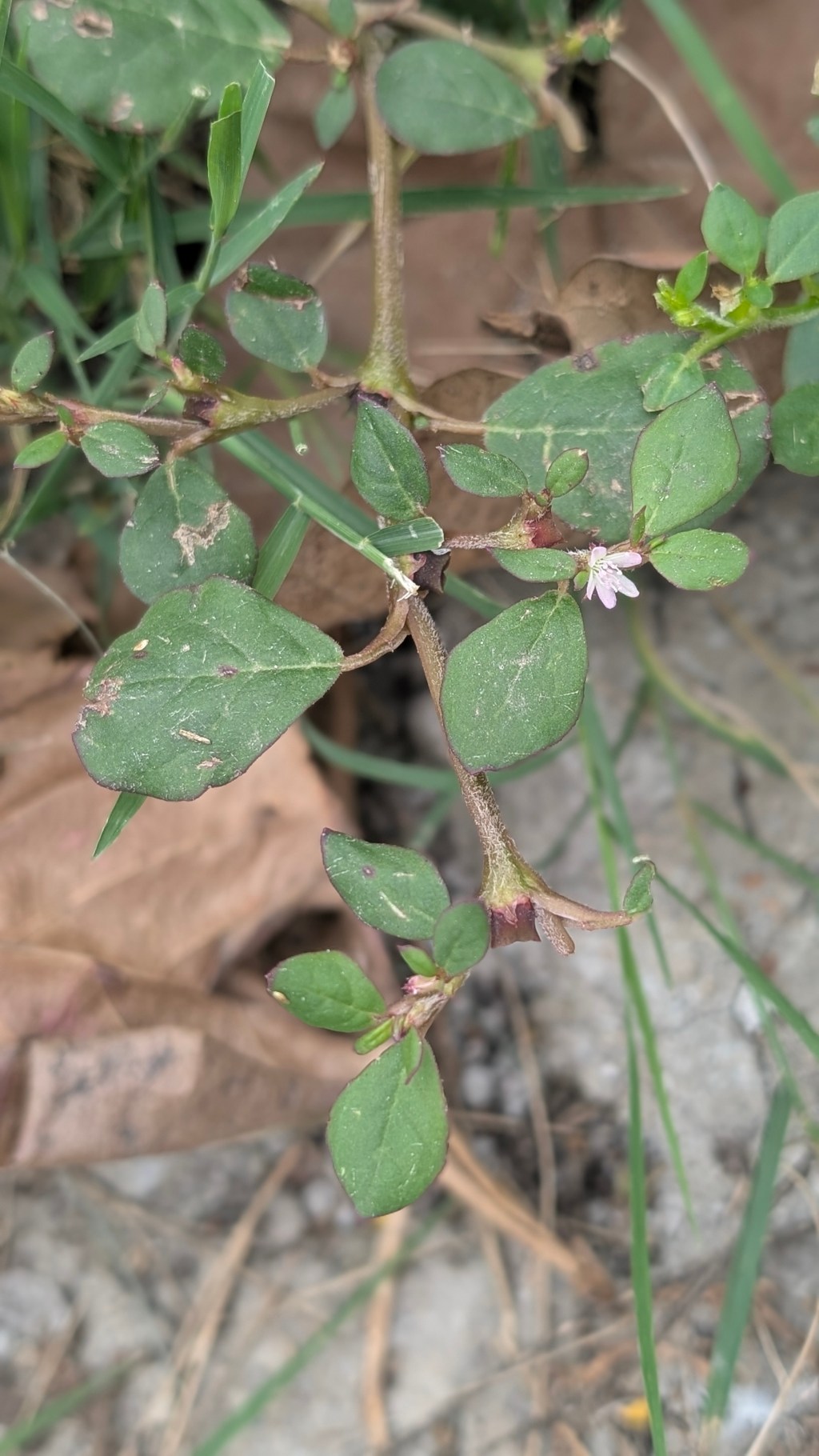
After Common Purslane, Wild purslane, I thought of covering one more so-called-purslane(but it is not really a purslane) which I am aware of. This plant is often mistaken as Punarnava as the plant look similar to actual punarnava/thazhuthama(Boerhavia diffusa). While some call this plant as Shwetha Punarnava(as there are two varieties in this species- with pale pink flowers and another with white). To clear up this confusion, I spoke to several Ayurveda practitioners and other knowledgeable people in the field. The experienced practitioners, botanists and elders I consulted were unanimous in saying that these are entirely different plants from Punarnava. In fact, they explained that this plant is sometimes used as an adulterant in place of the genuine Punarnava!
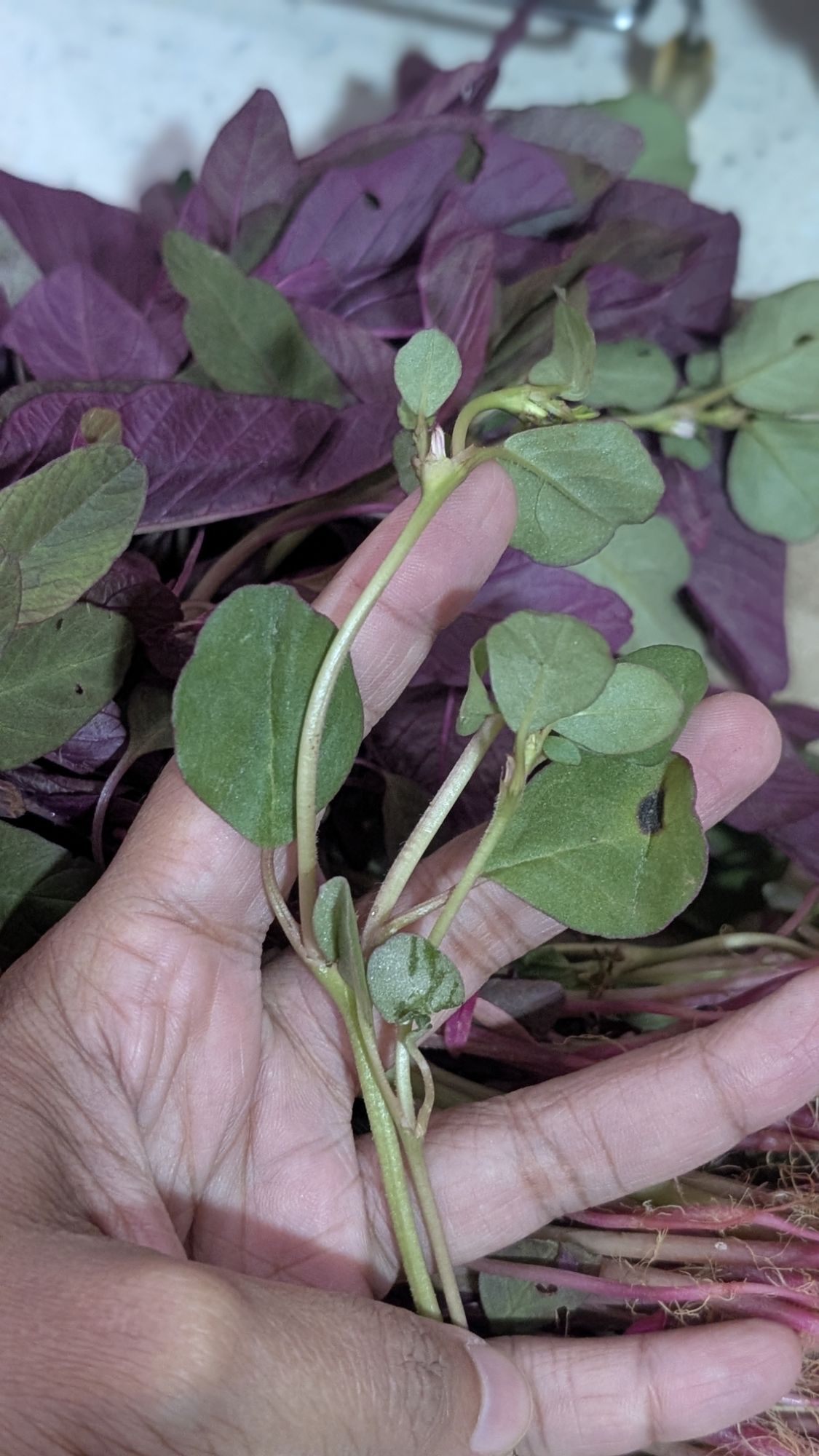
Botanical Name: Trianthema portulacastrum Family: Aizoaceae (Ice plant family)
Common name from flowersofindia.net:Desert Horse Purslane, Giant pigweed, Horse-Purslane • Bengali: Gadabani, Godabani, Kulphasag, Swetpunarnova • Gujarati: સટોડો Satodo • Hindi: Sabuni, Salsabuni, Svetsabuni, Vishakhapara • Kannada: ಮುಚ್ಚುಗೋಣಿ Muchchugoni, ಬಿಳಿಕೊಮ್ಮೆ Bilikomme, ಪಸಲೆಸೊಪ್ಪು Pasale soppu, ಸಿಹಿಪುನರ್ನವ Sihi Punarnava • Malayalam: Talutama, tavilama • Marathi: Pundhari-ghentuli • Nepali: Seto punarnava • Oriya: Luduru sag • Sanskrit: Chiratika, Dhanapatra, Dirghapatrika • Tamil: Sharunnai, Shavalai, Charu velai • Telugu: Ambatimadu, Galijeru, Ghelijehru
From my notes: in Kannada, Komme Soppu is generally called for Punarnava(B. diffusa) and this plant is called as Dodda Goni soppu, Pasale soppu, Muchchugoni(Chasing Soppu).
Etymology:
Trianthema: The genus name comes from Greek roots: treis = “three” and anthemon = “flower”. So Trianthema essentially means “three-flowered.” The name refers to the characteristic arrangement of flowers in the genus.
portulacastrum: This is formed from:Portulaca = the genus that includes purslane and -astrum = “resembling” or “somewhat like”. So portulacastrum means “resembling Portulaca (purslane).”
Despite the common name horse-purslane, it belongs to the family Aizoaceae, not the purslane family Portulacaceae. Its fleshy leaves and stems probably contribute to the common-name association with purslane.
Nectar Plant
Talicada nyseus – Red Pierrot
Zizeeria karsandra – Dark Grass Blue
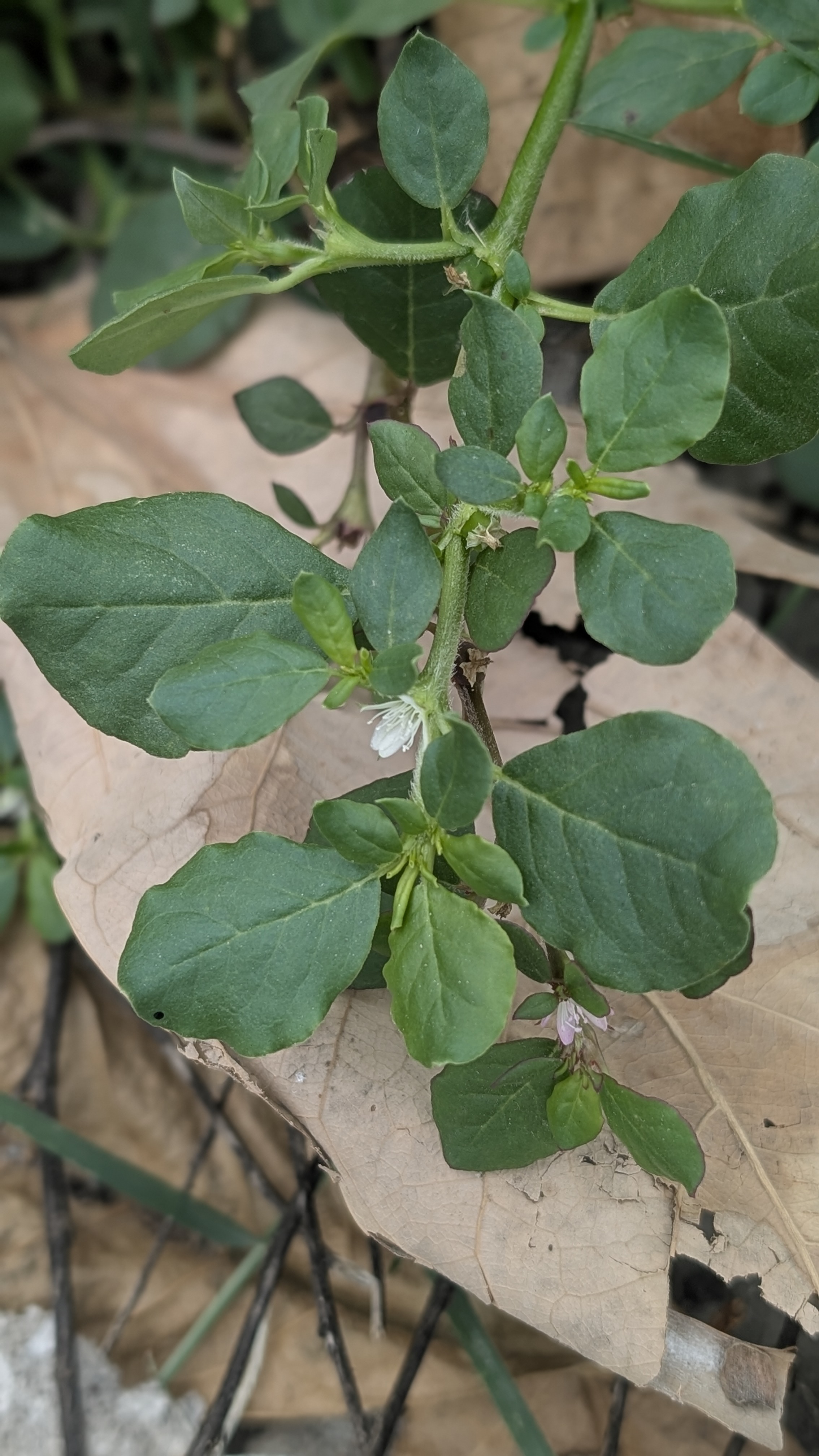
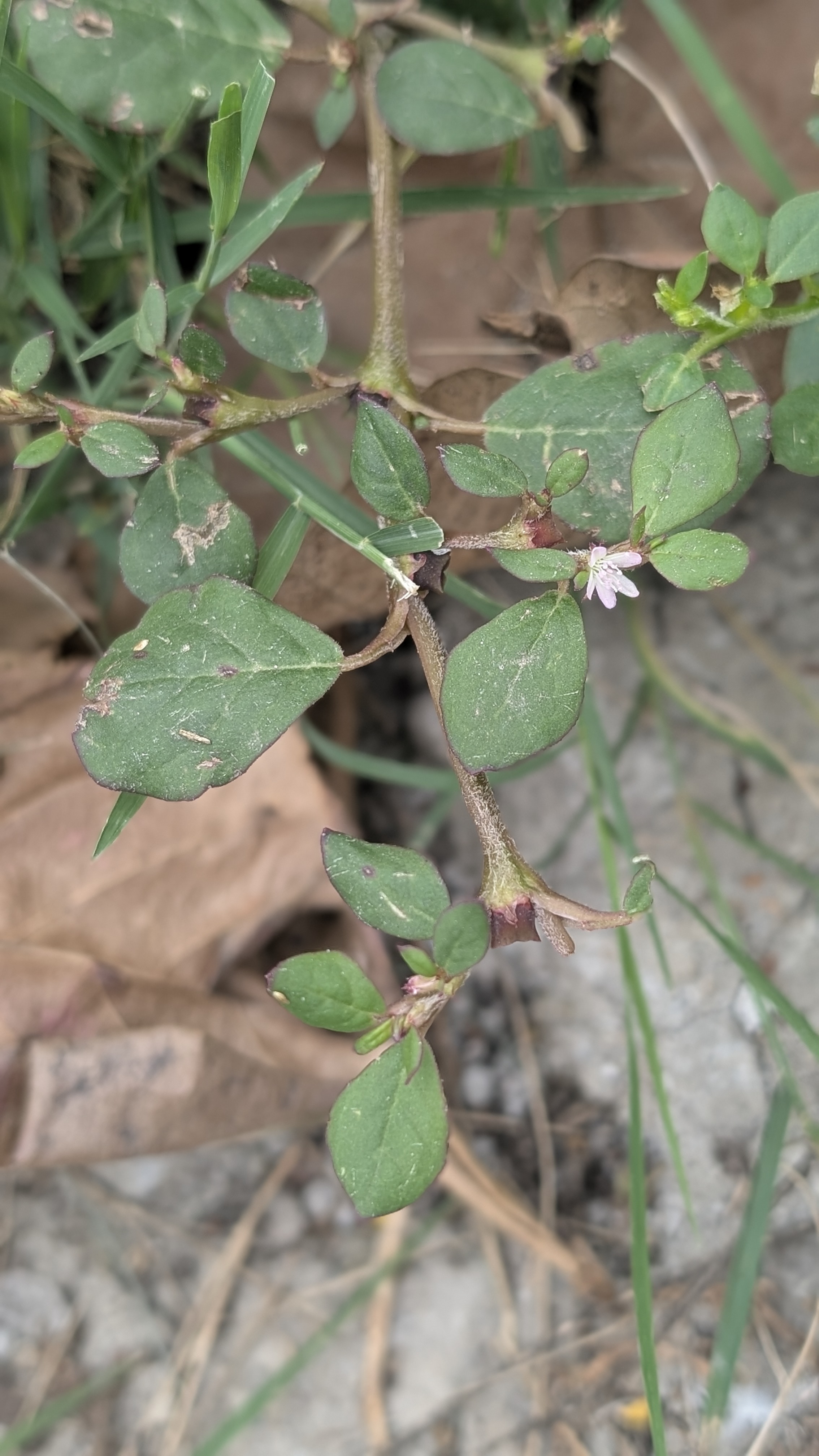
White flowered, green(white)stemmed and pale pink flowers, reddish stemmed Desert horse-purslanes spotted in Bengaluru roadside.
The leaves and stem are more succulently than the B. diffusa.The flowers are also very different from Punarnava. They grow right on the stem, very near to the nodes(refer the above pic), and single flower.
Gardening & Edible Uses:
Desert horse-purslanes acts as a host plant for several insects, viruses, and pathogens. Insects like Beet Leafhopper, Red Hairy Caterpillar, Webworm / Lesser Cornstalk Borer relatives etc hosts on this plant and thus these plants are part of the natural food web and can sometimes serve as an alternative host for pests that also affect nearby crops. Some researches also show that uncontrolled growth of these may affect the yield.
It also has a special adaptation called C4 photosynthesis, which helps it continue making food efficiently even in hot, dry conditions. It’s one of the reasons this seemingly ordinary weed can thrive in tough places.
Medicinal Uses:
Medicinal uses as per flowersofindia.net:  The roots are used to relieve obstructions of the liver, and to relieve asthma and amenorrhea. A decoction of the powdered root is taken to treat venereal discharge. The leaves are used in the treatment of oedema, jaundice, strangury and dropsy. The old leaves are used in a treatment against gonorrhoea. The fleshy nature of the leaves makes them suitable for use as a wound-dressing or poultice.
Want to know more edible greens around us?
Check out this 500+ greens listed here!
Recipes
Read more
A.


Leave a comment