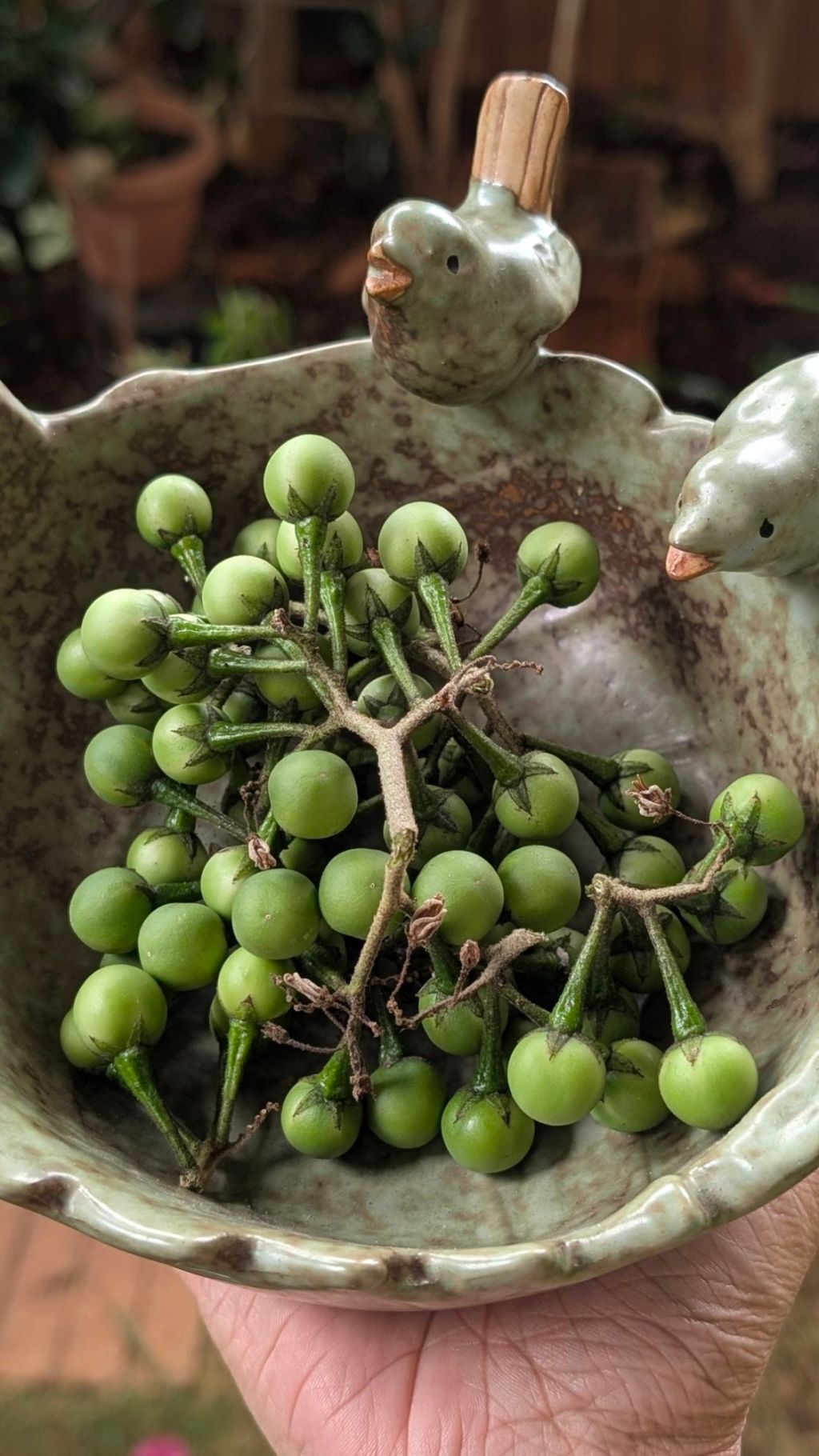
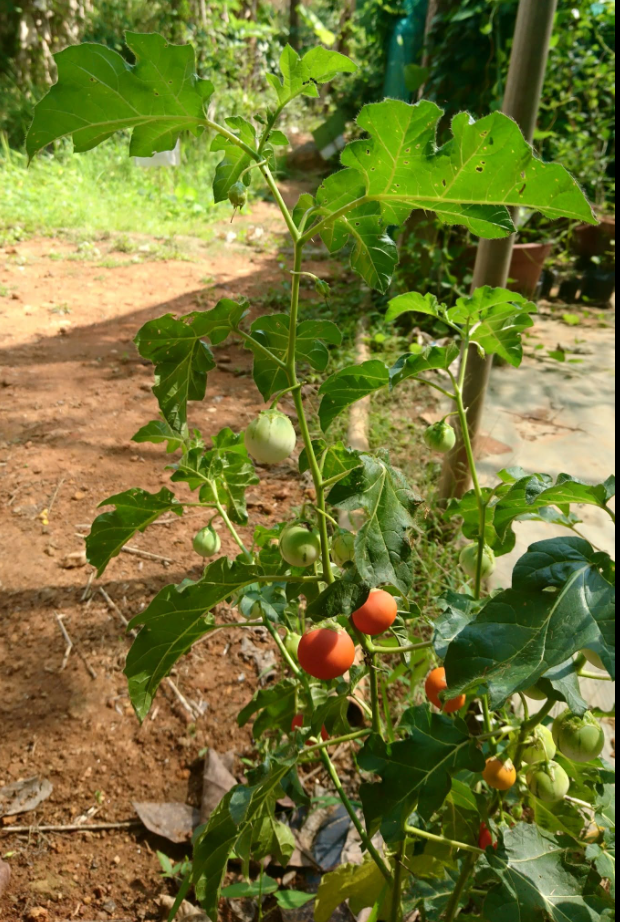
If you’ve got a backyard garden, or you’re lucky enough to live in a small town or village, you know the deal. Alongside the “usual suspects” like papaya, banana, and curry leaves that practically grow themselves and show up for free(from your neighbors too)… there’s always that one extra guest: Chundakka.
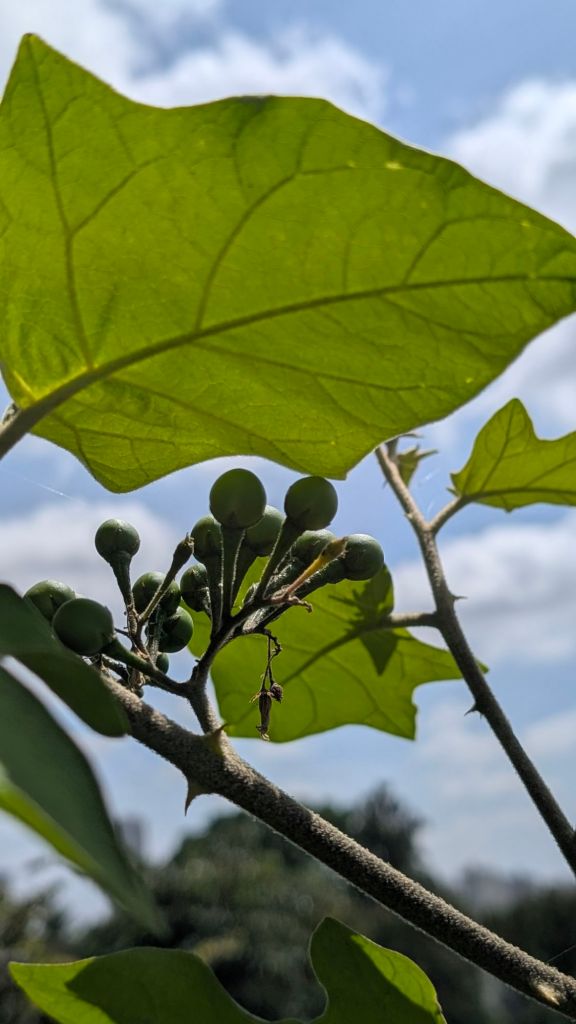
It is one of those vegetables that doesn’t believe in middle ground, it’s either love at first bite or a lifelong grudge. Some people can’t get enough of it in any form, while others reject it no matter how it’s cooked, spiced, or disguised. And I’m not exactly breaking the pattern either. As a kid, I was firmly in the “absolutely not” team, chundakka in any form was a hard pass, especially when it showed up as an endless supply from own home or neighbors’. Funny how things change though… now I find myself craving it like it’s some rare delicacy I once took for granted! I hunted for this little fruit and started to grow them in my balcony garden at Bangalore!
Botanical Name: Solanum torvum Family:Solanaceae(Potato family)
Common names from flowersofindia.net: Turkey Berry, susumber •Hindi: Bhurat, Bhankatiya •Manipuri: ꯁꯤꯡꯈꯥꯡ Sing-khang •Marathi: Marang •Tamil: சுண்டைக்காய் Sundaikkai •Malayalam: Anachunda •Telugu: Kottuvastu •Kannada: ಚುಂಡೆ Chunde, ಚಿಟ್ಟಬದನೆ Chittabadane, ಕಾಡುಸೊಂಡೆ Kaadu sonde •Bengali: Tita bagoon •Assamese: Bhi-tita •Sanskrit: ब्रह्टी Brihati •Tangkhul: Kapkhathei •Nepali: सेतो विही Seto Bihi, ठुलो विहीं Thulo Bihin, कचेर Kacher, बिहि Bihi •Nepali: सेतो विही Seto Bihi, ठुलो विहीं Thulo Bihin, कचेर Kacher, बिहि Bihi •Mizo: Tawkpui
Malayalam names from my notes – Chunda, Curry Chunda, (കറി ചുണ്ട/പുത്തരി ചുണ്ട), aana chunda ഉപ്പേരിചുണ്ട .Kannada names- Usthi kaayi, Kudanekaayi
Etymology:
Solanum: The genus name Solanum is generally traced to Latin solamen, meaning “comfort” or “relief”, possibly referring to the traditional medicinal uses of some species.
torvum: From Latin torvus, meaning “stern,” “harsh,” “grim,” or “fierce-looking.” The epithet may refer to the plant’s somewhat rough or formidable appearance, particularly its prickly stems and branches.
These little berries are a staple in many South Asian kitchens, and even in cuisines from Central America to Southeast Asia. But here’s the thing, despite their small size and innocent appearance, they pack quite a punch!
When fresh, these berries are a deep green and grow in little clusters, each berry a tad smaller than a cherry. While they may seem inviting at first, tasting them right off the plant is a mistake you might not want to repeat! The bitterness is intense, almost overwhelming. But if you hang around long enough, you’ll start to appreciate them for what they truly are, an acquired taste.
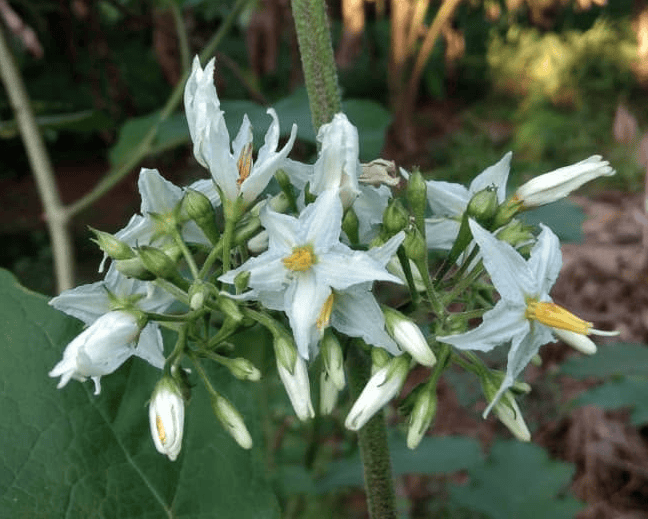
In Ayurveda, the fruits are used as used for treating respiratory issues, anemia, digestion issues and the list goes. In Siddha medicine, which is one of India’s ancient systems of healing, sundakkai is believed to be excellent for digestion. It’s used in a special herbal preparation called Sundavattral Chooranam, which is known to help with digestive issues. It is also used to treat intestinal worms, indigestion, and anemia.
In Indian cuisine, the Turkey berry is nothing short of a versatile ingredient, appearing in a variety of forms across regions. In Tamil Nadu, it’s most famously used as sundakkai vathal, dried berries soaked in sour buttermilk and then sun-dried, ready to be fried or added to curries. But it doesn’t stop there. In Kerala, especially in the Wayanad region, it’s known as Chundakka Vaduka and is often prepared with other spices and stored for use throughout the year. It also appears in curries, pickles, chutneys, side dishes and sabjis. In GSB homes, it is called as Chunde phal and is been used in making pickles(hummaan), upkari(sabji), ghashi(curries), or one of my favorites pachatti(a curd + coconut based semi gravy dish)!
Sundakkai vathal plays a key role in the Dwadashi meal, which is served on the 12th day of the Hindu lunar fortnight (Dwadashi). After fasting on Ekadashi, the body needs a meal that calms the stomach and aids digestion. The bitterness of sundakkai vathal (dried turkey berries) helps balance acidity, making it an ideal addition to the meal. Along with other soothing dishes, it helps restore harmony to the digestive system.The vathal is also one of the ingredients of the Angaya podi (Azhakiya Kaayam podi) – a herbal powder prepared and served mainly to women after delivery of baby as part of Pathiya Samayal(postpartum diet). It is also one of ingredients in similar traditional powders like Angarapodi(used as remedy for indigestion, diarrhea).
In Kerala, many farmers use this plant as rootstock for grafting commercial eggplants (brinjal), as it is incredibly resistant to root diseases. Also, the plant is extremely drought-tolerant and can grow in almost any kind of soil.
Some Chundakka Sayings –
“ചുണ്ടങ്ങ കൊടുത്ത് വഴുതനങ്ങ വാങ്ങുക” എന്നതൊരു പഴഞ്ചൊല്ലാണ്. ചെറുതു കൊടുത്ത് വലിയതു വാങ്ങുക എന്നതാണ് വാച്യാർത്ഥം. ഒരുവനെ ചെറുതായി ദ്രോഹിച്ച് വലിയതായ ഉപദ്രവം ഏറ്റുവാങ്ങുക എന്നതാണ് വ്യവഹാരാർത്ഥം. – Meaning explained by Manoj Manayil
Literal meaning: To give something small and receive something bigger in return.
Figurative meaning: To cause someone a small harm and end up suffering a much greater harm in return.
சுண்டைக்காய் கால் பணம் சுமை கூலி முக்கால் பணம்
Puthari Koottu –
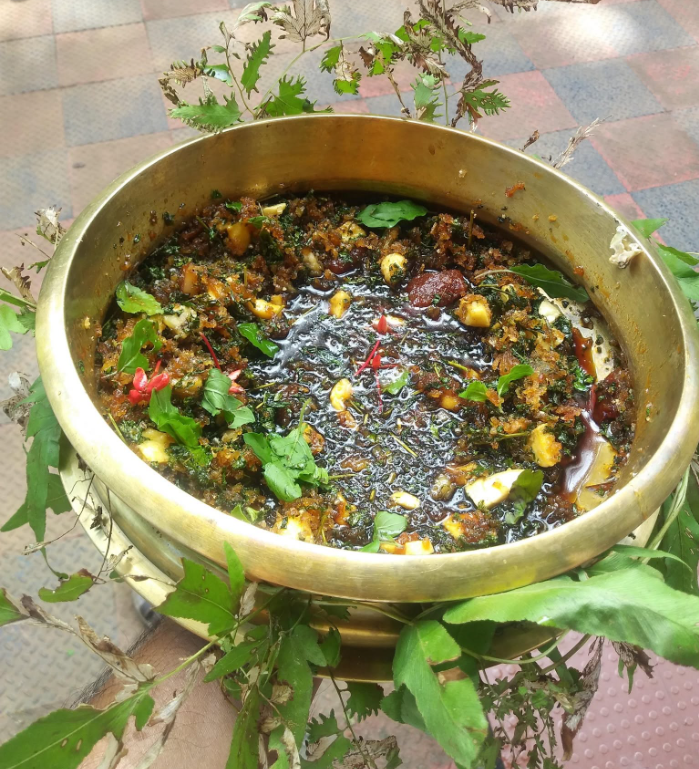
At Kallur Maha Vishnu temple,in the month of Thulaam, a special naivedya is prepared for Bhagavan and is distributed to the devotees aftewards. The herbal preparation is made with puthari(freshly harvested rice), jaggery, rock sugar, honey, salt, coconut, green peppercorns, ginger, turkey berry, Tora leaves and ghee. The preparation is kept in an uruli tied with either balloon vine(uzhinja) or with Flexuous climbing fern(poli valli, theeppannal-Lygodium flexuosum).
Types of Chunda(Kerala based information)
We have many types of chunda plants. While all are not considered as edible, most of them are medicinal, hence it needs some amount of cleansing before used as medicine.
- Disclaimer– Please remember that the local name could be same for different plants. In Kerala itself, the name ‘Cheru chunda’ has been called for many varieties of Chunda.So if you are using for consumption or as medicine, please check with your physician for confirmation.
Solanum violaceum(S. indicum) – Cheru chunda(ചെറു ചുണ്ട)
Solanum violaceum(S. indicum) is called as Puthari Chunda,Cheru chunda or Cheru Vazhuthina. Its also called as Bruhati in Sanskrit. It is one among the Dashmaoola in Ayurveda.
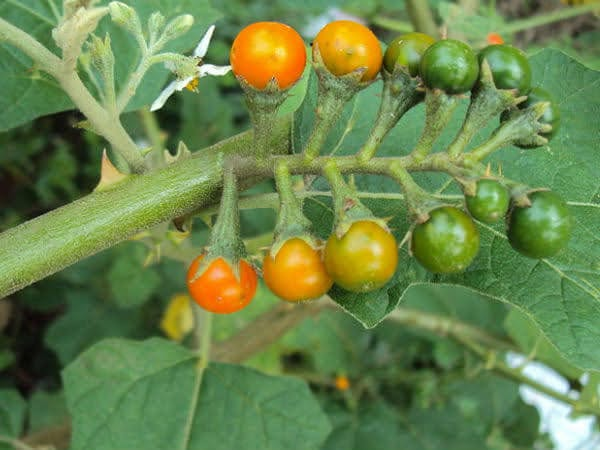
Solanum melongena var. insanum – ആന ചുണ്ട ( പുണ്യാഹ ചുണ്ട)
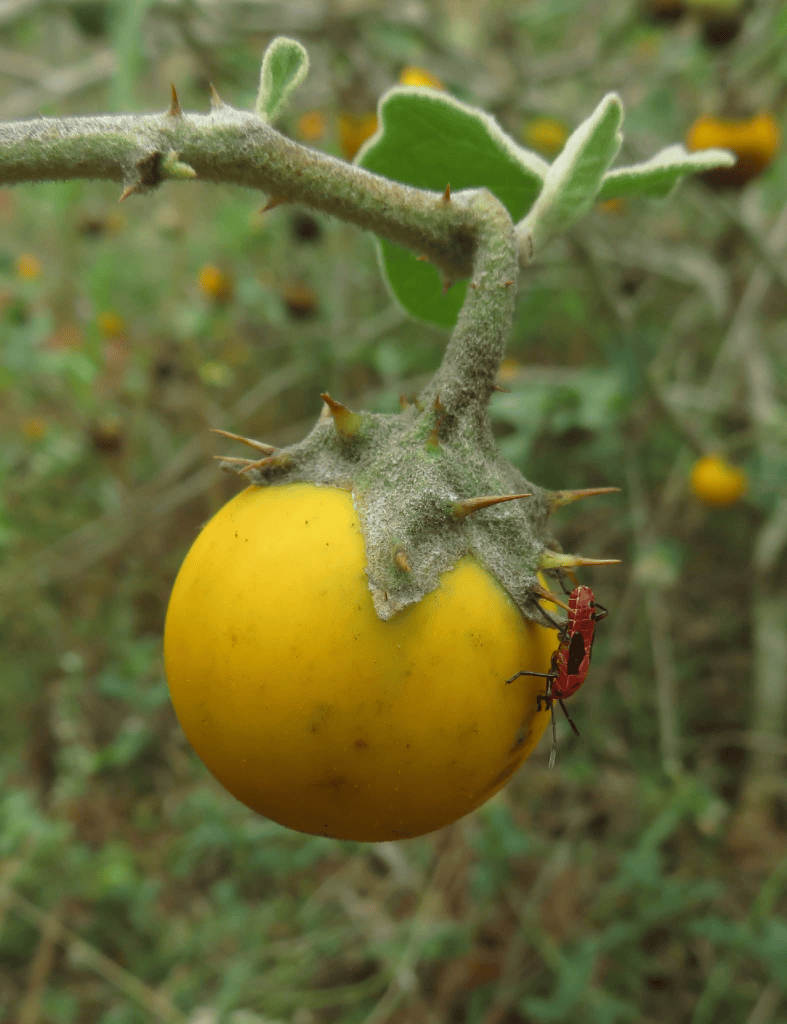
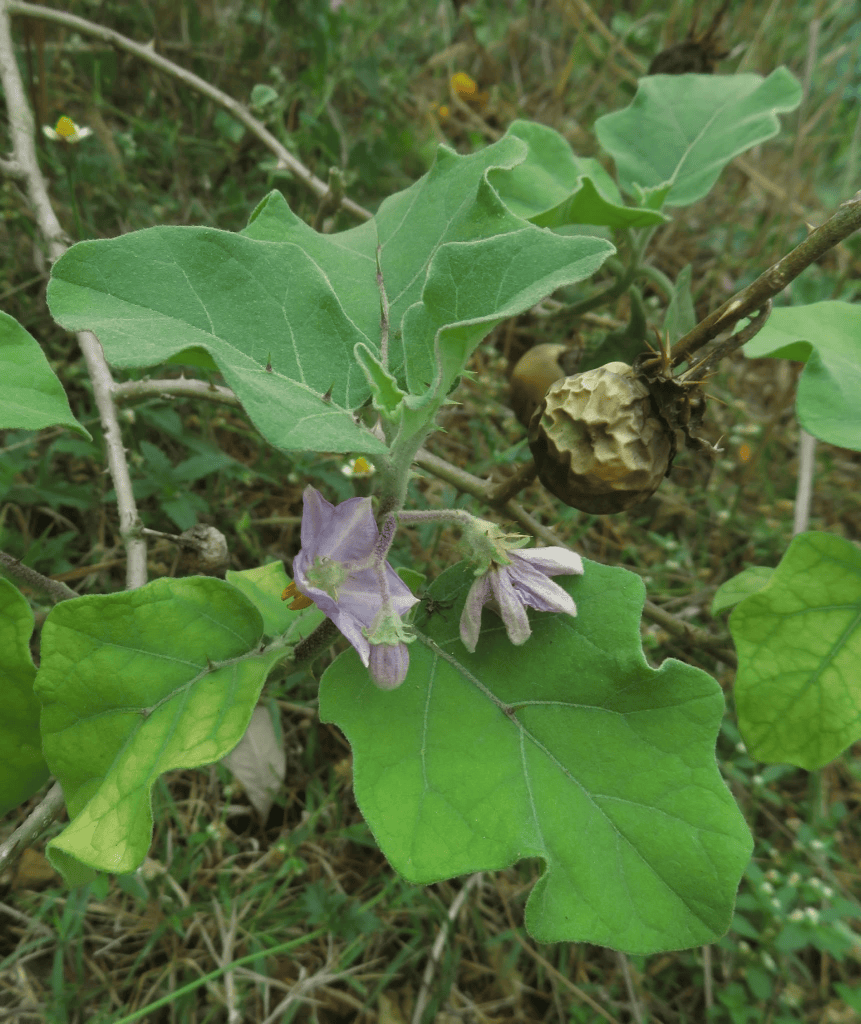
It is used for some pooja, punyahams mainly in temples.The flowers of this are used to redden the eyes of the artist who performs art forms like Kathakali, Krishnaattam, Koodiyattom, Mudiyettu etc. We call that ritual as ‘Chunda pooviduka(ചുണ്ടപ്പൂവിടുക).
Solanum virginianum – കണ്ടകാരി ചുണ്ട(Kandakaari)
Solanum virginianum is called as Kandakaari Chunda(കണ്ടകാരി ചുണ്ട).The plant is very effective on respiratory conditions like Asthma, Bronchitis, coughs and colds.
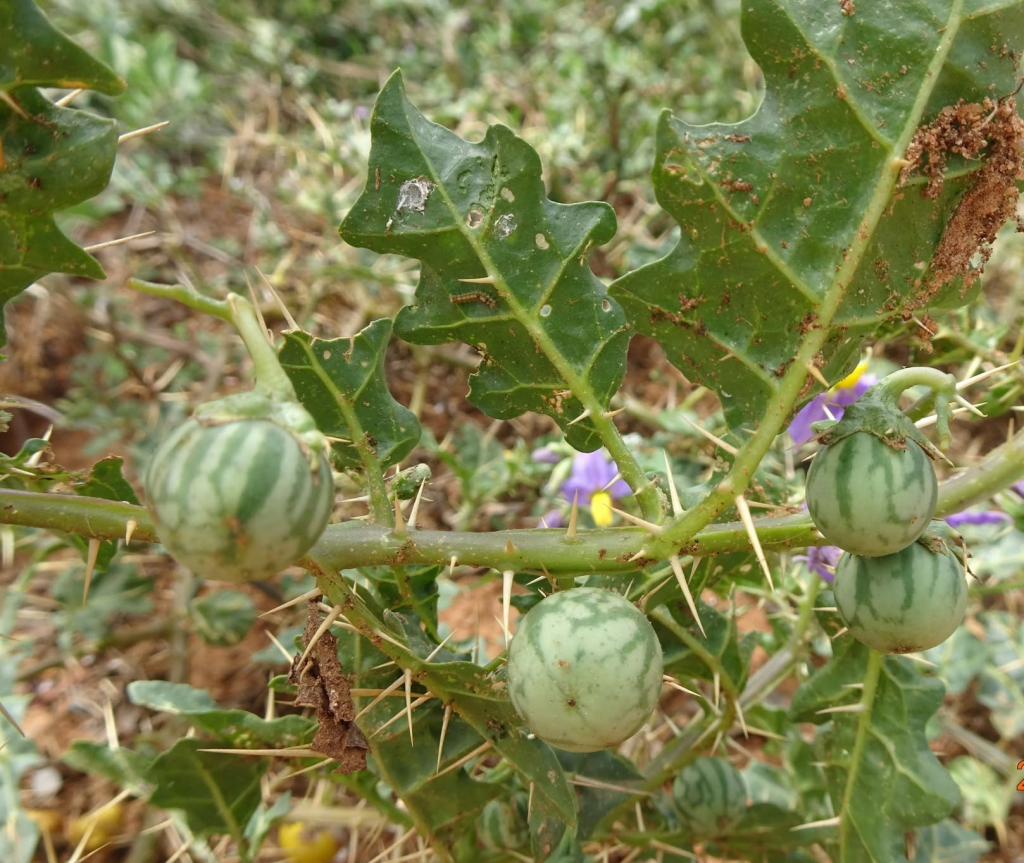
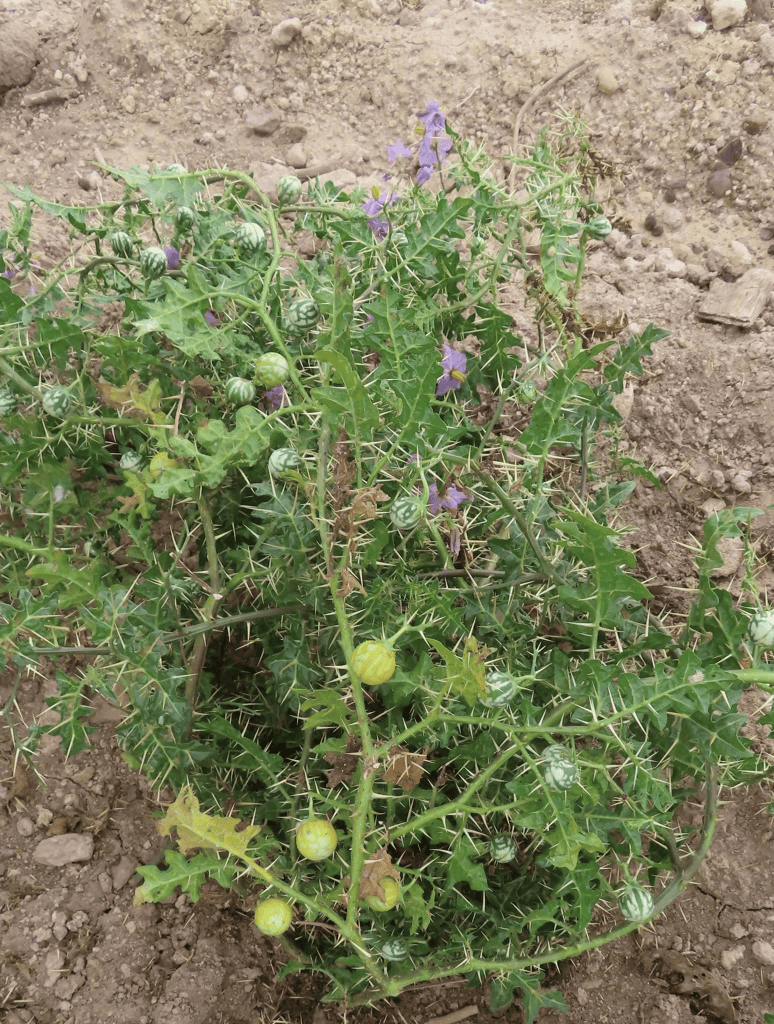
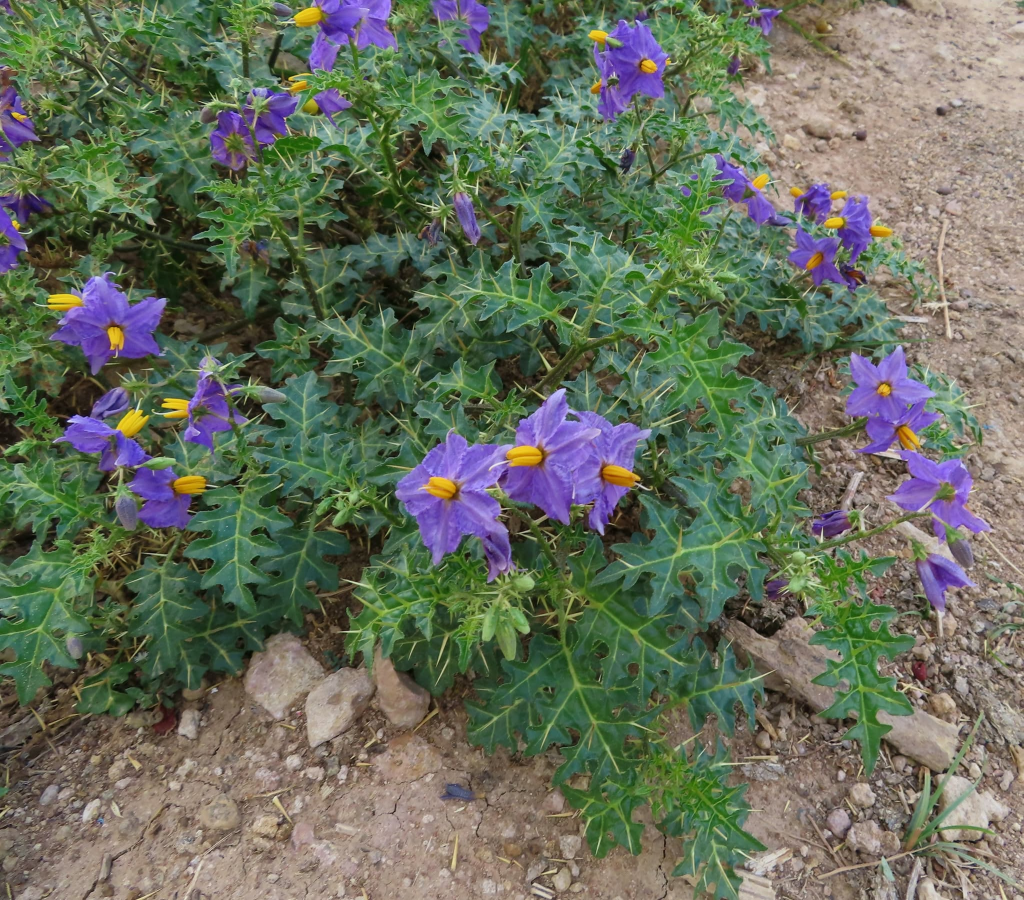
കാട്ടുചുണ്ട(Kaattu chunda/Wild Turkeyberry)
Solanum asperolanatum is called as Kaattu Chunda(കാട്ടുചുണ്ട). But some call Solanum anguivi as Kattu chunda. If you know more about these types, please share it in the comments.
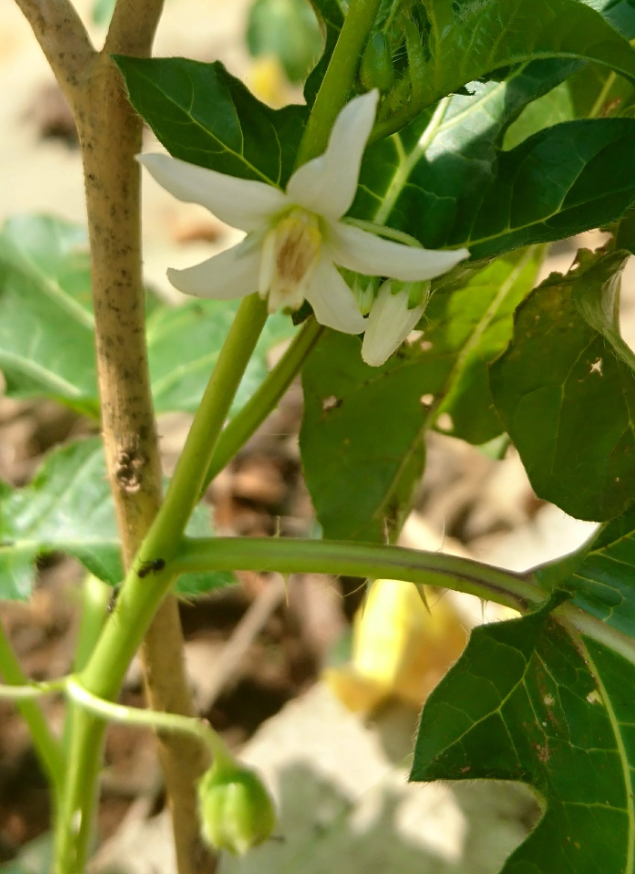
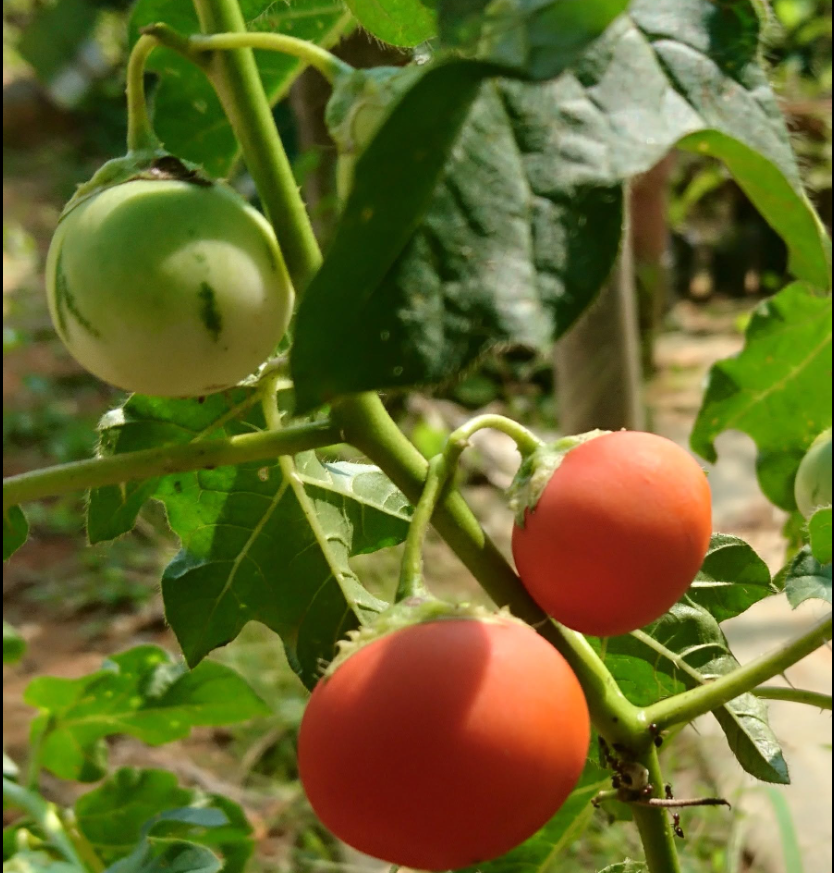
Solanum capsicoides – രക്തചുണ്ട(Rakthachunda)
There is an interesting common name for this – Cockroach berry! In Kerala, people call this as Thakkali chunda also as they resemble Thakkali(tomato). These are not used for consumption as food.
Pic Courtesy- Dr. Ajayan Sadanandan
Recipes
Disclaimer – While some believe that the tiny seeds inside these berries are toxic, some believe that they are hard to digest in big quantities. What I learn that, removing or cleaning using these methods, reduces the bitterness to an extent. Hence, they suggest to crush the berries a little and remove the seeds(not fully). Some soak them in buttermilk, tamarind water or in just regular water. But it is not mandatory that you need to remove the seeds.
- Vathakozhambu
- Turkey berry tambuli
- Chunda phal and Pototo Humman
- Chinese potato and chundakka upperi
- Dry berry pachatti
- Stir fry
- Raw papaya and chundakka stir fry
- Thiksani koot humman
- Chundakka pulisseri
- Chutney
- Thoran
- Chundakka vaduka– Wayanad special
- Cutlet
- Chutney
- Sundakkai Moru Kuzhambu
- Tibbattu Mallung– A stir fry from Srilanka.
- Raita
- Shundakkai Molagu Shaatamdu
- Chundakka theeyal
- Sundakkai Sambar
- Sundekkai Alasande Huli
- Sundakkai kozhambu
- Sundakai vathal podi – good for those who loves to add podi to their hot rice with a dollop of ghee ;)
- Sundakkai Vathal Saadham
- Sundakkai chutney – By Subhashini
- Sundakkai Morkulambu with Sundakkai Vathal – A curd based curry with sun dried Sundakkai
- Sundakkai Kulambu
- Chunde phala pachadi – Konkani recipe from my home
- Papaya- chunde phala upkari
- Chunde phal -Kook Ukkeri – Turkey berry and potato stir fry
- Chunde phala ukkeri
- Chunde phala Hummaan
- Chunde phal dali thoy – Turkey berry dal recipe
- Turkey berry and Chinese potato stir fry
- Chundakka thoran
- Chunda phala edgai – Pickle recipe
- Turkey berry stir fry
- Pachadi with dried berries
- Chutney
- Hummaan – pickle kind
- Another Hummaan
- Chundanga pulisseri
- Tibbattu Mellum – A Srilankan recipe
- Susumba – Jamaican recipe
- Shundakkai Molagu Shataamdu – Turkey berry Rasam, Iyengar special
- Kudane Gojji
- A unique cutlet recipe with Rasavalli(Purple Yam) and Sundakkai by one of my favs Deepa Paticheri
- Chundakka chakkakuru thoran – Sundakkai and Jackfruit seeds sabji
- How to make kondattam/vathal – Malayalam
- Chundakka theeyal – by one of my favs – Dakshina/Sarang
- Chundakka vadagam or vaduk(വടുക്) – Wayanadan style
- Turkey berry pickle
- Thuvayal
From my Insta post
A.


Leave a comment