Most of my greens’ knowledge arrived through my Amma. But this one arrived through Facebook.
I first heard of Kummatti keerai in a FB post, and I assumed it belonged only to Tamil Nadu. Then I started reading the ethnobotanical studies, and the plant politely corrected me. It tops the use reports in an Andhra village survey. It turns up in Kerala’s Wayanad and Parambikulam and in Maharashtra’s Gadchiroli.
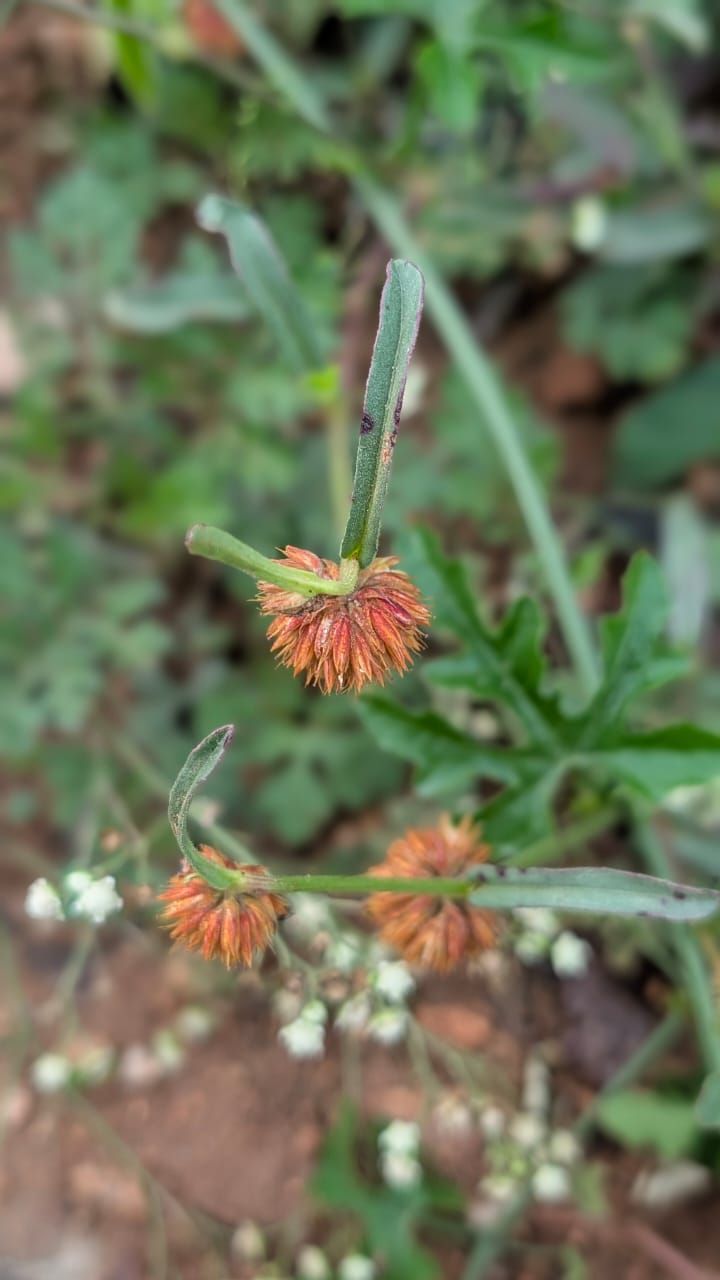
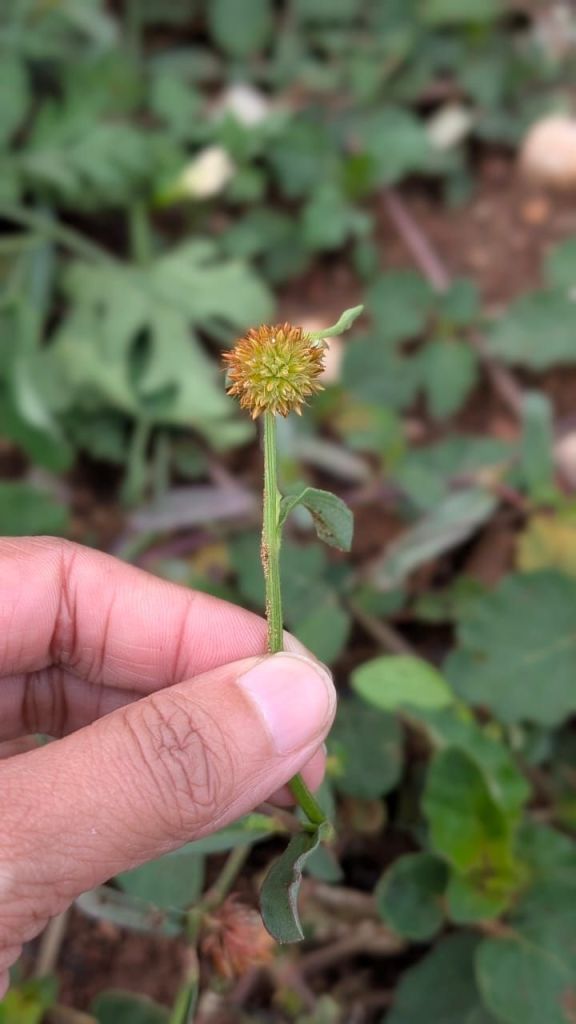
My own meeting with it was brief. We were on a family outing at a lovely stay near the Tamil Nadu border, and there it was, a stunning bloom at the edge of my vision. One look and I knew it. Not enough of it to cook a dish, sadly, but plenty to fill my phone with photographs.
So I have no family recipe and no childhood memory of this keerai. What I have is a plant I recognized at first sight and a promise to cook it someday. Honestly, that is how a forager’s stories usually begin.
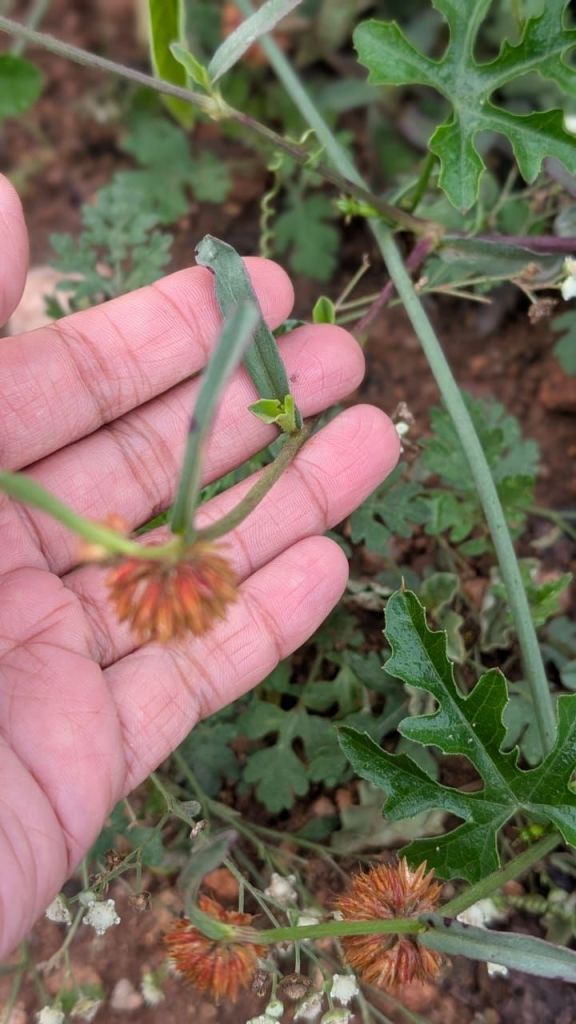
Botanists once filed it as Celosia nodiflora, which makes it a distant cousin of the flamboyant cockscomb flower. The genus name Celosia comes from the Greek word for “burning”, a nod to those flame-like blooms. Celosia comes from the Greek keleos, meaning burning, in reference to its vibrant, feathery flowers.But later, it was renamed as Allmania nodiflora.
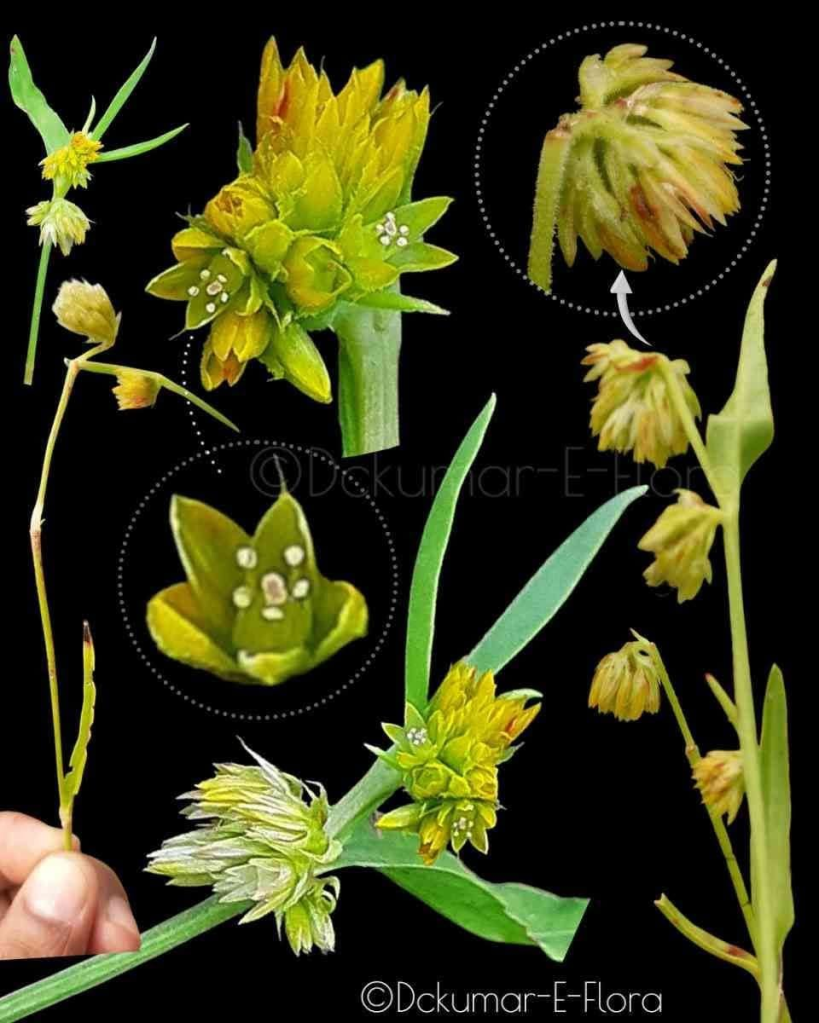
Botanical Name: Allmania nodiflora Family: Amaranthaceae (Amaranth family)
Common name from flowersofindia.net: Node Flower Allmania • Kannada: ಬುಡ್ಡೆಸೊಪ್ಪು Budde soppu, Hasiru budde soppu, Kandu budde gida • Malayalam: Pee-coipa, Pee-tardavel • Tamil: Kumattikkirai, Kiraikkummatti • Telugu: Gurugu koora
From my notes: Tamizh- Kamatchi keerai
Etymology:
Allmania: Its precise etymological origin is not clearly established in commonly available botanical references, so it is best not to assign it a speculative meaning.
nodiflora: Derived from Latin botanical elements: nodus = “knot” or “node” and florus / flora = “flower” or “flowering”.
The epithet refers to the plant’s flowers arranged in clusters at the nodes (the points where leaves attach to the stem).
It is an annual herb, with fleshy, spoon-shaped leaves that are dull green with purple margins. The flower heads are round, turning slightly longer with age, and the flowers can be greenish or orange-red. The seed is glossy black, very similar to our regular Amaranth.
In Tamil Nadu it is mostly a seasonal green, available through the three months of Aippasi, Karthigai and Margazhi. That is the cool, post-monsoon stretch from about mid-October to mid-January. And the most commonly cooked dish with this is Keerai Kadaiyal(similar to Karnataka’s massopu)in TN and Bassaru in Karnataka.
Apart from a good protein content, it also has luteolin(antioxidant and anti-inflammatory, neuroprotection) and beta-carotene(vision and skin health, neutralizes unstable free radicals, helps lower cellular oxidative stress). No wonder why this greens was widely used by our elders.
Have you seen this wild edible green?


Leave a Reply