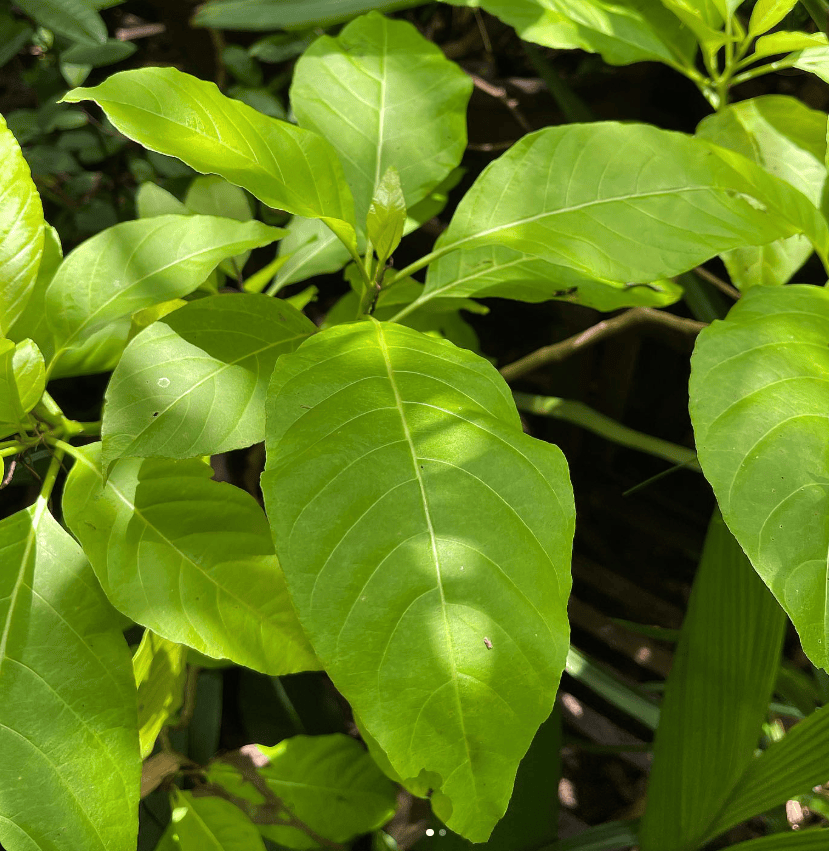
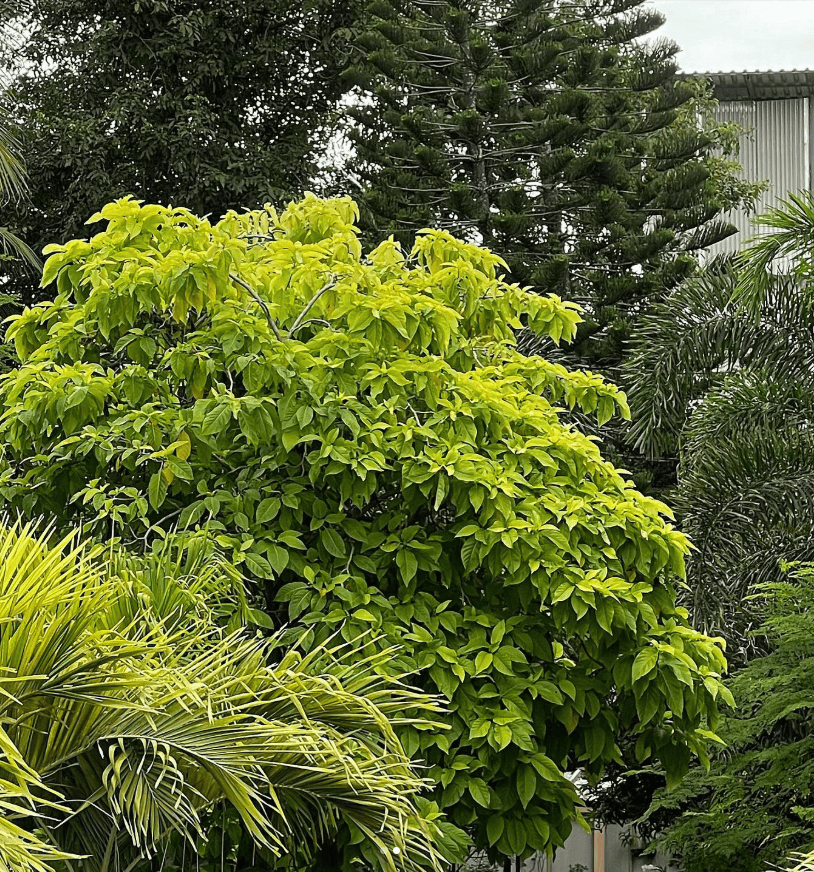
Remember my favorite habit of looking at plants while traveling? It was mentioned in the aavarampoo blog a while ago. Pisonia also falls into that category. While passing through the Salem-Erode highway, we crossed small towns with both sides of the road fenced with beautifully grown and trimmed Lachakottai keerai! The stunning fluorescent yellow-green foliage was really an eye-stopper! On the way back, I remember asking my parents to stop the car so we could ask for more details about the plant and, if possible, get a few cuttings too :P. And yes, we got the details and a few cuttings.
We learnt from the locals there about its various names and how it’s used in cooking. Mind you, this was years back, when the Internet was not so common. No Google Maps, no GPay era.
Botanical Name: Pisonia grandis Family: Nyctaginaceae (Bougainvillea family)
Common name from flowersofindia.net: Lettuce Tree, Bird-lime Tree, Bird Catcher Tree • Hindi: Bhagga-chura • Marathi: Chinaisalit • Tamil: Chandu, Nachukottai keerai, Lachukottai
From my notes- Thamizh names – Sandi keerai,Nanjundan keerai. Malayalam- Sauhrida cheera(സൗഹൃദ ചീര), cheera maram, maithri cheera, Bhagya cheera. Common names in English – Cabbage tree. Kannada- Sule Soppu
Etymology:
Pisonia: The genus Pisonia is named after Willem Piso (1611–1678), a Dutch physician and naturalist. He is known for his work on the natural history and medicinal plants of Brazil, particularly through the publication Historia Naturalis Brasiliae (1648). The genus was named in his honor.
grandis: From Latin grandis, meaning: Large, Great, Tall, Impressive. This refers to the plant’s large size and tree-like growth habit. It can grow into a substantial tree with a broad canopy.
In Thamizh, Nachu means poison and kottai (changed in usage from ketta, meaning doesn’t) means it removes the toxins or gas from the body. It is said to be good for arthritis/rheumatism and gastric problems. It is also said to reduce blood pressure and increase blood flow to the joints, thereby improving mobility in arthritis patients.
In the Philippines and a few other parts of the world, the young tender leaves of Pisonia (kolis) are traditionally used as edible wrappers for fish. I also got to read recently about the forest of Ihos (Maldives) that was gone within generations of human settlement.
The genus Pisonia includes about 27 accepted species, but in India only 3 are found: P. aculeata L., P. grandis and P. umbellifera (Andaman and Nicobar Islands).
While this plant is edible and is called the lettuce tree in some parts of the world, it turns out to be deadly for some birds in another part. There it is called the bird-catcher tree. It thrives on tropical islands and atolls and is closely associated with seabird colonies. Birds such as noddies, terns and boobies provide nutrients through their droppings, while the tree provides nesting habitat. However, its sticky fruits can sometimes trap birds (and even smaller insects), making this an unusual example of the complicated relationship between plants and their animal visitors.


Leave a Reply